

Not much to write about, so I'll give the Dems some new ideas to pound their opponents:
1) Obama should start talking more about how Americans should be able to retire at 65, like they used to. I'm pretty sure that people are working longer, because they have to, and it's a way to talk to seniors, talk about the direction of the economy, and suggest that McCain should be able to sit on a beach and get some color on him rather than apply for a new job. I mean, we keep hearing about his service to the country: doesn't he deserve a break already?
2) The Dems should stop running from the "they want to make government bigger and they want government to choose your doctor, your school, etc." They can win this debate: government exists to fill in the holes, build and maintain society, and make sure that while all the greedy little capitalists are scheming to squirrel away more dollars, those who are less fortunate do not get eaten up in the process. It does not exist merely for its own sake, nor just to wage war.
And what's more, the Dems should flip the "family values" thing: we want to make sure that everyone has healthcare. We believe there are some minimum requirements that should be in place in a country as great as America. But they want government to tell you who you can love, what you can do with your own body, what faith you should follow, and even who will be allowed to see you in the hospital, provided you can afford one in their wholly privatized system. We don't need the government to tell us our values: we can do that part for ourselves.
These suggestions aren't even controversial, but I think at least the second one may strike a chord with the libertarians and energize people who want government to butt out. If the Dems want to win this thing, they have to move to new ideological ground and elevate this debate from where it's been in the past.
Sep 8, 2008
More Unsolicited Advice for the Dems

Aug 31, 2008
Film Recommendation: Heavy Metal in Baghdad
 Finally got to see this film (bless you, Netflix!), and I highly recommend it, particularly to metalheads of color and those against this (or any other) senseless war. The film tracks "the only Iraqi metal band" through it's struggles to just play the music that they love in their home country as it blows up around them. The insight of some of the members about what life in Iraq was like before Sadam, just after the overthrow, and in the years afterwards (portions of the film were shot in 2006 and 2007), is something else. And getting a video look at life both in Iraq during the war, and in the refugee communities in Syria where the band finally reunites is kind of mind-blowing.
One of the most amazing things is that the band had been together since 2002, but until their "reunion" show in Syria, they'd only played 6 times together. Their rehearsal spot in Baghdad was blown up by a rocket. They had nothing left, and yet they still push ahead to try to make music. It's phenomenal and really sad and triumphant all at once. Even if you're not a fan of the genre, you have to see this film. It's just very moving to see these young guys who have seen so much yet keep on pushing. And again, like that monk from Italy, they say that Metallica is an influence, but they kick Metallica's ass all over the place: their playing really rips.
On top of all of this, the film was co-directed by a South Asian Canadian: Suroosh Alvi - he has a welcome perspective that made me much less suspicious of it from the get-go (seeing the film-makers wearing kevlar vests just so they could make the trip out to Baghdad from the airport to meet the band in 2006 was pretty striking). They had to travel in an armored SUV and hire 2 gunmen and a fixer/translator.
You know, when I was talking about the film with a friend over breakfast yesterday, I realized that beyond the music element, the story personalizes the very real heartbreak playing itself out over and over again for people who have been forced to leave their homes as refugees, seeking asylum in places that are not as war-torn or dangerous. But it also reminds me that the story never ends with their entry into the accepting country: asylum seekers do not have it easy, and the band's travails and sharp observations of life in Syria (and to a lesser extent, Turkey) was quite telling. On the flip side, the way that the global metal community, upon watching the film and hearing that the guys had to sell all their gear to eat, came together, and raised money to get them more gear. Regardless of what people think about this subculture, there is a community here, and reading that just reminded me of that fact.
Anyway, not your average documentary about metal. Check it out. You won't be disappointed.
Aug 30, 2008
What is Meat? (Pt. 2)
Continuing where I left off in post 1, I'm just talking more about vegetarianism here. Not in an effort to convert you, just thinking about it, particularly in an Asian American and "socially conscious" (whatever that means) context.
You know, I still can't take the cruel sad joke that's played on me every time I go to an event where the planners "didn't anticipate" that there would be more than a few vegetarians. I have a friend who gets visibly upset because she wants the offering to contain proteins, not solely starches. Heck, I'm happy if I can get black beans instead of refried, and white rice instead of Mexican, just because I'm careful about whether there are meat by/products used in the production of my food, beyond just big meaty chunks. You'd think that it's not that fringe anymore, but somehow, even if mainstream NYC has caught up, large segments of the Asian American "activist" community are still clueless.
As I said, it's not that I'm trying to convince anyone, because I tend to like the steak-eaters who don't push their diet on me more than the militant tofu-pushers, but I do see vegetarianism to represent many facets of social and personal consciousness:
First, and perhaps most obviously, I do think of it as a moral stance regarding animal welfare. The idea that the act of killing is for sustenance is a brutal and overstated worldview, especially when people have shown in Buddhism and Jainism that it is not necessary to kill to live. But beyond that - the way that animals are treated in massive industrial farms is simply beyond the pale. Upton Sinclair's seminal book, The Jungle, shone a light on the conditions of meatpacking for the humans involved, and Eric Schlosser's Fast Food Nation did a similar job regarding the animals and the systems created to turn fellow life forms into just another (by)product of/for human consumption and waste.
Second, I could argue a health stance regarding my personal health (i.e. heart, blood, etc), and that of global public health for communities and populations around the world. Meat production has shown, especially in recent times, how susceptible it can be to widespread infection. And to think of how many people could be fed on the grains that are given to factory livestock just to "create" one pound of "good" meat. Farm-fresh meat, which is free of growth and other hormones, and allows the animals to live without eating pieces of their brothers and sisters in the animal kingdom, is ever more rare to find. The health consequences are off the chart. Do you really want to be eating that stuff?
Third, I could take an environmental/ecological stance with mega-farms and industrial commodification and genetic manipulation of species as destroying ecosystems and playing god where we shouldn't be. Why aren't those driven by "faith" more angry about this? We're meddling in God's designs: shouldn't there be a line here, as easy to draw as all the lines they draw about morality and abortion? In addition, the level of waste connected to the meat production industry is again, phenomenal. Animals are treated like fodder for the human shovel-headed kill machine, and even as their habitats are cleared and decimated to house our people, their lives have become meaningless and wholly subsumed into serving our "needs." There are also studies that directly link massive meat production to climate change.
Fourth, I could take an intellectual stance regarding the necessity of violence for self-sustenance. Have we not evolved from the "instinctual" enough to think before we destroy? Granted, we always like to think that we're at the top of the food chain, but it's sickening, really. To argue that there is some kind of perverse justification for the wholesale destruction and harvesting of other species in the framework of simple hunter/gatherers is reprehensible to me. The extreme species bias that humans have is reflected in the racial bias that I write about the most on this blog. Maybe man's newfound ability to reason pushed him to separate himself from the rest of the beasts and animals that surrounded him. The separation quickly became the grounds to decide that we are better than the animals, that a higher force put animals in front of us as our sustenance and for no other reason.
This attitude breeds the callous relationship most people have with animals - from the insects and small invertebrates that they carelessly kill, to the beautiful animals that they hunt for "sport." When we place our own interests, even entertainment and recreational, over life, we have lost something and we have become a risk to the rest of the world. There is little that shows that we are at the "top" of the evolutionary chain: it is just that our particular adaptations of reasoning, which led to technology, have allowed us to overcome natural challenges like disease and predators, and allowed our populations to flourish and edge out the natural order in ecosystems around the globe. But we were very wrong to allow this success to go to our heads in a kind of species chauvinism that recasts other species as grist for the mill of human progress. The reckoning, for Earth's own survival, will not be pretty.
Finally, as a matter of faith, vegetarianism and the respect for other life is an important consideration for me. I don't smash bugs or run over animals with my car on purpose. I try to let insects and spiders escape most of the time through an open window rather than just kill them. The Jain philosophy of my ancestors has rejected killing: it has decided that humans and our path on this earth must preserve and respect life. I don't agree with all of the tenets of Jainism, and there are always contradictions inherent in the interaction of these world views (especially those that are millennia old) with modern times, but the fundamental equalizing of the value of life across life beings is very striking. Is it an evolution for humans not to kill? Is our ability to reason our escape from what others believe is the inevitable "circle of life" that makes animals that are striving to survive killers for food, for territory, or for self-defense? I don't know. But it is remarkable for people to actively stop killing, or at least eating the spoils of others' killing.
I'll close here, though there's one (very unfortunate) thing that I found out in the process of writing this piece that will have to come out in part 3. Stay tuned, and whatever you do, don't forget the gravy!
Aug 29, 2008
Jessica Yu's Ping Pong Playa
 Okay, just listened to a report on Asia Pacific Forum (if you are reading this, you should be listening to the weekly show from the prog/rad collective in New York) about Jessica Yu's new film, Ping Pong Playa. I definitely want to see this film - seems like an insider's send up of a lot of the cliches in Asian American activism and community dynamics. Here's the synopsis from the Asia Pacific Forum piece:
Christopher "C-Dub" Wang, a suburban Chinese American kid, aspires to make it in pro basketball. He spends his days talking trash and overreacting to perceived slights against Asian Americans. But when misfortune strikes his family, C-dub must overcome living at home, working a dead-end job and living in the shadow of his older brother, a physician and ping pong champion, to run his Mom's ping pong classes and defend the family's athletic dynasty. We’ll be joined in the studio by director JESSICA YU and by JIMMY TSAI, who created the character of C-Dub and played him in the film. Ping Pong Playa is the first narrative feature for Yu, an acclaimed documentary filmmaker.Catch the film as it debuts in NYC, LA, and the Bay Area next week! Read More......
Aug 26, 2008
What is Meat? (Pt. 1)
With the early onslaught of Halloween preparations, a holiday that's never been the same for me since I found out that many of my favorite candies have shredded beetles and other unsavories in them, I thought this as good a time as any to post my consideration of the more-complicated-than-I-thought-it-was question: "what is meat?"
I have been surprised by the different ways that people in the Northeast (my only frame of reference) consider the various subgroups of "food" and justify the exclusion of each from their personal definition of "meat." I don't know if this is true in other parts of the U.S. or if even this is another one of those uniquely American propositions. But it just knocks me out that this is as debated (or at least contested) as it is. Pescatarian, Vegan, Non-Red-Meatatarian... the variations have promulgated in a way not unlike the many permutations of American Christianity.
I actually think it's not so complicated for people who aren't in the United States. Or maybe that's a massive generalization that isn't large enough - perhaps it is more the whole Western, Christian world that doesn't quite get the difference between a carrot, a crab, a carp, and a canary. Whatever it is, there are a number of observations and impacts on people who are trying to stick to one or more of these diets, and more importantly, the assumptions that come from people who just don't get the difference. It also has ramifications for movement work in communities that have heterogeneous and specific diets.
I know it's been a source of frustration for the older desi generation (well, my Mom is the sample for me here) when someone asks if they eat seafood or poultry right after they've said "I don't eat meat." Because to them, "meat" is anything that used to be an animal. And "animal" means anything that's not a plant, fungi, monote, or phytoplankton. For many of them, even eggs are included in that definition, but milk and dairy are not "meat" because they are not directly "animals" but rather animal products, I guess. For some reason, this is really hard to understand for a lot of people - I don't know if it's the penetration of the concept of "vegan" into the American psyche or sheer, complete ignorance. The number of questions about whether "x" or "y" are acceptable under old school immigrant definitions of "vegetarian" is sometimes frustrating. It used to be basic questions like "where do you get your protein?" and "that's weird!" but now that the concept of vegetarianism has permeated mainstream American life more, the questions have actually multiplied and become more specific.
Anyway, I believe that the regular exclusion of fish (and even poultry) in the Western conception of "meat" strongly normalizes carnivorism. Anthropomorphism is also a fairly common way of describing diet: "I won't eat anything with a face" translates to me that some of the Disney animated shows with cute talking animals must be having some lasting effect, at least on the subliminal level, and maybe some of the kids who watch the films over and over again will grow up wondering why Bambi equals venison, and Thumper makes a good stew. But then, why is Sebastian the crab is less sympathetic and more likely to find himself taking his final dip in a giant hot tub that is really a hot pot? Let's not even get to the fact that people get all freaked out by insects and spiders, but are more than happy to crunch into other, larger, many-legged arthropods like lobsters, shrimp, and crabs. I just don't get the logic: eat a damn spider already. And that's not because I'm an Indian, and we eat that kind of stuff regularly.
I also think that the inability of some people to fully understand that fish, crustaceans, mollusks, and the various other exceptions to the meat rule seem, at least to me, to signify one of two things: 1) "I don't care about science, I'm proud that I don't know what an animal is, and you should go screw yourself," or 2) "It's too hard to include all of these things, and as long as I'm not taking a bite out of a live whale's trachea or something, you should leave me alone to my drumstick. At least I don't go hunting these things (off season)."
Ah. Yes you do. You may not lay the trap, throw the net, or reel in the line, but you are hunting them as you maneuver between the CostCo, the Super WalMart, and the other discount food retailers (the nutritional-industrial complex?) to get your best price. You're driving this crazy market for faster, cheaper, and more "consistent" tastes in meat products. Your attenuated tolerance for variation and regional nuances in food and food preparation have lead to the mass production of these food products. For shame! Your burger just had to taste the same as what you just had in Chicago after your week away from home. I may have philosophical and faith reasons for rejecting a carnivore's diet generally, but I can accept eating for the sake of sustenance and survival, and in a way that doesn't turn fellow species into a commodity. But that's not what the modern method of meat and food production is about.
The furthest extreme includes so called "white meat" in the list of acceptable and consumable flesh. And does anyone remember the posters in the NYC subway announcing "pork: the other white meat"?! Man, come on. You've got to be kidding me - pig is the meat forbidden even to the most meat eaters. I'm convinced that the campaign was some crazy Christian right thing to piss off the Muslims, Jews, Hindus, Buddhists, Jains, and other assorted veggie heathens in one fell swoop. Ugh. I'll take those annoying peanut ads any day of the week.
I'll revisit this theme in at least one more post, to go through some thoughts on vegetarianism as a framework for social and political consciousness, and also for the challenges that remain for vegetarians in Asian American spaces.
Jul 23, 2008
Comfort in the Home Stretch
I am a more than casual listener of music. But it gets in the way sometimes, especially when I'm trying to learn a bunch of legal concepts for this exam.
At long last, and not a moment too soon, I've finally found the right sound to carry me through: Filmi songs from the 40s - 60s, featuring Lata and any partnering male (at this point, I'm listening to her with Mukesh). I don't understand Hindi, but that's the charm: these songs immediately speak to me of home - I can almost smell my mom's cooking, and I can hear her singing along. I know the melodies like old lullabies that you've heard a thousand times before. But I don't get lost in the words - I just hum along.
There's something about the way that these songs are hardwired into many of us: our parents because of the way the songs linked them to memories of home and gave them a lifeline in their new, immigrant lives (I touched on this once before) and us because we grew up with the songs playing all the time.
I feel like I should make a cup of tea and have some dhokla or something. All I need now is the rain.
Jun 6, 2008
Wonderful Piece on NY'ers and Our Attitude
 I don't have a lot of original thoughts right now, with BarBri owning my brain for the next 2 months, but thought I'd share this article that I really enjoyed from last month's Smithsonian Magazine about the bad rap that New Yorkers get about our attitudes.
The piece highlights that in NYC, people act in public how most people act in their private spaces. Read the piece - her observations totally made sense to me - I have waited around when an outsider asked someone else for directions or tips, just in the hope that I could say something. I've struck up conversations (brief, because we always know when to stop talking, which is more than I can say for yappers from other parts of the country) with complete strangers about something we're experiencing, something they're reading, whatever.
Her conclusion? It's because of a sense of common cause. I've read it before, but I think her examples kind of jumped off the page for me. There is definitely something like that - it reminds me, to be honest, of India and other places where people don't have such weird feelings about interacting with strangers. But what I love about the City, still, is that you just shut that off when you want to. You can pretend to not want to engage with people, and go about your bizness. And when you're ready to plug back in, there are opportunities abound as soon as you walk out your door.
But the comments on the article are even more interesting. It really comes down to the difference between people who've never spent much time there (the occasional visitors are so easy to pick out, what with their incessant comments about crime) and those folks who recognized something in the author's observations. There's also an undercurrent of commenters completely not getting that there are spaces for most folks in the city (though we're all getting priced out at this rate). If you put together the honesty and the grit of struggling to be on top each day, you start getting people who either don't know how to look up and enjoy anything or those who take solace in dependable habits, unique moments, chance encounters.
The whole idea of going from boxes where you live to boxes where you work in the bellies of smaller boxes that consume fossil fuel, which you take to big boxes on the weekends to buy boxes filled with stuff: well, count me out. Okay, I'm rambling. I intended just to share the article, not to read the comments, but those comments underscore what I've always felt: people just don't get NYC.
And the real city is disappearing as I write this, with the working people and immigrants (whose faces and (sending) places may change with the decades, but whose stories still turn the engine of what makes the place so special) getting pushed out. How many boutique hotels will we have in Chinatown by the end of this year? How many new condo buildings in Manhattan, Brooklyn, and even Queens? And when they move out of the city, without the public transportation infrastructure from NYC that keeps these communities connected and people in more direct contact with one another, is the future just more suburban ethnic enclaves that revolve more around consumerism than residence and shared experiences?
May 13, 2008
Indian Fraternities and Sororities
This past academic year, I spent more time at a large public undergraduate college, where there is a pretty significant Asian American community. I got to interact with some of the college-aged South Asians - though they were primarily Indian American, of course. Although the school has multiple South Asian organizations, based on religion, ethno-national identity, and even cultural groups (singing troupe, dancing group) a lot of the folks were part of the ever-growing South Asian (really, Indian) "greek" life that seems to have blown up over the last 5 years.
I know that the first Indian fraternity started in 1994. It was called Iota Nu Delta (IND) and started at SUNY Binghamton. Their website is quite a trip. I particularly enjoy this call-out quote on the sidebar: “February 7th, 1994 would be the birth of an organization where eight great men laid the foundation for the entire South Asian Greek cpmmunity (sic)...”
Okay - where to start with these groups? I guess the first thing is that the groups were marginal at best when I was an undergrad, and even in the years following. We laughed at their initial steps, not realizing that they would grow and multiply. I think there are about 10 Indian/South Asian fraternities and sororities now, and the students I spoke with were very energized about their organizations - far more, in fact, than they were about being part of any traditional college organization organized around ethnic or ethno-national origin. Far more, in fact, than they were about attending workshops or taking classes that explored South Asian American history, organizing, and struggles in the U.S.
So what is it with these organizations? Speaking as an outsider, I guess I thought they were fairly harmless when I was first exposed to them. Just replications of the mainstream white "greek" groups, not really following in the footsteps of the Alphas or the other strong Black and Latino/a fraternities and sororities that really focused on service and building a different kind of community. Those groups really focused on academic excellence, built around a fundamental understanding that shit is fucked up and that the man is trying to push us down, so this is another site for political and personal growth, solidarity, and identity. Again, as an outsider, that's just what I saw, in comparison to the watered down animal house hijinks of the white frats and the vacuous self-absorption of the white sororities. I remember the Black and Latino/a organizations worked hand in hand with the political organizations - there were differences, but they were connected as well.
But it doesn't seem to be the case with the new Indian greek life. The organizations seem separate, the students seem like they are in their own worlds, and just when I thought the Long Island cluelessness that had seeped into the consciousness of so many suburban desi kids was the outer limit of their uselessness, these folks often push the envelope further. And I haven't seen an outpouring of critical thinking or even serious community service come out of these groups - it's just more of the same from the mainstream frats. With more of these organizations coming up, I wouldn't be surprised if they just get stuck in their own turf competitions, and fully check out of any other campus engagement.
I know, I'm old and I'm out of it. But these groups are no longer on the fringe where they exist, and honestly, political campus organizations have not caught up and created something that matches the powerful effect of the pledging process: particularly how the rites of passage make folks feel connected (artificial community development). Once they get the incoming students to pledge/join up, they don't need to explore different identities and ideas - they can stay in the comfort zone of these uber-cliques.
I'm genuinely fearful for the future: I wonder if even the Indian Student Associations of the American college scene (never mind the pan-South Asian groups) have the same pull they once did. Not to mention that these groups actually re-emphasize the "Indianness" of the whole thing - as campus South Asian spaces become more heterogeneous, the frats and sororities may reflect the circling of the wagons for the privileged middle class Indian kids from suburbia, whose picture of what brown people in college should be is being rattled by urban, working class, non-Indian, non-Hindu, non-conformists. Rather than find common ground, the mainstream folks have moved into different configurations and "safe spaces" where they can continue to push the falsely monolithic "Indianness" of their parents that's not as threatening.
And what will that mean for social justice organizations in the future? Does it limit their pool for recruiting and/or building consciousness, or were these folks the already/traditionally uninterested, so there isn't much loss related to this development? Are there other effects when the active South Asian population is so fragmented on campuses - so that you have the "cultural" groups that attract foreign students and folks who grew up around all or no South Asians, the growing greek groups, the religious groups (I have to post on this separately, because this is also a newer development that is interesting/troubling), and the (quasi-)political groups (do they even exist anymore?). How can these folks advocate together around common concerns for South Asian American communities (on campus and off)?
On a different angle, if pan-South Asian work looks like it's failing, will that move more of the progressive South Asians on campus to the pan-Asian and pan-POC spaces out of frustration and their own search for community? Maybe that's a good thing... I have no idea if this is also happening in non-South Asian, APA spaces in colleges: and I really don't think this is likely on the West coast, where the history of student activism is so rooted. But I could be wrong, of course...
Sep 5, 2007
Iron M.I.A.den
Okay, so things have been a bit silent here for a spell, enit? I haven't had a chance to breath, and don't anticipate one until after this month has nearly been spent. That said, life remains good, I'm flying a bit, and enjoying the new workload. Working to find that rhythm.
 Kala. I don't know what she's pulling here, but someone has a metal hat on, and it's driving me crazy! It's like little hints that she's dropping around for folks to pick up - I guess it would be more likely in the U.K. where the lines between the genres (or at least what's acceptable as top 40 music)
 are not so clearly defined by the record companies as they are in the good ol' US. But if anyone's heard that she's a metal head, that would be really interesting. Actually, come to think of it, I think I read something in which she was talking about Sabbath (may have been a back-o-Rolling Stone, "what are you listening to" kind of section).
So I shouldn't be so surprised. but it's cool when the hybridity of music tastes actually includes a bit of my own crazy multi-hued, mega-decibel faves. Read More......
Aug 15, 2007
The Subversive Game Show: Drew Carey's Power of 10
Okay - so I was just flipping the channels to pass some time while I ate dinner tonight, and I saw this game show that Drew Carey is now hosting called Power of 10. I thought it was the same stupid show that you always see - harmless questions that an idiot could answer. But then I watched, and not only was it more interesting questions about where the American public surveyed stood on questions like "Should a girl be able to try out for the high school football team" (which Carey introduced with a brief factoid about Title XI). Anyway, so the woman was from Alabama, and one of the questions was "How Many Americans think the United States is the Best Country in the World." In what really seemed to me to be light jabbing about the South, but then turned into his bold assertion about how things with the war and everything else made people unhappy about the country was pure genius.
He made a number of comments when one of the participants said he was from New Orleans, Carey launched into a few wise snaps about FEMA, the government owing people, and at one point, saying he hoped the contestant would walk away a winner because he wanted anyone from New Orleans to walk away with dough. "Heck even if you can get what the government owes you, that would be a good thing." Few of the audience laughed, but the contestant got it and so did I.
The first question to the contestant was about immigrants - Carey started with "you're from New Orleans, and you know that there are a lot of immigrants there, rebuilding. This question is about what percentage of Americans polled think that an immigrant has to speak fluent English before they can become a citizen." In his little comments to the contestant, Carey said there were a lot of people in the US who were sick of immigrants "even though they are helping to rebuild New Orleans." It was pretty clear where Carey sat on this issue, and he even kind of made the contestant uncomfortable because he was just speaking the truth. I loved it. His awkwardness reminded me of myself in many social settings when I'm not surrounded by people open for a little healthy debate.
As long as the ratings remain high, I think he's going to have this innovative way of educating the American public about things like civil rights and making political commentary in a way that goes right past the hallowed (and cleanly separated) halls of the bloggiemart. With all the talk about how much influence blogs will have on elections and all things political, people only tune into blogs that echo their own beliefs or interests. Network TV is still a far more powerful tool. And by focusing on things a little less erudite than the Jeopardy topics, Carey's show may be making a deft play at something that only some animated shows have been able to get away with: bold political commentary in the middle of "entertainment" drivel. I'm impressed.
Apr 6, 2007
Kill a Scene: The Hipster Dilemma.
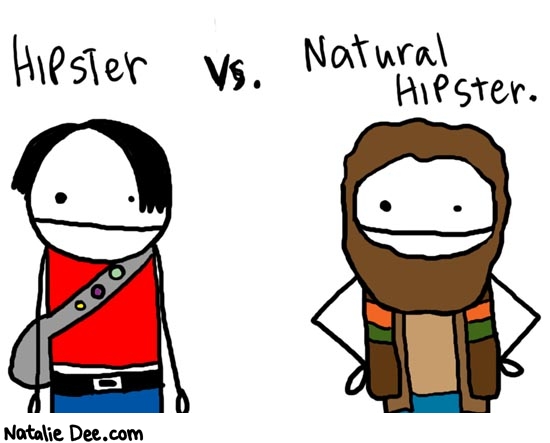 Permit me a bit of a rant. I can't stand hipsters. I feel like they're infecting all the places that I like to go where I think I'll be able to escape the faddism of general pop culture and all the fakeness that comes out of it. But of course, this fungus has spread into so many spaces that it's killing me. I've been asked what I think a hipster is. Well, to me, it's someone who dresses very particularly to look like s/he isn't trying to achieve a particular look, which I guess isn't as rigid of a definition as the requisite uniforms of folks who actually commit to a genre.
And maybe that's the thing: hipsters are ultimately people who are so noncommittal, to anything and everything, that they shift from fad to fad, playing it off as if they are at the "edge" of the cool, while fucking up the vibe for the rest of us in our respective "just around the corner" spots. How do you chill in a spot where people are trying so conspicuously to seem like they're supposed to be there? Especially when the race factor comes into play, though a friend made the observation that the "people of color on stage to hipster ratio is like, 1 to 5." But still, there's this weird dynamic when you have people coming to events because it's alt.pop, and that means that it's either political, "ethnic," or in some other way underground.
These hipsters, the folks with the wardrobes carefully chosen and hair tossed just right to make them look disaffected, nonplussed, and casual, must either be massively networked to come out to shows and events in such brute force nowadays, or it's just that some events are clear magnets for their ilk. Wow. I just found this article, which much more succinctly sums up many of the elements of what I hate about hipsters. They are not counter-culture or post-mainstream. The piece actually makes it out well: they are the new mainstream, especially in urban spots like Brooklyn and San Fran. It's this commodification of "cool," or trying to be cool, that really annoys the shit out of me. I like people who go deep in things. I enjoy conversations with folks who are actually really into something, and have been with it for a while. There's a harmonic vibe I feel from that, and if the person is talking about fly-fishing but seems to love being able to share it, well, that's awesome, and I do my best to keep along.
But what do hipsters talk about? I mean, do they have much depth? And is what I feel true: that they're mainly just a bunch of well-off white kids trying to create a "bohemian" lifestyle without any of the passion, ideals, or at least "I don't give a fuck" attitude of past (and current) groups? I just don't get it. I love hanging out with true bohos. Because they just don't care about what everyone else is doing. It's sort of the East Village of the not-so-distant past, when you just felt more free to express and explore who you were, and you had this loose community of people who were doing the same thing, and finally didn't feel like freaks for liking stuff that was non-mainstream and out there. It wasn't a "Scene"... it was just a bunch of micro-scenes that people went in and out of, but it wasn't as faddy as hipster "culture" (I cringe at giving hipster tendencies any cultural significance). It's just weird. I mean, if you seem to eschew the mainstream, you should be thinking about capitalism and marketing and what elements of "cool" are being marketed to you and what you're just reinforcing with your actions.
But that level of consciousness is completely lacking in the hipsters I've come into contact with. It's epic narcissism, with white kids looking at themselves and thinking that they're creating some kind of new tribe of the cool. I don't see hipsters as being a real community, but I may be wrong. I mean, I think it's ultimately every dude for himself. And "I think I'm cooler than you." It's like high school all over again. But in this weird way where instead of just keeping away from the metal heads and the brown and black kids and saying "look how uncool," the popular clique is coming to our events, getting up in our spaces, and making that their playground as part of their coolness.
Hipsters seem like just another weird outgrowth of white privilege, fucking up the vibe in vibrant subcultures as they go, essentially asserting a right to be there and leave there with no respect for anything. Basically - anyone should feel free to step into a scene, but not just to be seen, know what I mean? And that's what annoys me more than anything. Just freakin' commit already. I guess their apolitical nature also bothers me - there's nothing less counter-culture than just sucking up to the materialism that's around us, and not having anything critical to add to the dialogue. I mean, at least the Marxists sitting in their coffee shops talking about the revolution are still engaging things in some way. Hipsters are just mold on the food that is our culture.
I almost feel like skipping the stuff I'd rather go to, which has become infested with hipsters at every turn, and just going to something so over the top that they wouldn't be caught dead there for fear of being branded uncool. I mean, isn't Genesis touring again? Or is Yanni around? Suddenly the hyper-commercialized becomes so anti-hip that it's hip?
Is that the game we have to play? Fuck it cousin, I'm just unplugging if this is how it's gonna go. I'll cook my own food to stay away from them in the cheap eats around town. I'll start my own band and play in my head for hours, safe from the hordes. I'll visit folks and skip consumer leisure culture all together. And when those mofos catch on that it's the next movement, I'm locking my door behind me.
Apr 1, 2007
I for India: On Lata, Leaving, Longing, and Losing Our History.
I recently had the very good fortune to see I for India - a family documentary that touches on the emmigrant experience of a particular family that settled in the U.K. If you can see this film, I highly recommend it. It's a very personal look through the eyes of the family itself, because they used the medium of film to keep in touch with the family they left behind in the United Kingdom. The loving arrangement of these fragments was made by the youngest of three daughters and interspersed with amusing and illuminating BBC and other clips, as well as present-day segments with the filmmaker's parents, the emigrants who straddled two worlds in their quest for a new life, and even tried to return to India.
I'm not going to go into the play-by-play on this one. Just check it out. However, there were a few scenes that really touched me. There's a scene that has the filmmaker's father in the present day, going through his morning routine (and at other times going through mundane, home-owner chores like property maintenance) with his headphones on. The filmmaker smartly takes us inside the 'phones, and gives us a blast of old school filmi music from the greats of Bollywood. I couldn't name the song, but I'd heard it countless times before while growing up, and as the images on the screen segued from a small town in the UK in the 21st Century to older 8mm film from India, I felt like I was traveling down the winding road of memories with him.
And it was at that point that I started to think about my parents, and by extension, many emigrants from India and Pakistan who left bright-eyed and ready to study or work in the 50s, 60s, and 70s. I don't know a lot about their stories beyond the touchstones ($8 in my pocket, going to Chinese markets to get Indian vegetables) that we always take for granted. But I do think that there are some things that lie just beneath the surface about their big trip out here, into the unknown and away from their loved ones and the reassuring feeling of belonging just because you look like everyone else.
It's nothing like what immigrants to urban areas in the UK and the USA face now. Even though the earlier generation was well-educated and/or relatively affluent, I imagine that the predominantly bachelor population had a bit of a shock having to do many of the household activities for themselves. They didn't have the option of going out for food and conveniences from home that most H1-Bs take for granted now, and had to either cook, or adapt to the new environment (with many bringing a less than climactic end to the countless generations who preceded them without taking drink, cigarette, or meat).
Nor did they have the regular communication back home in the years predating low-cost and accessible internet (or even international long distance). Forget that, getting the news of back home was probably quite difficult in the UK and nearly impossible in the United States of the 50s and 60s. So they were on their own, and left to their own devices to survive, to make a home for themselves, and find some comfort in what was likely a cold place. Imagining that time, and thinking of how much was changing in the United States, especially with Kennedy's election, his assassination, the war in Viet Nam, and the growing importance of political protest in the culture of the time, I just wonder what it was like for that generation of people who came to the U.S. to study or to work. What was it like for folks who came from inherently conservative backgrounds to be in the United States at the time when it was arguably at it's most liberal? When revolution was actually something more than the rhetorical exercise its become in the States. Many of my friends speak of the 60s and even early 70s as the time they wish they were around, and active, because of how many things were coming up at that time, and how much (at least in our looking back at their history) it seems like people were actually engaged and willing to be more engaged. But it seems that many of us forget that we likely know folks who were here during all of it. Our parents, our uncles and aunties, a family who we've been in touch with through our many informal desi networks. But have we ever asked them of their impressions, when Watts and other urban centers were burning... when the 4 students were shot at Kent State... when Fred Hampton was killed by the FBI? Or do we fear that nothing beyond the big assassinations really registered?
Anyway, aside from the context in which they came, they were probably met with curiosity in the U.S. (or downright racism), and I can't even imagine the range of reactions in the UK where the scar from the colonial "umbilical cord" was still fresh. Still, as curiosities, they were probably spared the virulent anti-immigrant rhetoric that bleeds into most mainstream media in the present day. But without their own media outlets, the earlier wave of desi immigrants missed out on more than just the news: they also missed out on music and the simple comfort of turning on the radio and hearing songs that would remind them of growing up, of their parents, of home. But for whatever reason, and in whatever way, their connection to that music is incredible. Songs that they haven't heard in decades come flooding back when happen upon them, and their memory of when they first heard the song, or when they first saw the movie, is often impeccable. Somehow, the ability to recall the year of release seems to be very prevalent with a particular generation, and it's not limited to just the men - the aunties can bring it too.
Perhaps their separation from their homes and the music that enveloped them through much of their formative years (whether consciously or not), and the shock of arrival created a more developed connection with that music. But is that explanation sufficient?
When I think of my family members and uncles and aunties I know from India, and their depth of recognition of popular songs from Hindi films, and the emotional ties they have to that music rivals anything I know from my friends or myself. The music and love of the songs from that particular time (40s, 50s, 60s) is not a casual exercise for many of these folks, even though they did not own much of the music while growing up. It was radio, maybe more than the movies themselves, that soldered the songs to their memories, creating a link that has stayed with them through the great journey over the ocean and into America.
And the amount of music that they know off the top of their heads, and the connection between those songs, their memories, and who they are is astounding. For a long time, as an American/British popular music enthusiast, I scoffed at the relative paucity of music in India that was independent of the film industry. The link between the movies and the music, though, is making more sense to me, especially in the context of immigrants who are removed from the lives and worlds that they remember. While folks listen to songs/music many times, especially when linked to their emotions or memories, there's something more profound about the way that songs from Indian films end up having both a very personal connection for our folks, and also a visual element because of the films in which they were housed. It's difficult to separate the soaring duets by the famous singers from the actors/actresses who were likely in mind when the songs were conceived for the films in which they appeared. Take the interplay between emotional weight of the song from within the film, and then the emotional pull of that song within the listener's own life, and suddenly, you have emotional content that's far more potent than most pop music in other contexts. I guess the best analogue we may have is musical theater in the United States, for the folks who have the privilege of seeing really good shows and being affected by them - Rent is the obvious choice for me, but I have similar feelings for songs from Les Miserables, Sunday in the Park with George, and a few others. It's the combined effect of the music, the lyrics, the delivery, and the context. And getting context beyond the song itself is helpful to bond your emotions to those songs.
I remember going through my Dad's records while growing up, and just passing right by all the desi records to get to a Muppets 45 that we had, or later on, to discover the copy of Abbey Road that he'd bought, which now hangs on my sister's apartment wall. But I went back home recently and dug out the records that Mom had stored carefully, even though we hadn't had a working record player in the house for well over 15 years. I was amazed at what was there - more than just for the retro-cool of having Bollywood paraphernalia that didn't reek of the new schmalzy palette of the 21st Century, but because these records represented, for folks who were pretty modest in what they bought and kept, some kind of connection to home, to belonging, and perhaps even to their childhoods and adolescent years. I was suddenly filled with more regret that I didn't take the chance to go through these records and garner some of their stories when I had the chance.
Maybe some of the 45s actually came with my Dad from India when he first came here in the early sixties to study, though given how little money he had, that's pretty unlikely. Maybe they came with his brother, who he sponsored in the early seventies. Some of the 45s are in thin plastic sleeves that have a record store's name printed on them - a store from Bombay. Maybe some of the records were part of some prized collection that he took care of when he studied in Bombay. But that's incredibly unlikely as well, because he wouldn't have had a record player in India.
But sadly, the possibilities of where these records were from, and how they fit into the puzzle of my father's life in India and in the United States are not comforting to me. They are pieces of a relationship that I didn't put together quickly enough, when the time was in front of me. And I don't want to create fiction about something that is so hardwired into who I am. I want to collect and understand where these things fit in the past. I want to recreate what really happened. I want to see my father eye-to-eye through the few things that he left behind of who he was.
Ignoring our own histories in the effort to emphasize the injustices felt by newer economic migrants doesn't really help them. It just makes the middle class activist more likely to ignore stories of early immigration, acculturation, and resistance that don't fit the mold of "the most oppressed" group within the community or direct action or organizing. The motives for their resistance to discrimination and misunderstanding may not comport cleanly with our goals for critical analysis and desire for a break from the capitalism that brought them here to begin with. Their "making it" (economic assimilation, if not cultural) after initial difficulties may seem to argue against the whole project of discussing their history to begin with.
But denying their history or its personal import makes us somewhat rootless. Rootless in way that is unlike those people in poor communities with whom we want so much to identify, to work with and on behalf of (for non-organizers). We deny these stories from within our own families because we perceive that the minor injustices and difficulties that we think our parents faced register as less immediate, less pressing than what people are dealing with now. But I'd argue that we need to ask these questions. We need to document these stories, if not for some larger movement, then at least for our personal histories and to pay the proper tribute to our parents who made it through cultural upheaval in a way that few of us will ever experience. So even when we're talking about middle class privilege, and while we keep their experiences within the broader context of the different waves of immigration and the difficulty that poor and uneducated immigrants have in this American society, we should keep in mind that the stories of our parents are still interesting, affecting, and part of the mosaic of our communities in this country.
And I think that more than anything, I for India really recognized this, without overemphasizing their struggle in the UK or anything else. It was clearly a labor of love to her parents, and it made me think of how much time I've lost without asking some of these questions. Some of which I will never get to ask.
Feb 20, 2007
Postage Stamps and Identity.
 So I was chillin' on the US Postal Service website (don't ask), and I decided to see what stamps were on their way this year. I've often said that the fine art of letter-writing is dying out, and with my desire to try to keep it going, I've been fascinated by stamps. Whenever I have to head out to the post office, I end up asking what stamps they have in stock, and usually end up getting some. I hate the U.S. flag stamp because it seems dull and uninteresting, but it's the only stamp that comes in a roll of 100, so I end up getting a mix everytime.
The Jim Henson stamps were a trip. I don't think that I saved any of these. But I have a sheet of the Malcolm X stamps from when they were released - I distinctly remember Chuck D's lyrics going through my head "most of my heroes don't appear on no stamps." He said he had to change that tune with the issuance of the iconic Malcolm stamp (though an argument has been made that images of Malcolm and Che that have been emblazoned on everything from shirts to beer mugs kind of defeat the core of their message and feed right into the ever churning engine of capitalism. Rolling in their graves, I tell you.
Anyway - so this year, amidst the ubiquitous "Love" and Disney designs, they're actually  releasing a stamp to commemorate the 60th anniversary of Mendez v. Westminster, a case in which a group of Latino parents challenged segregation on the basis of national origin. I am so impressed by the Postal Service - the civil rights commemorative stamps were amazing, and this one just seems like a great one to capture a piece of American history that isn't quite as known as Brown v. The Board of Education or other iconic cases in American legal history.

I think it's interesting how people see the inclusion of cultural and other icons on postage stamps as a part of the formula of "making it" in the United States. I know that the push for Diwali stamps (probably a response to the beautiful Eid stamp that the Postal Service has issued for a number of years) is representative of that (and I guess it's definitely cooler than the suspension of alternate side of the street parking).
But still, this quest to be recognized seems to be the theme for the mainstream members of any community that identifies itself as different in the United States. I've been thinking more about the concept of identity and re/pro/claiming such a thing because of a seminar that I'm taking which looks at the lenses of identity in the United States and the way that the law and the legal system have enforced and also turned notions of identity on its head over the centuries. But one of the central questions in class discussion has been whether the identities that we hold on to so dearly are truly important or useful.
One of the articles I just finished reading (The Subject of True Feeling, by Lauren Berlant) posits that a person's identification with a group as a reaction/claiming of collective pain will only go so far, and that the victimization and focus on pain/reparations inherent in organizing a politicized identity in such a fashion can seldom be transcended. I think that the author is questioning the casting of self as victim, and finding solace, comfort, and even community in similarly affected people, effectively centering upon pain as the primary stimulus for self-activation/politicization.
Some of this is relevant here - are we truly caught in an endless cycle of oppressors and the oppressed, in which the relatively calm eras reveal a push for equality and reparations for past wrongs, which forge the most lasting identities of that particular time? And are our assertions of self, and of community, merely reactive, perpetuating an understanding of ourselves that only revolves around that victimization? And is this why, while some white, mainstream folks feel surrounded and beleaguered by the "multicultural throngs" seeking a piece of their pie,
most don't really feel the need to confront issues of identity as often or as intensely as visible and other minorities. Though I guess the White Studies programs and white-only scholarships may call even that premise into question.
Anyway - back to the stamps. Why is it that communities make so much of these little "gimmes" - specifically related to recognition and inclusion in the constructed images of America? It's like some people are trying to photoshop themselves into the iconic snapshot of the "American dream/myth" that's rammed down our throats every day. But ultimately, is the goal of claiming and asserting our identity just so that the majority, or those in power, finally see us? Is that enough? Will we ever even the score?
Or is battling the giant for "separate" actually better than chasing the windmills of "equality"? So yeah, stamps are not just stamps, but still, this thing got out of hand and only touched a few surfaces, so let's see if we can revisit soon.

Feb 8, 2007
Which Caucus Should I Go To: Affirmative Identity, Passing, and Challenging Brownness
All my friends are Indians,
All my friends are brown and red.
-Soundgarden - "Spoonman"
Most of my friends are people of color. It's just the way things work out, I guess. At this point, law school has been good because at least I'm meeting cool white people women. But I have my most interesting conversations about race and identity with people who are double- or triple-marginalized. While questions of being "of color" + "woman", or "of color" + "queer" have come up in the literature and the movements of the past 40 years, there are very interesting issues that are still not addressed in many progressive spaces. More and more of the people I speak with are not as gung-ho about one identity or another, especially when the identity is race-based.
I don't have the same sense of ambivalence about categories, though I'm not particularly thrilled to be lumped into the 1.2 billion Indians from India either. For some of us, trying to stand out or cut away from the sameness of belonging to a group is important - I identify as who I am affirmatively, to stop the immediate sizing up, classification, and generalization that you get as "one of the same." As part of an outsider group in the United States, I feel more conscious of this insider/outsider dynamic, and much resent being relegated to that outsider status unless I conform to a particular vision of what "American" means. On the other end, I'm striving to be the outsider in my specific community, unhappy to be lumped with everyone else, and still hanging on to some ideal of American individualism (I guess). The dynamic is one that I create for myself - I could just go with the flow like most of drones.
However, that's not true for everyone. And as folks resist being boxed into one group or another, there's a natural instinct to want to belong, or at least to be able to choose where you belong. In the midst of all of this, for desis, and I guess most other groups, where do folks with diasporic roots fit in? For desis specifically, while the North America/UK/South Asia connections seem more and more fluid in this transnational age, large multi-generational populations in places like the Caribbean, Africa, Fiji, etc are not really part of the mix. Is the perceived cultural divide the issue? Is there a casual exclusion? Is this primarily a throwback to a pre-Technological Age, when the links between the diaspora and the sending lands were much more difficult to maintain?
One of my closest friends, C, and I talk about this question of belonging, of fitting in, as multiple-migrants and members of our particular micro-generation. As an Indo-Caribean she often feels on the margins, and while I'm sure she feels comfortable with that most of the time - it's still difficult to not have a bunch of people in the same space as you. And as someone whose ancestry is probably 100% of Indian origin, she doesn't have to confront issues of racial identification, though diasporic communities really push and pull at American constructs of race in a way far more sophisticated than most Americans know how to deal with. For example, 9 out of ten times, people probably peg her as "Indian," but that's only a race grouping, which deletes or ignores a rich cultural history of more than a hundred years of migration and survival in the Western Hemisphere.
C also resented being asked these questions by strangers - the "where are you from" question is an annoyance for me, but represents so much more for her because it feels like her place is questioned in different circles and spaces. Culture, nationality, ethnicity, and race are not synonymous, and American citizenship does nothing to address or reconcile any of these things. It doesn't help that most Americans are clueless about the patterns of migration, or even the whereabouts of many of the countries we mention. Trinidad and Bangladesh may as well be neighbors in the myopic world-view of typical Americans. That includes people of color, by the way. The education system doesn't do much to counter prevalent ignorance about the world around us.
***
Then I think about another close friend of mine, B, who has one parent from the subcontinent, and another parent from a different part of the non-Western world, and her experiences illuminate another part of this conundrum. For her, racial category and grouping sometimes seem to be imputed upon her by the person she's speaking with, which doesn't work well, given how clueless most people are about identity and respect. In the past, I think I imagined that I knew what it was like to be questioned in this way, but then I saw it in progress and realized that I'd only considered the tip of the iceberg.
We were at a reception together, speaking with someone who worked at an Asian American organization. So this woman says that she's been invited to join a working group that my friend B was a part of, because they need an "Asian" face. B immediately responded "I'm Asian." As an aside, I'm usually annoyed when East/Southeast Asians talk about "Asians" and forget that the political identity includes some South Asians still (though the number continues to dwindle, in my estimation). But get this - the woman actually contested her personal affirmation of group identity. I couldn't believe it - how clueless do you have to be? I tend to stay away from telling people what group they belong to, but if someone says "I am" - well, that should indicate to you what group the person identifies as belonging to.
So why do folks who are bi- or multi-racial, have to choose one group or another? And why do we take it upon ourselves to question people about where they are and how they align themselves? And it's just funny, because we seem to do that more than the white folk question the straggler folks of color who tag along and mimic their Abercrombie ways. I think white folk just assume that everyone wants to join their tribe, and if they don't make sport of you, let it slide. Why don't we just let it slide - if you're hanging with a group, and you're not a creepy -phile of some kind, why do we have to get all into questioning it all the time?
But thinking back, I don't think that this is rare at all, and I think that it is particularly difficult for people who don't fit the "phenotype" of the group that is excluding them. It's just interesting - because people write and talk about passing - especially in the context of being "white" or close enough to white to not be questioned as a member of a so-called minority group. But we don't talk about "passing" in the context of groups of color. And we've created little in-groups all over the place that exclude people who don't "fit" or can't pass with questions. If this is the way that we create community, then who needs it?
To be honest, some of these thoughts are prompted by a recent reading of White by Law: The Legal Construction of Race this week for a class. While I didn't follow all of his arguments, Lopez raised a few very interesting points about the conceptualization and investment in "White identity" for White Americans. It seems that while all the rest of us keep trying to become white, White folk don't really think about it much, or see it as a defining feature. Until they do, and actively deconstruct that identity of Whiteness (a positional construction related to "not being non-White" even in the early court rulings when it was a lot easier (though they kept changing their mind) to identify who wasn't white than who was), we're not going to see a truly equitable society.
By this argument, is there a concept of "Brownness" that we should be exposing, exploring, and expunging from progressive and radical thinkings about community? Are we sticking ourselves into boxes which, though of our own naming, are still arbitrary boxes? Insider and outsider, belonging and not belonging... are we, in effect, writing another master narrative that marginalizes folks who don't fit the lowest common denominator of classification (or commonalities that we can rally around as a function of building an identity on something less than radical politics)?
I mean, I don't know how to bhangra: does that make me less passionate about being brown, and asserting a positive desi identity in the states? We don't speak Hindi/Urdu - does that make us less committed or genuine? And if I can identify the edges past which my marginalization begins, what about folks simply do not fit into the pre-packaged identity boxes? Are they to be double-marginalized - from the mainstream "whiteness/blackness" discussion, as well as this gradual coalescence of some concept of "brownness"?
Oct 31, 2006
American Halloween
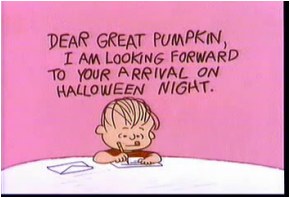 It's Halloween, and the kids are out all over the country. At least, in middle class suburbia, where the houses aren't too far from one another, and people still have some limited degree of trust for the person next-door, although it's hard to reconcile with all the nightmares of moral and psychological depravity that are hidden just behind some of the doors... after all, aren't most serial killers lurking there? And isn't drug use rampant behind door number two? And can you even trust the kids when you know that one of them may be plotting to take to the school in a final Rambo-like blaze of glory?
Anyway, when I was growing up in a small suburban town, Halloween was a pretty big deal. I didn't really get into it the same way as others - my costumes, when I had them, were store-bought and simple. But the candy was a big draw, as was the effort and wish to cover as much ground as I possibly could, and the inevitable fear of going to the "wrong" streets, where adolescents with eggs, shaving cream, and toilet paper made go at one another, the neighbor's car, and everything else. I remember walking home from school the next day, taking specific paths that would take me through the war-torn areas (there was at least one street whose name was synonymous with battles in the lore of my growing up), just so I could survey the damage.
I also remember taking my sister around trick-or-treating when I was older. She wasn't much of a sweet tooth, and was pretty timid while young, so she would dutifully give me most of the candy at the end of the night. But she enjoyed going out. But somehow, I also remember walking with her, and a pair of scissors in my pocket, in the hope that I'd be able to cut a hole in some unsuspecting kid's bag. Ah, the memories. I even remember some of the houses where we'd get the most loot (when I was growing up - there weren't as many kids around the quiet blocks, so people were fairly generous).
Later, I would spend a number of Halloweens in my house with the lights turned off and garden hose primed and ready in case anyone made the unfortunate mistake of targeting my house for a shelling. I never had to use it, happily, but I would have. The thing about Halloween, though, is that even though I didn't have a particularly good one any year that I can remember, we had our small customs and rituals that our family came up with, like the "traditional" meal of frozen ravioli that my mom would have ready for us upon our return. Somehow, we turned Halloween into a small holiday that was just about our little family, extended clan excluded.
***
Now, living in the city, Halloween seemed like less of a staple autumn activity for the kids. I'm sure there are some things that folks do at home or in school, but with kids' safety in mind, I wonder if they go around much at all. It's sad, really - because in my mind, it was one of the few times that kids are encouraged to step out of the closely guarded world in which they live, where even a neighbor is a stranger with whom you should not speak. Kids finally have the ability to peer into their neighbors' home, if even for a brief second. To know a little of what they normally don't get to see.
And I guess that's what makes Halloween such an interesting celebration for the United States, where personal privacy and the right to be left alone, and the prevailing concept is that "every man's home is his castle" (and he'll take great pains to build the moats and barriers he needs to keep everyone else out). For a few brief hours during this one night, it feels like kids are able to satisfy some of their curiosity, and some communities, at least, feel a little bit closer as many participate in the effort for the benefit of those children.
But what Americans who don't travel will likely not realize is that many places around the world are like that normally - where though they don't have much, the boundary of experience and contact extends for the kids beyond the four walls of their family's dwelling. And it's okay to admonish the neighbor's kid once in a while, because we're in this together, and the kids benefit from the collective knowledge and caring of the community. America, or at least white sub/urban America, has lost this element of community life. And while giving candy to kids for doing a few parlor tricks is not really reaching back into that tradition, it's an interesting throwback, when viewed through this perspective.
I wonder how immigrant families engage with this tradition now - I mean, my parents had their own feelings about it (Mom loves it - she wanted to give $1 per kid this year, to which I replied "you're going to see the same pirates again and again!"), but I know that some folks just don't want to deal with the hassle. I mean, what if the kids looked at them and said "and what are *you* supposed to be?"
***
Anyway, my favorite Halloween story has to be about a desi friend of mine who grew up in a small town in the MidWest. As a little boy, his parents dressed him up as "Man from India" for Halloween, wearing some of the clothes he had around as his outfit. That was strange enough for the neighbors, I guess.
Sep 26, 2006
Michelle Malkin's New Angle.

I just found this while trying to get caught up on the Clinton interview that is apparently big news. So I end up first seeing that Ann Coulter called Clinton gay at some point, which was mildly amusing, and right down the track from Coulter, trying desperately to cash in on her cache, I find Michelle Malkin once again.
I have to admit, I was once quite upset with Malkin for her commentary, but as I started to listen to it more closely, I realized that she really doesn't have strong analytical skills, and fits more in the vein of smear journalists from the past than a legitimate conservative threat. I think of Dinesh D'Souza as more of a threat, because his arguments have been reaching a more elite base, and have the potential, at least, to affect people of influence. Malkin feels more like a pop culture diva riding out her novelty as a neo-con, but not really bringing anything new to the table. Basically, she's a journalist who gets more play because Fox News picked her up as a political analyst.
Though this segment of Hardball made the rounds when the John Kerry swiftboat attacks were causing waves in the presidential campaign of 2004, I wasn't particularly pleased with it. It felt like Chris Mathews was beating up on a woman, and a woman of color at that, and it seemed quite unfair, and almost violent. I was offended for Malkin, even though what she was saying seemed off base. If she were a white man, she would at least have been given the respect to finish a few sentences before being proclaimed ridiculous. I don't know - I don't watch Hardball, but that was my feeling, and with whatever animus I feel towards Malkin (she's taken aim at quite a few folks that I know), I couldn't cheer that display on.
However, I just found out that she has some new venture to "balance" the video clips that are out there with her bugging out on the O'Reilly Factor, or wherever else. And I found this particular post, from last week, to be quite interesting. She's positing that liberals have hurled all kinds of race-based insults her way, and in the direction of other conservatives of color (cheers, Michelle, for moving forward in your lingo). She is asserting victim status (something that she's done before, but never to this degree) to call out the liberal establishment as racist and uniquely bigoted. It's interesting - because I feel that she has definitely gone through some image consulting - she's more confident, less obviously crazy, and possibly a better messenger for the "Democrats are biased" line than a lot of other folks in the GOP.
But I guess I would say that she should be more of a purist. After all - the Dems and the GOP aren't very far apart from one another, and it would be pretty hard to say that the Republicans really have a better image than the Dems in this issue. They just have Karl Rove, who's a bit smarter and ballsier in his ability to put together smear campaigns. But the point is - they both suck at true integration of their parties, and there's a lot of bias that remains just under the surface (if it even stays that far under, right Mr. Allen?). The GOP are well-served by the round of visible, strong candidates like Steele in MD and Blackwell in OH. They are definitely starting to show that the party isn't 100% monochromatic. But I guess my interest in her points lies in the question of whether there will ever be a point at which the Dems start to look at themselves and realize that they have to change as well. That they can't continue to just play business as usual, taking the default votes of communities of color and immigrant communities as the lesser (by little) of two evils, while just playing lip service to our real issues until their backs are against the wall and something has to be compromised in the chamber of white men (with some women and minorities thrown in for the good ol' PC/media thing) called Congress.
While the fact that politicians of color often suffer from the exaggerated expectations of co-ethnics who hope they can make something change for their communities is often spoken about (releasing those politicians from any responsibility and letting them just go with the machine and focus on building their individual careers), what about white men protecting their own? It doesn't matter whether they are Dems or Repubs... they have another representation beyond their states, their districts, and their corporate backers: they have a race that looks to them as the great hope, the circled wagons on yonder prairie trail, because the wild, wild west is coming back to get them. And while the natives regain their strength, the new pioneers are not white. But wherein lies the power, therein lies the future. And there's not been any significant, nor proportional shift in power from the white majority to the other peoples of America.
So while I could talk about Malkin's new attitude, new look, and new approach (well - new to me), I'm just curious about how we're going to get anywhere in this place as peoples who love elements of this nation, but realize that its been built in blood, and that its entire foundation depends on a particular worldview: militarism, and know-nothingness. There is no party of ideas anymore. And while Jefferson and his brethren were slave-owners, aristocrats, and white men, they were also thinkers who battled in great ideas that mature even now, more than 200 years after they explored them in the founding of this system. Our great thinkers now remain entrenched in garrisons that become more distant and more removed with each passing year... the ivory towers and halls of the academy. Our intellectuals and rebels would leave the United States as ex-patriates, writing, thinking, and living a different American reality overseas. But now - they distance themselves in theory, or in esoteric research that isn't current or relevant.
Does Malkin have a point with her "only comes from the left" angle? Well, the right doesn't care about left-leaning people of color - it's also just assumed that's where we'll all be until very recently. Plus, the outspoken folks of color in either party are countable on one hand, and most folks who are conservative don't want to be known for their group/race/ethnic affiliations because they believe in the Horatio Algers myth of the self-made man, and in individual identity at the cost of group identity. Hey - hurling the "sell-out" thing at Malkin is easy. Look, I don't know her personal story, but she's obviously trying to make a living, and she's using the intersection of gender/race that she has as a marketing tool. She's benefiting from the novelty of race in her particular rhetoric niche, but as of tonight, her post about race-baiting had only 40 views, compared to 5,000 for the Hardball segment. So... she may have to think about podcasting (she may be doing that, too).
Michelle - I hope you find some peace somehow. You don't seem happy. Pinay sister (I think), we'd welcome you to the fold again, with a little work maybe you'd even have some pride in the rich history of resistance to authoritarianism and racism that people of color, of whom you seem to count yourself a member, have waged in this country for more than 500 years. Join us. We're more fun, and at least within the more hip circles of color, we won't exoticize you, either. But maybe you like that sort of thing.
May 30, 2006
Americans are just that stupid.
This is depressing. [thanks s.plant]
And the thing of it that drives me even more crazy is that there is some kind of twisted pride in being so closed off from the rest of the world as not to know anything about it. This nation is filled with protectionists, isolationists, and ethnocentrists who aren't any of these things by conscious choice, but pretty much by default, either because their brains have been so addled by caffeine and mass media that they don't know any better (or can't see beyond the immediacy of the quick fix in entertainment or education) or because jingo-nationalism has wiped out any semblance of sentient thought and curiosity about this world around us.
As I've written before, it will be a rude awakening for Americans when our nation falls further from the luxury of its post-Cold War position in the world. The deterioration of sensible trade relationships, the decimation of light manufacturing, the politicization of scientific and engineering innovation, the war on the poor, the ongoing schism of immigration policy, the frenzied and slow-headed dependency on barreled oil, and the apathy concerning engagement with the world's states as equals through the U.N. are only some of the short-sighted mistakes of this and previous governments. The status quo is gone, but Americans are too fat and too slow to adapt. Europeans have adopted to an almost entirely new way of working together, in a short 15 years - who would have thought that there would be a unifying currency in much of Western Europe, or that the U.K. and the "real" chocolate makers would be able to get through their mutual disdain for one another? But it's happening. And America's dependence on foreign labor, fuel, ideas, credit and loans will make it more necessary than ever for the U.S. to continue playing this game of loud bull in the Mikasa store for the sake of its citizenry, while dealing away their rights and the nation's future behind closed doors and executive agreements with other heads of state.
How long before the truly powerful nations in the world stop allowing the U.S. to whine and bully its way through diplomatic relationships? What if they see the U.S. as a rogue nation, with just a little too much power to be stomped on like it stomps other nations? It's a sad joke, really, when Americans wave their flag (or disgrace it by wearing it as a bandana, a hat, or underwear) and boast that they don't need to know anything about the rest of the world. What happens when Americans have to go abroad for better jobs? Will they be able to adapt to new and hostile environments as well as the immigrants who come here? Will they throw fits the way they do as tourists with currently powerful dollars to wave in the face of protest? Will they be able to navigate systems and challenges in languages that they have scorned or forsworn because they pigheadedly refused to learn any of the other tongues of the world (but rather held onto a colonizer's language, regardless of their own Swedish, Italian, Irish, German, Welsh, Polish, Russian, or other roots).
Multilingualism is a rich possibility in the United States that is stopped at the gates by the culture police, so afraid - sensing that we are on some imagined razor's edge between an "American culture" and many pockets of disunity. We could know about the world than others in the world, simply because the U.S. has members of most of the world's community here, but rather than tap into that rich reserve for the sake of knowledge and wonder, the government taps "specialists" from these communities for C.I.A. and F.B.I. initiatives of spying and surveillance, and otherwise, the communities are expected to whitewash their culture and just disappear in this amorphous, boring, non-ethnic "American" identity that is manufactured and imagined. American culture of this kind is a giant, amorphous mass-delusion. New York and Little Rock, Arkansas are not geographically, culturally, economically, or even linguistically connected. It's just a matter of convenience that this thing called America is even 1 nation under anything at this point.
Anyway - enough of this rant.
May 4, 2006
Study: Geography Greek to young Americans
WASHINGTON (CNN) -- After more than three years of combat and nearly 2,400 U.S. military deaths in Iraq, nearly two-thirds of Americans aged 18 to 24 still cannot find Iraq on a map, a study released Tuesday showed.
The study found that less than six months after Hurricane Katrina devastated New Orleans and the Gulf Coast, 33 percent could not point out Louisiana on a U.S. map.
The National Geographic-Roper Public Affairs 2006 Geographic Literacy Study paints a dismal picture of the geographic knowledge of the most recent graduates of the U.S. education system.
"Taken together, these results suggest that young people in the United States ... are unprepared for an increasingly global future," said the study's final report.
"Far too many lack even the most basic skills for navigating the international economy or understanding the relationships among people and places that provide critical context for world events."
The study, which surveyed 510 young Americans from December 17 to January 20, showed that 88 percent of those questioned could not find Afghanistan on a map of Asia despite widespread coverage of the U.S.-led overthrow of the Taliban in 2001 and the political rebirth of the country.
In the Middle East, 63 percent could not find Iraq or Saudi Arabia on a map, and 75 percent could not point out Iran or Israel. Forty-four percent couldn't find any one of those four countries.
Inside the United States, "half or fewer of young men and women 18-24 can identify the states of New York or Ohio on a map [50 percent and 43 percent, respectively]," the study said.
On the positive side, the study noted, seven in 10 young Americans correctly located China on a map, even though they had a number of misconceptions about that country. Forty-five percent said China's population is only twice that of the United States. It's actually four times larger than the U.S. population.
When the poll was conducted in 2002, "Americans scored second to last on overall geographic knowledge, trailing Canada, France, Germany, Great Britain, Italy, Japan and Sweden," the report said.
The release of the 2006 study coincides with the launch of the National Geographic-led campaign called "My Wonderful World." A statement on the program said it was designed to "inspire parents and educators to give their kids the power of global knowledge."
Read More......
May 16, 2006
Internet Friends; Waving the Star-Spanglish Banner
It is just so fascinating how the internet allows us to form these odd and unique “relationships” with people that are based solely on information sharing in lieu of any other personal contact in the past, present, or as is likely in this case, the future. I’ve spoken with one friend and fellow blog-writer about “internet friends” and the danger of meeting some of these people in person. I don’t really have (m)any internet-only friends, although I do have one friend that I can think of that started as a “real” friend, and with whom I have had a strong correspondence friendship over the years through AIM, mostly. When I think about it - I guess in her case it’s the most natural thing, but it’s funny how such an ephemeral medium (who really reads chat transcripts from a couple of years ago anyway?) can take the place of something as terrestrial as pen-and-paper letters. Which I’m committed to getting back to this summer.
Anyway - so the person who sends out the forwards sent me the article below, which I’d missed along the way. I think the author make some good points, and I’m more interested in just the idea of a national anthem belonging in a “national language.” I think that it’s incredibly powerful that people are willing to sing the “Star-Spangled Banner,” a song that I feel is incredibly out-of-date, and as I’ve heard many people say, shouldn’t be the national anthem anyway. It’s about war, and though it’s true in a way that the red-blooded Amerikans may not want to admit that this country was founded and remains grounded on the battlefield, I don’t feel any connection to it. I’d rather that “America the Beautiful” or “This Land is Your Land,“ songs that celebrate the natural beauty of the land itself, or what’s left of it, as well as the spirit of America at its best - live and let live.
I wanted to write about how English is an ugly language, but it’s my true first language, and all that I really know, thanks to an American education system that values anything above understanding more of the world and America’s place as a peer among nations rather than a bully in a small playground. It is only because of economic strength that English continues to be important, and it may not fall from that position now, but what if China and other foreign investors decide to pull the plug on their financing of America’s stupid and irresponsible spend-now-save-never economy? If that happens, and America slides into a deeper recession, the successful erosion of New Deal era social net programs coupled with the inability of Americans to adjust to global change will make the population vulnerable and shit-out-of-luck if English falls as the business language of choice.
Regardless, it’s just stupid - people want to sing a song about the nation, and celebrate the hope and promise of America, and all the idiots can focus on is that they choose Spanish. The song could use a more fluid language to iron out its own spikiness anyway, but that’s not the final point in this mess, is it? Can we just say ”it sounds *better* in Spanish!“
Would that work?
WASHINGTON POST
Sunday, May 7, 2006
Waving the Star-Spanglish Banner
By Ariel Dorfman
The airing last week on Hispanic radio stations of "Nuestro Himno," a Spanish-language adaptation of the American national anthem, has been greeted with an unprecedented and, indeed, astonishing wave of denunciations all over the United States.
Talk show hosts and academics have indignantly called this loving rendition by a group of Latino artists a desecration of a national symbol. Senators -- both the conservative Lamar Alexander and the liberal Edward M. Kennedy -- have declared that "The Star-Spangled Banner" should be sung exclusively in English. And they have been joined by President Bush, who has used the occasion to remind the citizenry that "one of the important things here is, when we debate this issue, that we not lose our national soul."
The national soul? In danger of being lost? Because Haitian American singer Wyclef Jean and Cuban American rapper Pitbull are crooning " a la luz de la aurora" instead of "by the dawn's early light"? Would such an outcry have erupted over a Navajo version of the national anthem? Or if the words had been rendered into Basque or Farsi or Inuit? Would anybody have cared if some nostalgic band had decided to recover and record the legendary 1860s translations of the song into Yiddish or Latin?
Of course not.
There's a reason for the current uproar. The streets of America are not filled with marching Eskimos or Basque patriots, and certainly not with scholars ardently shouting against discrimination in the lost language of Virgil. What resonated in Los Angeles and Atlanta, Chicago and New York, as recently as last Monday were the voices of hundreds of thousands of protesters demanding that the estimated 12 million illegal immigrants in the United States be granted amnesty. And the language in which they were chanting was the same sacrilegious Spanish of "Nuestro Himno."
No wonder the Spanish version of the national anthem caused such alarm: It was a reminder that, along with their swarthy and laboring bodies, those immigrants had smuggled into El Norte the extremely vivacious language of Miguel de Cervantes and Octavio Paz. They weren't coming here merely to work, bake bread, lay bricks, change diapers, wash dishes, pick strawberries, work, work, work; Dios mío , they might decide to speak! And not necessarily in English.
Although English is what most immigrant parents have always wanted for their children, what distinguishes these recent arrivals from earlier huddled masses is that they're not prepared to abandon la lengua materna, the mother tongue. Spanish is not going to fade away like Norwegian or Italian or German did during previous assimilative waves. It is not only whispered by the largest minority group in the United States, but is also being spoken and written and dreamed, right now, at this very moment, by hundreds of millions of men and women in the immense neighboring Latino South. Spanish is a language that has come to stay.
I believe this is why "Nuestro Himno" has been received with such trepidation. By infiltrating one of the safest symbols of U.S. national identity with Spanish syllables, this version of "The Star-Spangled Banner" has crossed a line. It has inadvertently announced something many Americans have dreaded for years: that their country is on its way to becoming a bilingual nation.
If I'm right about this, and America will sometime soon be articulating its identity in two languages, then the question looms: How will the citizens of the United States react to this monumental challenge?
One possibility, of course, is a nativist backlash, with more vigilante Minutemen swilling beer in the Arizona sun, more calls for deporting all illegal workers, more demands that an impenetrable wall be built against the foreign hordes, more attempts to dismantle bilingual education in U.S. schools.
But others may tell themselves that the United States has been built on diversity and tolerance and that, at a time when the national soul is indeed being tested, at a time when the democratic ideals at the heart of American identity are truly in danger of being sacrificed on the altar of false security, our better angels should welcome the wonders of Spanish to the struggle and the debate.
For those who are afraid and claim it can't be done and believe that the United States can only endure if it is monolingual, there's a simple answer. It comes in words that have been heard on the streets of America in recent days, sung and imagined by men and women who crossed deserts and risked everything to live the American dream. In words that the nation's founders and pioneers might have embraced, and that have now become part of the national vocabulary:
Sí, se puede.
Yes, it can be done.
adorfman@duke.edu
Ariel Dorfman, a Chilean American playwright, is a professor of literature at Duke University. His latest books are Other Septembers, Many Americas and Burning City, a novel written with his youngest son Joaquín.