

Grim happy new year, ya'll. It's been one piece of bad news after another, from the brutal murders that are still going on in the name of "security" and with the blessings of our government, in Gaza, to the brutal murder of a 22-year old black man by Oakland police. Let's hope for some real hope soon.
Meanwhile, I have been working to close unresolved issues that have plagued my history for the last 15 years. I started upon this path at some point late last year, just looking back after hitting the personal milestone of finishing school, and realizing that life has been good for me, but there have been these moments along the way when I just had abrupt changes: people breaking off friendships, work situations not working out, losing people in more permanent ways, and collaborations fizzling. I've not been scarred, but the natural impulse to wax nostalgic and/or wonder what the hell happened has always brought me back to these moments, whether consciously or not.
I've been thinking lately that while those moments did not stop me from moving forward, this feeling of unease that something was unresolved in the past makes it hard to fully be in the present or plan for the future. With other aspects of life feeling peaceful, including finally trying to work through some of my personal weaknesses that had affected my life partnership, my attention kind of fell on these things. And some of them are actually starting to resolve themselves, one by one. Nothing is perfect, but closure is the best we can hope for. And sometimes apologizing - or getting that apology you didn't realize you'd been missing for all those years - is all we need.
And each of these things, really, can propel us forward like a nitro pack on a drag car. Not to get all touchy-feely, but if you can make that call, or find that way to confront demons of the past, do it, and be done with it. I don't keep a list on me, but I feel like some things are getting scratched off whatever list I might have kept for unresolved or messy endings. And the best thing I can do is try to avoid adding things to that list.
Jan 10, 2009
Resolution.

Sep 11, 2008
Seven Years Have Passed.

Seven years have passed.
The elementary school near where I live broadcasts its morning announcements to the streets via a speaker or two on the outside. Today, they took a moment of silence for 30 seconds and I wonder "Is this what it was like in the decade immediately following Pearl Harbor or the Triangle Shirt Factory tragedy?" Do kids who only read or hear about recent tragedies through newly edited textbooks feel anything, or are they all just going through the motions like we tend to do in so many other circumstances?
Seven years have passed.
And what was once too immediate and present to speak about with anyone, has now become almost too distant and faded. I had a hard time dealing with what other people were feeling and experiencing, and hadn't really addressed or come to terms with my own feelings, and now I wonder if the time has passed. Is it time now to "move on"?
Seven years have passed.
I got a message yesterday from an old friend from whom I've grown a bit distant because of time and place. But we had worked together in communities affected by the aftermath for more than 2 years. And his mind returned to that place and time, even if he just said that he was checking in. Something remains.
It's odd to think about time before a date was reduced to a soundbite and the same video clips played over and over. I'm just as tired as anyone else, but the memories trigger something, and I'm forgetting what that innocence was. And I start to feel conflicted sometimes, because I have a better idea than many of what real loss in the wake of that loss was like, but it wasn't my own or even that of people who I knew personally. And seven years have passed.
Jul 23, 2008
Comfort in the Home Stretch
I am a more than casual listener of music. But it gets in the way sometimes, especially when I'm trying to learn a bunch of legal concepts for this exam.
At long last, and not a moment too soon, I've finally found the right sound to carry me through: Filmi songs from the 40s - 60s, featuring Lata and any partnering male (at this point, I'm listening to her with Mukesh). I don't understand Hindi, but that's the charm: these songs immediately speak to me of home - I can almost smell my mom's cooking, and I can hear her singing along. I know the melodies like old lullabies that you've heard a thousand times before. But I don't get lost in the words - I just hum along.
There's something about the way that these songs are hardwired into many of us: our parents because of the way the songs linked them to memories of home and gave them a lifeline in their new, immigrant lives (I touched on this once before) and us because we grew up with the songs playing all the time.
I feel like I should make a cup of tea and have some dhokla or something. All I need now is the rain.
Mar 16, 2008
Somewhere Back in Time Concert Review
I caught Maiden at the Meadowlands on Friday, and what can I say? First, it was the third time I've seen them, after the Brave New World tour, their stint on Ozzfest where they played the tightest 1.25 hour set I could imagine from their first four albums, and this one, where they stretched out a bit and celebrated the Live After Death DVD release (finally!) with a throwback to that period. This time out, they promised to play songs from the next few albums, and we were treated to the four songs from Powerslave that people knew, a couple of tracks from Somewhere in Time, and a golden 3 from Seventh Son (as well as a sing-along of "Fear of the Dark," the title track from the album that I've written about earlier).
What can I say? I got into Maiden after a good friend said "you found Guns 'n' Roses? You should listen to this" and handed me Somewhere in Time. So I don't go as far back as many of the other fans who can point to original pressings of Metal for Muthas and whatever, but I ate it up. Maiden was the first band I really obsessed over, and getting to know the back-catalog became a bit of an obsession. I settled on my favorite album (post-D'ianno, of course) to be Seventh Son for a long time, and it remains the one album I know I can put on at any time and just listen to straight through (though "Can I Play With Madness" grates on my nerves, to be honest). Anyway, as I've gone through many phases in music, and even in my interest in much heavier stuff now, Maiden remains for me, as I can imagine for a lot of other people, a touchstone, a reminder of a simpler time, and a consistent favorite.
Going to this show was particularly exciting because the only good live recordings of songs from Somewhere in Time and Seventh Son I had heard were from Maiden England, which I thought was phenomenal. I wished I had known about the band (and been able to get out of the house for concerts) during the Seventh Tour. But even just hearing a few of these songs live for my first time would be a real treat, so I was excited.
I'll just break down my realizations after the show briefly:
1) Large venue shows kind of suck. Too much money for tickets (and Ticketfucker is involved and sucking the marrow out of your bones as you pay), parking and getting out of the clusterfuck parking lot sucks, and you have to walk a long time to get back to your vehicle.
2) Concert shirts are damn expensive. I'm a bit old to still buy t-shirts and wear them (and my walls don't have space for this shit anymore), but come on: $45 for a t-shirt?! Now I see the "strategy" that Metallica is employing, since their shirts are now available at JC Penney (well, I saw a Ride the Lightning shirt there, next to something with Pac-Man on it, I think). My souvenirs from the show? A downgrade in my hearing ability and a postcard announcing new tour dates in June.
3) There are a lot of assholes who come to Maiden shows. They are too accessible, they have been around too long, and they are an easy name to drop to show your "creds." So there are a lot of dicks who comes to these shows. We almost torched some of them when they started tapping our vehicle to talk to us.
4) There aren't really surprises when you come to a Maiden show: the catalog is deep, the B-sides aren't as deep -- with all the coverst they do, you can enjoy the songs when you get them but who cares to hear that shit live -- but they don't really have the space for spontaneity, which is too bad, really. So while there are new songs on this set that we haven't heard live, it's not like they are suddenly pulling back and giving you "Flash of the Blade" or "Big 'Orra" or something. Or even a throwback to the old Smith/Murray dual guitar solo that they did during Somewhere in Time. After seeing some other acts a few times, like Springsteen, who has been around for longer than Maiden, and seeing how he pulls together set lists that are so different each night -- drawing from fan favorites that aren't singles to obscure b-sides, and not really catering to the lowest common denominator each time -- you feel like you can go to one Maiden show, and you know 75% of the songs you're going to get each time (give or take a few tracks from the new album, if there is one). So that was a bit of a downer, though I don't know what I was expecting. I guess I feel like if they have to go back to the first 4 albums for some of the standards, I'd rather hear "Flight of Icarus" or "Still Life" live, which I didn't catch when they did their first revival of the old stuff, than the 1 millionth replay of "Iron Maiden," "The Number of the Beast," or whatever else. Maybe it's just because I can tell that they are on the top of their game as musicians playing the material (they were amazing), and I want to see/hear more.
5) Adrian Smith could be in a harder band. He looks the part. Janick is ridiculous with his onstage presence, but it's endearing now. Dave Murray's leads were on fire. I would have killed for even a short detour on one of the songs though, to let the guitarists breath a little. A tight set is a wonderful thing, but it would have been so worth it to see them let loose a little bit more.
Anyway - I don't want to seem overly critical. It was a Maiden show, it was amazing, and I was so happy I went. I may not get to see them when they return to the area in June, because of the damn bar exam, but I'm glad I saw them here. Hearing "Wasted Years," "Moonchild," "The Clairvoyant," and a few other songs just made the night for me. I think I'll have to pull together my dream set-list for a 2 hour show, just to see how different it would be. Thankfully, they didn't play "Die With Your Boots On," or else those poseurs who got in our way when we were trying to leave might have ended up on the evening news.
UP THE IRONS!!!
Feb 3, 2008
Retro-Thrash Makes Me Nostalgic
With the advent and current fad of retro-thrash that I've been reading/hearing about a lot on Invisible Oranges, Aversion Online, and other reputable spaces, I've been curious about the phenomenon, but not had the time or exposure to hear a lot of the new stuff. More than that, the phenomenon has made me think about why thrash has been a favorite of mine in the various (and ever-increasing) genres and subgenres of metal.
What is it about thrash? I'm not going to go down this path for too long, because "retro-thrash" has made me go down memory lane and revisit a period of the music past the 1991 release of Metallica's Black Album - which I used to hold was the turning point for thrash, and the point at which I stepped away from metal for a while.
Anyway, I like thrash because of the aggression in the riffs, the just over the top nature of it (just past pop-accessible/mainstream power metal and hard rock), the way that it's not really unified in any way (where black, power, and death metal seem to have some theme/technique that binds them), the showmanship is focused on guitar leads and some riffage - not so much on the rhythm section (I didn't really even pay attention to what drums and bass were doing), and the vocals are all over the map. The funny thing is, they want you to be able to discern the lyrics... there's perhaps a bit of naiveté that they will change the minds of people listening. But think about the singing - from the highly idiosyncratic vocals in Vio-Lence, to more power metal type stuff with Forbidden, to almost a hardcore approach with the thrash bands that adopted that style. And where else could a singer like Joey Belladonna seem to fit on top of a band like Anthrax?
I like thrash because it is pretty uncomplicated - the complexity of death metal (I've been learning) is hard to dig into (especially for someone whose metal journey started with Maiden). I like the social consciousness of some of the lyrics, though you can only imagine there's a "top ten" list out there somewhere from which the lyricists choose their themes (racism? check, environmental warning? check, war?...). I like singing along with people whose voices aren't so technical/skills-based (usually) as power/heavy metal, and yet actually have the pop-sensibilities of verse-chorus-verse structure. And I'll still hold that a strong/solid Slayer lyric is much more aggressive and "dangerous" when you can blast it and the average Joe in the street knows that Araya is screaming "before you see the light, you must die!!!"
As an outsider embracing a music of outsiders and for outsiders (hipsters weren't around when I was coming up), being "close" enough to understanding for mainstream listeners to more clearly demarcate my difference, actually made a difference. I think death and black metal were just so out there at that time that they weren't considered sufficiently dangerous enough for me to let go of thrash. Really, it was the sing-alongs while barreling down small town roads in my buddy's car.
So I've been revisiting older, but not first generation, thrash lately. I got into the genre after the standard-bearing albums had been out for a while - it was catch up for me until Metallica's Black Album came out. The album's "accessibility" blew them up, screwed them up, yadda yadda yadda. The story is documented in their own, tragically funny Some Kind of Monster (a real treat for the Mustaine fans/haters out there, by the way). I'm not going to waste space on the album here - it was baaaaad - it just wasn't thrash (or, really, very revolutionary or new in any way. If I wanted to hear watered down Soundgarden, I'd just as well have waited for Audioslave). More than just the album itself, what I think it did was sound the death knell for American thrash. Albums by other groups after Metallica did so well tried to emulate the accessibility of their effort, or reacted to it. Many groups broke up soon afterwards, and grunge took off in the mainstream.
I have a personal story connected to (and that prompted) this little walk down thrash memory lane. I was turned off by Metallica but I distinctly remember going out during May of 1992, in the midst of my finals in college, to one of my favorite record stores downtown to pick up the day's new Maiden release: Fear of the Dark. I can't remember if I knew or just found out then that Testament's The Ritual came out at the same time, but I picked that up too.
Fear of the Dark struck me immediately because the cover (which I had on one of those large cardboard boxes they dispensed with soon after) featured the first non-Derek Riggs sleeve I'd seen for Maiden. I was shocked, and not happy. The music impressed me even less. But Maiden had lost their way with the preceding album, in 1990, which felt like a step backwards, a quick release, and a major disappointment after the masterful Seventh Son.... Because I was trying so hard to like Fear, I only gave Testament's The Ritual (blessed with a more interesting cover), a few cursory listens. I seemed to have some positive memory of Souls of Black - the 1990 release which is now my least favorite Testament album, going further to suggest that the decline of the metal I listened to actually pre-dated the Black Album because 1990 was a pretty bad year.
Anyway, because of my Souls of Black memory, I thought The Ritual was just not hard enough. It showed a stronger departure from Testament's trademark thrash sound - the highlights on this disk were Chuck Billy's ability to stretch out his voice and sing a bit more, and Alex Skolnick's lead breaks. Even Peterson's trademark outstanding riffage was not particularly interesting or memorable. This seemed like more of a hard rock/crossover kind of album. Now that I know Chuck Billy's roots as more of a rock singer, I can see where this gave him some space to spread out, and he does just that. It's hard to fault his vocal delivery - he really is one of the best. Listening to the album now, it's actually grown on me a little more, though I can't help but notice how boring the drumming is - something I only noticed after listening to more death metal.
Once I heard The Ritual and found out that Skolnick was leaving, I tuned out for about 10 years. I missed their resurgence with Low, the new direction of Demonic, and the full return to form in The Gathering. I only got a sense of how great they'd become when I listened to the outstanding Live at the Fillmore disk - where I heard Murphy shred, and the wonderful 3-song acoustic set at the American Indian Community House in NYC (if only I'd known!).
That I missed the original releases of the key thrash albums back in the mid eighties is one thing: I was pretty young. But missing new classics as they were released because of the Black Album fallout (and how too many groups thought it was a ticket to get away from struggling on the fringe), really sucks. Metallica killed a lot, and the new resurgence of metal (thrash, particularly, because death, which was just a footnote when I was coming up is the real veteran now) is at a good time, and I'm glad to actually be a part of it as it is going on.
Jan 26, 2008
Asian Americans and Palestine
Does Asian America care about what's happening in Palestine? Sometimes I wonder if folks even see how connected it is to this nation we strive to imagine (or thrive by collecting a paycheck on). More on that in a minute. But seeing the thousands of people streaming across the border from the besieged Gaza territories into Egypt really shook me - I wasn't paying attention to the sealing of the border and embargo that Israel had placed on the territory over the past weeks. People needed food and goods to survive: they were buying what they needed from across the border, not stealing.
I live in relative comfort, and am afforded the luxury to complain on these pages. But real people are struggling with real crisis, and sometimes it gets me how people are so selective about what they care about. A touchstone moment for me was a conversation I had with an activist and lawyer friend years ago who I respect for his commitment to civil political rights of Asian/immigrant communities here, in NYC. We were having some kind of conversation about recent events and I mentioned some things I'd heard about overseas in an Asian nation that doesn't get much play in the media (or didn't at that time). He said, both with some level of chagrin, but mainly with a "don't have the time" response that he really has no idea of what's happening around the world - he's too focused on the fight in front of him.
This isn't uncommon, but the moment is frozen in my memory because the date was Sept. 10, 2001, and the nation I was talking about was Afghanistan. It wasn't that I knew something was up - it was actually a conversation about the Taliban's destruction of the Buddhas of Bamyan earlier that year - but even at that time, his relatively sharp rebuke about not knowing/caring about world affairs struck me. Of course, it was only days later that the Taliban became a known and familiar group on the American landscape, but only after something happened here.
Of course, Americans of all kinds just tuning out of world dynamics isn't a new observation, and bringing it up here isn't a revelation. But I feel like folks should wake up and think about the interconnections, especially if they profess some kind of community kinship across the fragile coalition of Asian America and/or they say that they believe in justice. One of the biggest gaps in Asian American spaces and dynamics, aside from the very familiar "East/South/Southeast/Pacific Islander" tensions, is around questions of solidarity, especially related to the faith-based concerns for Asian Muslims and other non-Christians. I haven't read/seen much on this, and I don't have empirical data, but I want to put some things out there that I hope to get back to at some point.
I've mentioned before (I think, and if not, it's a pending post that I will definitely get to soon), that while the narrative of Asian American (and broader) cultural studies sometimes suggests that traditions and sharing around food are one of the ways that different communities build solidarity, there's often a gap for people who observe dietary restrictions. So where the whole "we all eat with chopsticks" or "rice is central" themes are nice, it makes it hard to break bread with APA compatriots when the bread has lard and there's pork or meat in every other dish.
Not understanding how a simple issue like poor menu planning can immediately alienate and make folks less open to collaboration when it excludes consideration of vegetarian and halal diets is a fundamental failing of a lot of pan-Asian American efforts. You want to think that the community and political stuff should take precedence, but I've heard time and again that when something so simple is completely not considered, people lose faith that there's any point in trying for the bigger issues. I've seen this change gradually in cities on the East Coast, perhaps because South Asians and others are still more active in pan-Asian spaces, but it's pretty terrible on the West coast and other places. If I'm going to end up at a "community" dinner where I can't order something, I might as well be part of the NRA.
The bigger picture here, though, is that there are feelings of solidarity and empathy that a lot of people within "Asian America" feel for people suffering under systems of oppression around the world, aside from their so-called homelands. I can't think of a situation more relevant to more people I know than Palestine. The extreme injustices perpetrated as part of the Israeli oppression and occupation, and the world community's acceptance of state actions that are wholly unacceptable in almost any other part of the world, angers many people. No one is condoning outright acts of violence by either side, but state actors have to be held in check by the world community. And beyond an observation of world politics, this really affects the local.
The human rights violations perpetrated by the Israeli government are well-documented and hard to contest. And many see the struggle of the Palestinian people (not the military or insurgency leaders - just the ordinary people) as emblematic of how the rights of certain people -- Arabs, Muslims, whomever else -- are disposable on the global stage. And that's one of the reasons that a lot of people who are not personally tied to Palestine feel so strongly about the plight of the Palestinian people: that so many people who claim to care about rights don't care about Palestinians means that there are some rights that the world community just doesn't care about. And for the last sixty years in Palestine, that's Arabs and/or Muslims. In Kashmir, that's Muslims and Hindus. In tribal lands around the world, that's indigenous peoples. In China, that's Tibetans, Buddhists, Christians. In Burma, it's ethnic minorities and freedom fighters. In Sudan, it's the African Muslims and Christians. And the list is ever long.
Though the conditions aren't as bad in the United States for many of us, seeing that people aren't incensed (or often, are clueless) about the direct ramifications and echoes of these world phenomena upon our states of Asian America reminds people of how a lot of AA leaders played a game of "not our problem' for state actions against Muslims and South Asians in the wake of 9/11.
On that tip, there are some Asian American leaders out there who either don't see why the Israel/Palestine question is relevant, or have actually bought into the idea that the Israeli state is justified in anything/everything that it does. I understand that it is scary for many mainstreamers to voice an open anti-Zionist position because the fringe have convinced the world that speaking out against anything to do with Zionism is anti-Jewish (is speaking out against "Manifest Destiny" in the U.S. anti-European/white, or anti-oppression?). I guess the intersections of faith and politics are hard to navigate, but the perpetrator and originator of the most egregious violence is a state actor preserving power by stoking flames of intolerance and hatred between people with so much in common. Our understanding of Theo-Political fascist states should not be shaped by Dubya's rants. Just look at Modi's Gujarat.
So I'm very unhappy with the way that a lot of people, especially those in positions where they purport to represent Asian America, don't ask critical questions and come up with a reasoned orientation to the situation. By being so out of touch, they continue to show us how they will not be able to hold together an effective, progressive Asian American coalition that recognizes and stands against oppression, regardless of whether it directly (or at least, obviously) affects their interests. It's time to hold them accountable.
Dec 21, 2007
A World Without Art.
I have spent the last two and a half years stuck in the timesuck that is law school, and while I see the tunnel's end, it isn't really lit up yet. I'm thankful to be back in school, but a quick accounting of what I've lost along the way makes it a less than fully rosy picture.
But what affects me more, and in a far deeper way, is how I have lost my connection to the arts. This has happened over a longer period time, maybe about 4-5 years, spanning from the dog days of the last full-time gig that I held down. In my first life after school, I spent a lot of time checking out performances, readings, and even some visual stuff. It's easy to overlook things in NY, even though it's all over the place, but I was fortunate enough to be in a setting where I had access and I was around artists.
Cut to more social service and policy work, and I didn't have as much exposure, but still took advantage when I could. There's something rejuvenating and pure about art, and engaging with people who want to talk about the (per)mutations of human experience, thought, culture, and political galaxies that intertwine with good work. To feel inspired, to feel challenged, to experience something that is, in most cases, ephemeral... momentary... unique in that moment. That's probably why I love performance. Though live music can fill that gap, but it's still a different experience than other performance, especially good theater and performance art.
I've dug deep into music as a refuge, but it is not a satisfactory replacement, no matter how much I love it. At least not recorded music. I've not been able to read much fiction for a long time, and I still feel that reading is too isolating - it doesn't feel like I'm experiencing something with people the same you feel with performance. The journey is generally inward, and I don't feel satiated or inspired by inwardness.
So I feel empty, in some critical, crucial way. There is a vibrant, creative, urgent world right outside of my viewpoint, and I have not dipped into it for any sustained time in years. And honestly, lawyers, law students, policy wonks - they are too literal, too limited, too linear. Their language is tightly wound around single meanings and objectives - their time too guarded by objectives (worthwhile or otherwise). Spontaneity is a "waste of time" rather than a tapping of the real lifestream that is meant to replenish our weariness with passion for the struggles and stories that make liberation more than just an academic exercise.
No press release nor policy brief ever moved me. No legal argument ever fundamentally changed my view of the world and my place in it. No conversation with a lawyer has ever really kept me guessing about which turn or angle it will take next, careening from random association to crystal clarity and connecting dots I didn't even know existed. I don't begrudge any lawyers this, because it's not their role, but I miss what I have lost.
Aug 19, 2007
Kill Your Television
I visited with the one friend who has always been like an older brother to me tonight. I think I've outgrown much of his advice, though I think he still likes to give it, and I don't protest too much. And we've traveled quite a few miles together.
But it's always a bit weird to meet up with friends whose lives aren't really moving that much from where they were a while ago. This friend is different from others that I have who really seem stuck - his life has changed a great deal - but the conversations still seem sort of the same.
I don't know - it's just weird for me to communicate with folks who don't really seem as interested in what's happening in my life, though he does ask about some elements of it. Is it because they're afraid to open up weird moments in the conversation (like something coming up about politics or that sort of things like it did with the uncles and aunties)? Whatever it is, it makes me have to drop in stuff about my own life all guerilla and shit, which is just not the democracy-in-dialogue I'm hoping for.
So the other thing I'm realizing is how much some people in my generation watch TV. We don't have cable - not because we're fundamentally opposed to it or anything, but because shelling out the dough isn't fun right now, and we've gone without for many years at this point so we're not going through withdrawal. But when so much of a conversation with a friend you haven't seen for a while is derived from quotes, plot summaries, and assorted punchlines from tv shows, it makes you wonder. Television has truly replaced religion as the opiate, and I don't know how to react when this is what has replaced real conversation. I missed the show, because I wanted to, so stop giving me the play-by-play! But I did interject with a smashing Boondocks reference.
Funny thing is, both this friend and another dear friend who seems somewhat desensitized to the world, gave me DVD sets of television programs as a gift recently. I'm actually touched to received gifts and at least the first one was so on the money that it's scary, but I'm surprised that they're thinking DVDs instead of music. Then again, with all the time I spend in front of my computer, maybe I have that glazed over look that is mistaken to be from the TV.
ironic thing is, I gave him a mix today with Forbidden's Hyponotized By the Rhythm. I wonder if the irony will strike him the same way. Excerpts below:
Channels changing, nothing changing
Re-deranging, warping reality
Turn it off, it will turn you on
It's the drug of our time
Mesmerizing
Living Dying
So on goes the picture denying
We watch hypnotized
Addicted to lies
What we see is electric disguise
I am hypnotized
Hypnotized
Addicted to lies
What we see is electric disguise
We're all hypnotized
May 25, 2007
Organizing - School/IRL.
I really enjoyed the tail-end of my student days in college, feeling like I'd finally found a community amongst the student government and Asian American junkies. Looking back at those days, the student government stuff was probably the most "political" of the work, with identity-based conversations that would quickly be realized as basic taking up the bulk of my time in the Asian American spaces at school. More than 10 years later, and I'm again involved in student organizing, but this time I definitely feel more like I'm realizing the dream I had to be at the forefront of some kind of movement in undergrad. Here, I feel like with the wave of work that we're doing should be deeply related to the work that I want to do when I graduate, and also embraces some of the spirit of work that I'd learned and thought about while an undergrad in a state school. About documentation and development of a strategy. About accountability and building a student movement that will go beyond the semester, or even the year for its organizing schedule, calendar, and strategy. That we can break the cycle of stall tactics that the administration knows will eventually weather any student activation around issues, based on attrition because of short attention spans, graduation, and competing interests. But when you integrate alumni organizing in the mix, suddenly you're in a place where the graduations don't help the administration anymore, because now you have angry alum with money to donate, time to commit to a committee, and a stronger sense of purpose because of denied/thwarted efforts as a student. If the right elements are combined, the nature of movements take over.
But I do miss being around very active, radical Asian Americans. The legal profession leads people to take more "rational" or tempered paths. A friend once said that I would be entering a profession that is natively more conservative. I didn't know what to make of the comment when he made it, but I definitely feel it a lot more now, even at my law school, which is anything but conservative. it's just the way that you start to think about things - using a "rational" approach towards problem-solving, and even problem identification. "Choosing what battles to fight" seems like a theme that runs through a lot of this work. And I feel like the restrictions of the bar upon your ability to do what is in your conscience (as I've learned in my last couple of classes of ethics) is also a harsh reality that you have to face. Sanctions charges and possible disbarment seem like incredible disincentives for people thinking to engage in more direct action or anti-establishment work. Can you be "out" as an anarchist and a lawyer? Can you be anti-establishment and still practice law?
After all, the revolution will not be realized by some kind of Supreme Court epiphany. The nature of stare decisis, of precedent, of basing so much of our legal practice on English Common Law are all inherently conservative characteristics of our system. That doesn't mean that it isn't a good thing some of the time - consistency and fairness are important goals if the system is to build any faith in the people its meant to govern/reside over. But that doesn't mean that we should just accept it and the conservative/anti-revolutionary standards that it imposes upon us. Shouldn't we have some kind of choice of the system we live in and the definitions of justice that govern our everyday existence?
So as my thinking slowly evolves and breaks free from the middle class conservatism that comes naturally (no matter how often we call ourselves "liberals" or "progressives"), the question becomes, how much of this is about self-image and hype, and how much of this is about movement-building? Do we have to put ourselves and everything on the line all the time to be "real"? I don't know - as time goes on, you accumulate stuff - not material things, but obligations and hesitation, I guess. It's when you're young that you feel you have little to lose - and honestly, more of us should feel that way later on in life. Otherwise, none of this shit is going to change. But it's a leap to take.
WTF. This post started okay and turned into some kind of stupid therapy session. Over and out.
May 6, 2007
Writing/List.
I've been living a little more, blogging a little less.
But feeling the urge to write more, in a calm way that doesn't scream "do it right now!!" and make me feel like I'm slagging off on everything. So that's a positive thing. If only I could write in a way that wouldn't give me a headache, and yet still have the effectiveness of typing. But I've pulled out the good ol' composition book for my train rides once more. I'm anticipating (hopefully) a long train ride to work this summer, so that will be a good excuse to attempt some focused writing. So many interests and topics, so many shadows and light. So much to reflect on, without getting lost only in consideration. I have infinite admiration for people who can write in a concise period and then move on to the next thing. I'm not like that at all - I mean, if I think something is important enough to write and think about in any non-stream-of-consciousness way, the process is agonizing - almost working around the actual writing until I finally have to sit down and crank it out. That's how it is for me right now with this final paper that I have to slog through before I get to freedom on the other side.
Heck, even fun writing takes me a long time sometimes - that piece I wrote about I for India took me a very long time, because I was trying to delve deeper into my personal history, and to think more about the topic - but I didn't give myself the quiet time to do that thinking that I need. I guess it's a matter of compromise, and learning that at a certain point, just putting something together and getting it off your chest quickly is cathartic, and this act of writing, particularly in a blog, which is supposed to be two part entertainment (if at least for self) and one part reflection should come more easily. Ah whatever! Thanks for reading, y'all. I've been very thankful for the past week or so, getting through my semester's end frenzy with more grace than I've mustered over the past 3. The road back to community seems shorter than it did at the beginning of this trip, and my step grows lighter with each passing day.
On that note... more things I'm grateful for in May:
Long walks. Our lives have been hectic, and I've not walked as much as I used to. Our neighborhood offers small and large sights, and taking advantage of the scene and the company are part of what makes the weekends special, no matter how often I say that I don't want to live just for them. Rather than try to cram everything we have to do into those two precious days, stretching out a bit and spending some quiet time walking has been a new habit. And I'm starting to recognize faces along the way/ flower buds bloom mark time passing rather than our calendars, and it's all right.
Mangoes. Hell yeah - it's mango season again. I wasn't really a mango freak until I lived close enough to an Indian market (i.e. Jackson Heights) to get a box whenever I was nearby. There's nothing like a good mango to change your mood. My mom ends up buying a couple of extra boxes in Jersey City to give to her friends near home. I'm carrying that tradition on - they may not be from my own garden, but I want to give people mangoes. All food metaphors aside, gotta share them while they're good. And ain't nothing like a fresh mango shake on a warm day.
Asian Pacific American Heritage Month. This sounds brutally banal, like one of those idiots who blogs on-and-on about how wonderful their lives, their yoga classes, and their "deep thoughts" about "community" are, but this is honest reflection. I love my community. I love that I have spaces where I feel comfortable, even though I didn't grow up there, and I don't try to front like I'm an insider. Chinatown is more like home because I feel comfortable there, just like Asian American arts spaces feel like places where I can relate to people. We all have friends and family, but being able to connect in this way really means something to me, spiritually. I know that we can imagine resonance with others in our lives, based in some part on what we hope this world to be, and that inner need for most of us to be able to relate to people takes over and distorts reality... but I don't think I'm imagining this connection. I feel peace. That grounded sense where the chaos of the moment fades to the order that lies beneath - the echoes of people whose lives were difficult before, and the struggles that people are fighting every day now. But if we can't celebrate that, if we can't see this as some great big canvas upon which the good and the bad are pieces of a whole, then our work will not matter, our efforts will be wasted, and their stories will be forgotten.
Connections. I've been extraordinarily blessed by the friendships I've made over the years. I meet incredible people who don't forget what friendship means or how to connect even when I'm often caught up in something in "life" that keeps me from being consistent for them. The possibility of drifting from people, especially when you don't see them regularly, is so great - in our lives, we take on new roles, meet new people, evolve in our thinking and relations (or don't). How we can keep our relationships dynamic and fresh really depends on how much we're willing to keep working at them, I guess.
I had a history teacher in my little town who gave me two things, among others. First, he'd hand out photocopied chapters from Howard Zinn's A People's History of the United States to supplement our textbook reading - a wonderfully eye-opening thing for a high school teacher to do. But I didn't read any of them. I read Zinn in the weeks after I graduated from college, picking it up from the bookstore in Bard College where I worked as a resident/teaching assistant for a Bank Street program with high school seniors. It was an odd choice for summer reading, but it was perfect, and I remember pouring over the pages and realizing what I'd missed - it took me two graduations to get there. But the other thing he gave me was a thought about how he wanted his friendships to be - he would tell me that he had friends who he would see from his younger days, but all they would do is talk about the good ol' days. But they didn't have much else to discuss, and he wondered about how and when to cut off those friendships - if it's not growing with you - if you're not able to talk about your lives now, no matter how different you may have become, well, does the friendship still really exist? Or is it the corporal equivalent of pulling your yearbook off the shelf and flipping through the pages?
I have so far to travel along this path I've only gently begun in community-based work, and that's what excites me still. As soon as that excitement wanes, it's time to move on. But some of my dearest friends are from my life before I started this way, and I fear that they think more about my choices than I do - as if we can measure our worth and what we contribute by the jobs we hold, the roads we've traveled. The measure of a person must be what's in their hearts, and I know that I have friends who sometimes think that they've "sold out" or they aren't living the life they want to live. And I feel helpless sometimes, because I can't figure out the words to assure them that our roles are all important, and that it's okay if they feel like they are in a rut, or that folks have obligations that have led them to the paths they have had to take (if they don't enjoy them). More than anything, I just realize that with my deep engagement with work and now school, I sometimes falter in my connections, but I have been reminded time and again of how fortunate I am to have met so many of the people who make up my memories.
I only hope that physical proximity is not what we need to keep those vital and formative friendships dynamic and alive.
Anyway - this post has meandered quite a bit. Sorry for that - Sunday evening when you have a lot to do, but a heart and stomach full of good things - and this is what you get. Listening to Explosions in the Sky/Aphex Twin's ambient work gives me this hopeful, lifted feeling. So does some of the soul that I've been picking up from Oliver Wang's excellent Soul Sides music blog.
I promise I'll listen to some aggressive shit and remember how messed up the world out there is, and live back up to my rage moniker. After all, I'm not blogging from California, there's a lot of fucked up stuff going on, and this is not the time to bliss out. We have work to do.
Apr 19, 2007
The Real Face of Terror.
 While I think that it's become an altogether unfortunate cliche of its own, I feel compelled to remind people about this guy, and to show his face. I'm sure I could put up a range of other faces, but today marks the 12-year anniversary of a terrible tragedy that has sadly been relegated to single footnote status to the immense dissertation that is September 11th.
I can't sesem to remember if the white/Christian/MidWestern community apologized for McVeigh's actions. Hell, do you know what school he went to? What denomination he was? Where he was born? Did any of those groups/places apologize for him? Did they emphasize that he was a white dude, and we should look out for other white dudes? Of course not. Race doesn't exist when you're white. It's a non-issue. Sort of like we only "talk" about race when there are non-white people involved. Why is that?
***
Actually, if things that happen outside of our borders struck the hearts of Americans more, I'd have pictures of Kissinger, Nixon, Truman, and a host of other people here. Oh, can't forget J. Edgar Hoover (wait, he was domestic) up here too. Hell, let's talk about the range of other things that have happened on our soil - there were many massacres, as people have mentioned in some spaces.
I guess this begs the question: are widespread massacres and shooting sprees a matter of personal interpretation? Does it really matter if there is one shooter or more than one... or if they were doing so under the auspices of "official" government business? I don't know. The systematic slaughter of Native peoples in the United States, the mass lynchings, the many other incidences of massive violence in this nation may not have happened in one day, but they had a devastating impact. And what the news reporters and the other folks who are so (rightfully) mortified by this week's events don't want to think about is the most unnerving pictures of people going out to watch a public execution (lynching, usually), and the joy on their faces in some of those photographs (if you haven't seen the old photos from lynchings, they are really hard to look at, and I did it because of a class, but the horror moves beyond the strange fruit hanging... it's the smiles on the faces of the onlookers. Accomplices every one.
***
Just listened to "Excuse me Amerikkka" for the first time in a long time by I Was Born With Two Tongues. That track really gets me, but it also reminded me of the terribly sad incident in 1989 in Stockton, CA where Patrick Purdy shot more than 100 rounds into an elementary school payground, killing 8 and injuring 29... mostly Southeast Asian kids. 100 rounds, folks. Do you remember that date? I don't. And that's a shame.
Apr 1, 2007
I for India: On Lata, Leaving, Longing, and Losing Our History.
I recently had the very good fortune to see I for India - a family documentary that touches on the emmigrant experience of a particular family that settled in the U.K. If you can see this film, I highly recommend it. It's a very personal look through the eyes of the family itself, because they used the medium of film to keep in touch with the family they left behind in the United Kingdom. The loving arrangement of these fragments was made by the youngest of three daughters and interspersed with amusing and illuminating BBC and other clips, as well as present-day segments with the filmmaker's parents, the emigrants who straddled two worlds in their quest for a new life, and even tried to return to India.
I'm not going to go into the play-by-play on this one. Just check it out. However, there were a few scenes that really touched me. There's a scene that has the filmmaker's father in the present day, going through his morning routine (and at other times going through mundane, home-owner chores like property maintenance) with his headphones on. The filmmaker smartly takes us inside the 'phones, and gives us a blast of old school filmi music from the greats of Bollywood. I couldn't name the song, but I'd heard it countless times before while growing up, and as the images on the screen segued from a small town in the UK in the 21st Century to older 8mm film from India, I felt like I was traveling down the winding road of memories with him.
And it was at that point that I started to think about my parents, and by extension, many emigrants from India and Pakistan who left bright-eyed and ready to study or work in the 50s, 60s, and 70s. I don't know a lot about their stories beyond the touchstones ($8 in my pocket, going to Chinese markets to get Indian vegetables) that we always take for granted. But I do think that there are some things that lie just beneath the surface about their big trip out here, into the unknown and away from their loved ones and the reassuring feeling of belonging just because you look like everyone else.
It's nothing like what immigrants to urban areas in the UK and the USA face now. Even though the earlier generation was well-educated and/or relatively affluent, I imagine that the predominantly bachelor population had a bit of a shock having to do many of the household activities for themselves. They didn't have the option of going out for food and conveniences from home that most H1-Bs take for granted now, and had to either cook, or adapt to the new environment (with many bringing a less than climactic end to the countless generations who preceded them without taking drink, cigarette, or meat).
Nor did they have the regular communication back home in the years predating low-cost and accessible internet (or even international long distance). Forget that, getting the news of back home was probably quite difficult in the UK and nearly impossible in the United States of the 50s and 60s. So they were on their own, and left to their own devices to survive, to make a home for themselves, and find some comfort in what was likely a cold place. Imagining that time, and thinking of how much was changing in the United States, especially with Kennedy's election, his assassination, the war in Viet Nam, and the growing importance of political protest in the culture of the time, I just wonder what it was like for that generation of people who came to the U.S. to study or to work. What was it like for folks who came from inherently conservative backgrounds to be in the United States at the time when it was arguably at it's most liberal? When revolution was actually something more than the rhetorical exercise its become in the States. Many of my friends speak of the 60s and even early 70s as the time they wish they were around, and active, because of how many things were coming up at that time, and how much (at least in our looking back at their history) it seems like people were actually engaged and willing to be more engaged. But it seems that many of us forget that we likely know folks who were here during all of it. Our parents, our uncles and aunties, a family who we've been in touch with through our many informal desi networks. But have we ever asked them of their impressions, when Watts and other urban centers were burning... when the 4 students were shot at Kent State... when Fred Hampton was killed by the FBI? Or do we fear that nothing beyond the big assassinations really registered?
Anyway, aside from the context in which they came, they were probably met with curiosity in the U.S. (or downright racism), and I can't even imagine the range of reactions in the UK where the scar from the colonial "umbilical cord" was still fresh. Still, as curiosities, they were probably spared the virulent anti-immigrant rhetoric that bleeds into most mainstream media in the present day. But without their own media outlets, the earlier wave of desi immigrants missed out on more than just the news: they also missed out on music and the simple comfort of turning on the radio and hearing songs that would remind them of growing up, of their parents, of home. But for whatever reason, and in whatever way, their connection to that music is incredible. Songs that they haven't heard in decades come flooding back when happen upon them, and their memory of when they first heard the song, or when they first saw the movie, is often impeccable. Somehow, the ability to recall the year of release seems to be very prevalent with a particular generation, and it's not limited to just the men - the aunties can bring it too.
Perhaps their separation from their homes and the music that enveloped them through much of their formative years (whether consciously or not), and the shock of arrival created a more developed connection with that music. But is that explanation sufficient?
When I think of my family members and uncles and aunties I know from India, and their depth of recognition of popular songs from Hindi films, and the emotional ties they have to that music rivals anything I know from my friends or myself. The music and love of the songs from that particular time (40s, 50s, 60s) is not a casual exercise for many of these folks, even though they did not own much of the music while growing up. It was radio, maybe more than the movies themselves, that soldered the songs to their memories, creating a link that has stayed with them through the great journey over the ocean and into America.
And the amount of music that they know off the top of their heads, and the connection between those songs, their memories, and who they are is astounding. For a long time, as an American/British popular music enthusiast, I scoffed at the relative paucity of music in India that was independent of the film industry. The link between the movies and the music, though, is making more sense to me, especially in the context of immigrants who are removed from the lives and worlds that they remember. While folks listen to songs/music many times, especially when linked to their emotions or memories, there's something more profound about the way that songs from Indian films end up having both a very personal connection for our folks, and also a visual element because of the films in which they were housed. It's difficult to separate the soaring duets by the famous singers from the actors/actresses who were likely in mind when the songs were conceived for the films in which they appeared. Take the interplay between emotional weight of the song from within the film, and then the emotional pull of that song within the listener's own life, and suddenly, you have emotional content that's far more potent than most pop music in other contexts. I guess the best analogue we may have is musical theater in the United States, for the folks who have the privilege of seeing really good shows and being affected by them - Rent is the obvious choice for me, but I have similar feelings for songs from Les Miserables, Sunday in the Park with George, and a few others. It's the combined effect of the music, the lyrics, the delivery, and the context. And getting context beyond the song itself is helpful to bond your emotions to those songs.
I remember going through my Dad's records while growing up, and just passing right by all the desi records to get to a Muppets 45 that we had, or later on, to discover the copy of Abbey Road that he'd bought, which now hangs on my sister's apartment wall. But I went back home recently and dug out the records that Mom had stored carefully, even though we hadn't had a working record player in the house for well over 15 years. I was amazed at what was there - more than just for the retro-cool of having Bollywood paraphernalia that didn't reek of the new schmalzy palette of the 21st Century, but because these records represented, for folks who were pretty modest in what they bought and kept, some kind of connection to home, to belonging, and perhaps even to their childhoods and adolescent years. I was suddenly filled with more regret that I didn't take the chance to go through these records and garner some of their stories when I had the chance.
Maybe some of the 45s actually came with my Dad from India when he first came here in the early sixties to study, though given how little money he had, that's pretty unlikely. Maybe they came with his brother, who he sponsored in the early seventies. Some of the 45s are in thin plastic sleeves that have a record store's name printed on them - a store from Bombay. Maybe some of the records were part of some prized collection that he took care of when he studied in Bombay. But that's incredibly unlikely as well, because he wouldn't have had a record player in India.
But sadly, the possibilities of where these records were from, and how they fit into the puzzle of my father's life in India and in the United States are not comforting to me. They are pieces of a relationship that I didn't put together quickly enough, when the time was in front of me. And I don't want to create fiction about something that is so hardwired into who I am. I want to collect and understand where these things fit in the past. I want to recreate what really happened. I want to see my father eye-to-eye through the few things that he left behind of who he was.
Ignoring our own histories in the effort to emphasize the injustices felt by newer economic migrants doesn't really help them. It just makes the middle class activist more likely to ignore stories of early immigration, acculturation, and resistance that don't fit the mold of "the most oppressed" group within the community or direct action or organizing. The motives for their resistance to discrimination and misunderstanding may not comport cleanly with our goals for critical analysis and desire for a break from the capitalism that brought them here to begin with. Their "making it" (economic assimilation, if not cultural) after initial difficulties may seem to argue against the whole project of discussing their history to begin with.
But denying their history or its personal import makes us somewhat rootless. Rootless in way that is unlike those people in poor communities with whom we want so much to identify, to work with and on behalf of (for non-organizers). We deny these stories from within our own families because we perceive that the minor injustices and difficulties that we think our parents faced register as less immediate, less pressing than what people are dealing with now. But I'd argue that we need to ask these questions. We need to document these stories, if not for some larger movement, then at least for our personal histories and to pay the proper tribute to our parents who made it through cultural upheaval in a way that few of us will ever experience. So even when we're talking about middle class privilege, and while we keep their experiences within the broader context of the different waves of immigration and the difficulty that poor and uneducated immigrants have in this American society, we should keep in mind that the stories of our parents are still interesting, affecting, and part of the mosaic of our communities in this country.
And I think that more than anything, I for India really recognized this, without overemphasizing their struggle in the UK or anything else. It was clearly a labor of love to her parents, and it made me think of how much time I've lost without asking some of these questions. Some of which I will never get to ask.
Jan 10, 2007
Goodbye, Car.
There's something about saying goodbye that's just so difficult for me. Today, we signed away our old car, selling it for a pittance because we were in a pinch and it gave up on us in the eleventh hour.
The story can be condensed (but since I like to tell a tall tale, probably won't): basically, the car's been "ours" (more precisely, "hers") from the showroom in 1995 to today. It's been through a lot, and it's seen better days, especially better than the last year or so. We bought a new car, not a luxury model or anything, mind you, but something that we could depend on for the longer road trips, and were managing for a couple of months with both vehicles and the idea that before the registration ran out on the old one, we'd find a way to get rid of it.
Being conscious folks, we thought we could actually donate it somewhere and get a tax break while helping a worthy cause. Of course, then finals happened, and we ended up in a rush to try to dispose of the car before the registration ran out, because who wants to pay for a new registration on a car you're going to get rid of imminently, and they definitely check vehicle registration in our neighborhood.
So I did some searching, and I found a place that claimed it could take the car in 24 hours. The site is called "Kars 4 Kids" and it seemed great. But then I started having doubts, and looked for information about where the money would be going. I had a very difficult time finding anything until I dug deeper, finally finding on their posted IRS filing that the organization name was J.O.Y. for Our Youth, an NJ group that used most of the money towards ministry services and programs for Jewish youth. There were still no details about what those programs were, or where the people were located, and when I called up the phone line, the person had no information either. A number of articles further enflamed my suspicion, and we decided to pass on it.
So we decided, two days before the registration was up, to try to sell it at a used car place that claimed to be hassle-free and fair. En route to the place, on a really busy street at rush hour, the car died. Luckily, we'd decided to drive both cars in the hope that we could leave the old one on the day of, so we weren't stuck high and dry. Even more luckily, we were next to a car dealership who were kind enough to give us a jump and hold the car in their lot for a day while we decided what to do. They offered a pittance to take the car off our hands, and we were in a pretty bad hole so we felt compelled to take the deal. So today, we signed over the title, pulled out the few personal effects we had left in the car, pulled the tags, and even pulled out an add-on disc changer, and said farewell to the car.
I felt more than a little choked up, even though I feel like the car was giving us the finger for abandoning it by shutting down 5 miles from the used car shop. Actually, I was of mixed mind about that too - was it flipping us off or was the shut-down the result of a broken heart? I found myself anthropomorphizing the car a lot more than I'd ever done with a vehicle, and I've only known it for about 5 1/2 years.
But that time stretches to equal the length of our relationship, and I guess, somehow, with all the moving and settling into different places, we don't have that many things left that have been with us from that time. So in some way, I've invested at least some emotional capital into this inanimate (and unanimated, at last parting) object/tool. I'm sure that some part of this is because I am generally loathe to view anything as disposable, often to the result of large amounts of "stuff" hanging out that others would have cleared away long ago. Not quite a packrat, I grow attached to things in a way that is not materialistic, but still, obviously, draws something from the material aspect of that thing I cannot let go of.
So with the car, it reminds me of our first date, of the many happy moments that comprise that early courtship (what an old-fashioned, yet appropriate word!), and even our lives together. The car had been through so much in Brooklyn, surviving the streets, the blizzards, and the illogical parking regulations. It had been towed a number of times, ticketed countless times, the subject of a few mad scrambles for registration in various offices, and made more airport runs than we care to remember. But it's taken us through so much, has been a refuge in the cold, a way to get to our parents, a safety net when all else failed, and a transporter in her different moves in different parts of the country.
Many good memories, many of which go with it to whatever final owner (or resting place) it will eventually find. I am glad to have gotten it off our hands, but I guess I can understand how folks can grow attached to their dogs and cats - I mean, look at how bent out of shape I'm feeling about this car! Yet in the end, it really is a question of safety, and knowing when a particular time has passed. And in a city like New York, the attachment to cars grows somewhat tenuous, what with the additional hassles of parking tickets, alternate side of the street parking (but not on Diwali, I guess), and the imminent threat that someone is going to want to strip your car for its airbags, stereo, or whatever else would sell.
So I'm a little bummed about losing the car, and saying goodbye remains difficult for me, perhaps because in some way, rather than let the memory remain in my brain and heart, some piece of it is bound to the item or person, and when that item or person is lost (or at least lost to me), I feel like the memories are no longer whole, and I cannot recreate them on my own. Those broken friendships, the loved ones who have passed, and even the places that I have left behind may all have that quality. And yet, we keep on keeping on. Here's to new memories.
Nov 24, 2006
debris.
I resisted the urge to join the throbbing, frenzied masses at the malls, outlets, and streets this holiday. I stayed home and did what I should have done last year: read.
My head hurts, and I don't know how much I retained. But there's nothing like being around my family without the dozen commitments that I used to make in the false hope that I'll be able to meet about half of them with only 1/3 of the attention I need to make it all worth it. So with all of that, I'm happy to leave the socializing for after reckoning day(s).
Went through some of my old shit that's still in boxes from a transition between apartments in the mid-nineties. My parents' home has become a repository of some of my old stuff because I didn't think it important enough to go through it and move it out. My mom has been as patient as you can hope, probably because of the fits I used to throw when she tried to get rid of anything. But there are more boxes than there should be, and now that I have room (and a car) I really want to go through this stuff once and for all.
I wish it were warmer - I have the desire to go through my old papers, my letters, my odds and ends and purge myself of a lot of it. The need to break free from things (even in light of my reverent post on books last week) and the attachments that come with this material culture which we've bought into (literally and figuratively, I guess) has never really motivated me in the past. But we carry so many effects with us, accumulating memories without meaning as we roll down the hill of life, an evergrowing brambleball of unmatched beginnings and endings, half-feelings and blurry recollections that wind up distorting a past that you'll never quite have the peace of mind to step back from and make sense of the whole thing.
I'm tired of finding half-written poems, and partial journal entries. I don't want to be the archaeologist with inside knowledge about the life I'm excavating (my own) box by box from the depths of my early twenties. I don't want to hear those voices anymore. My life here and now is good, and I want to be fully present here and now.
It's not the memories, but life's debris1 that bothers me now.
[1] Okay, borrowing from Bharati Mukherjee, of all people. She wrote in one of her short stories, one of the few I read, really, that "love flees, but we're stuck with love's debris." I liked that, and appropriated it here. At least I'm honest.
Nov 17, 2006
flashback.
In the wee hours of the morning, I'm having a crazy flashback to a time, many moons ago, when I was on the other end of the student budget process. But it meant something different back then, partially because it was so new at that time, and partially because we had real autonomy and really felt like it was a government of sorts, because it was a public university, our budget was at $1.4 million, and we were truly running the show. In a private school (and a graduate school at that), money is tossed around like it's nobody's business, and the numbers don't really feel real. I've taken it upon myself (of course) to try to do something a little more serious, but it's very weird, and very different from a past I once had.
I miss those heady days of my last undergraduate year. I felt like I was on top of something at that point, even though it really wasn't much of my academic work. Still, it was a good time, and so much of who I am now, and what interests me, derived at least in some small part from those experiences. Whatever man - this is a boring post. You still reading? Aight then. Let's see... what's a more interesting topic?
I'm crazy scared about finals, which I think is a good thing. I'm definitely reading more, and I feel more focused, though I'm unhappy about what the end of this weekend means. The one who keeps me grounded and nurtures the wounded ego I bring home each day will be out of town for about 10 days. So that means I have to stay focused, though lonely, for that time.
Anyway, can't believe I'm still working on student group budgets. Dag, man. Some things just don't change. And that was 12 years ago.
Oct 31, 2006
American Halloween
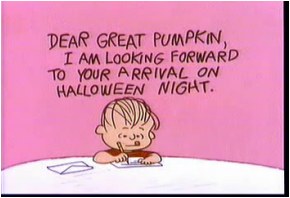 It's Halloween, and the kids are out all over the country. At least, in middle class suburbia, where the houses aren't too far from one another, and people still have some limited degree of trust for the person next-door, although it's hard to reconcile with all the nightmares of moral and psychological depravity that are hidden just behind some of the doors... after all, aren't most serial killers lurking there? And isn't drug use rampant behind door number two? And can you even trust the kids when you know that one of them may be plotting to take to the school in a final Rambo-like blaze of glory?
Anyway, when I was growing up in a small suburban town, Halloween was a pretty big deal. I didn't really get into it the same way as others - my costumes, when I had them, were store-bought and simple. But the candy was a big draw, as was the effort and wish to cover as much ground as I possibly could, and the inevitable fear of going to the "wrong" streets, where adolescents with eggs, shaving cream, and toilet paper made go at one another, the neighbor's car, and everything else. I remember walking home from school the next day, taking specific paths that would take me through the war-torn areas (there was at least one street whose name was synonymous with battles in the lore of my growing up), just so I could survey the damage.
I also remember taking my sister around trick-or-treating when I was older. She wasn't much of a sweet tooth, and was pretty timid while young, so she would dutifully give me most of the candy at the end of the night. But she enjoyed going out. But somehow, I also remember walking with her, and a pair of scissors in my pocket, in the hope that I'd be able to cut a hole in some unsuspecting kid's bag. Ah, the memories. I even remember some of the houses where we'd get the most loot (when I was growing up - there weren't as many kids around the quiet blocks, so people were fairly generous).
Later, I would spend a number of Halloweens in my house with the lights turned off and garden hose primed and ready in case anyone made the unfortunate mistake of targeting my house for a shelling. I never had to use it, happily, but I would have. The thing about Halloween, though, is that even though I didn't have a particularly good one any year that I can remember, we had our small customs and rituals that our family came up with, like the "traditional" meal of frozen ravioli that my mom would have ready for us upon our return. Somehow, we turned Halloween into a small holiday that was just about our little family, extended clan excluded.
***
Now, living in the city, Halloween seemed like less of a staple autumn activity for the kids. I'm sure there are some things that folks do at home or in school, but with kids' safety in mind, I wonder if they go around much at all. It's sad, really - because in my mind, it was one of the few times that kids are encouraged to step out of the closely guarded world in which they live, where even a neighbor is a stranger with whom you should not speak. Kids finally have the ability to peer into their neighbors' home, if even for a brief second. To know a little of what they normally don't get to see.
And I guess that's what makes Halloween such an interesting celebration for the United States, where personal privacy and the right to be left alone, and the prevailing concept is that "every man's home is his castle" (and he'll take great pains to build the moats and barriers he needs to keep everyone else out). For a few brief hours during this one night, it feels like kids are able to satisfy some of their curiosity, and some communities, at least, feel a little bit closer as many participate in the effort for the benefit of those children.
But what Americans who don't travel will likely not realize is that many places around the world are like that normally - where though they don't have much, the boundary of experience and contact extends for the kids beyond the four walls of their family's dwelling. And it's okay to admonish the neighbor's kid once in a while, because we're in this together, and the kids benefit from the collective knowledge and caring of the community. America, or at least white sub/urban America, has lost this element of community life. And while giving candy to kids for doing a few parlor tricks is not really reaching back into that tradition, it's an interesting throwback, when viewed through this perspective.
I wonder how immigrant families engage with this tradition now - I mean, my parents had their own feelings about it (Mom loves it - she wanted to give $1 per kid this year, to which I replied "you're going to see the same pirates again and again!"), but I know that some folks just don't want to deal with the hassle. I mean, what if the kids looked at them and said "and what are *you* supposed to be?"
***
Anyway, my favorite Halloween story has to be about a desi friend of mine who grew up in a small town in the MidWest. As a little boy, his parents dressed him up as "Man from India" for Halloween, wearing some of the clothes he had around as his outfit. That was strange enough for the neighbors, I guess.
Aug 28, 2006
anniversary.
Through conditioning, either social or otherwise, some dates become fixed in our minds as the ultimate symbols of a particular moment, the threshold between a before and after point in our understanding, our lives, the world. For example, August 6th always reminds me of Hiroshima, the eruption of the nuclear age, and the moment when the ability of humans to radically alter, or end, this world was no longer theoretical. It was also the date that my grandfather passed away, almost 50 years ago, a very personal date and memory for my mother and her family, but one that I do not have.
Likewise, December 7th, the so-called "Day of Infamy" was the date when Pearl Harbor was attacked in 1941. It has little significance to me personally, although it makes me recall the subsequent actions of the government, and the entry (at last) of the United States in the world theaters in which it had been so reluctant to engage.
I guess that comes more immediately to mind because I just revisited a public education piece concerning the Nazi Holocaust, and the American complicity in the death of millions is hardly mentioned - the more commonly known issue is that the United States knew what was happening and waited for years before it got involved. The piece I surveyed wrote about the possibility of bombing Aushwitz, one of the death camps that the Nazis ran with chilling efficiency in Poland. The U.S. had the ability to bomb it many years before it was finally shut down at the end of the war. But they did not do it. Why don't more people ask why? But perhaps it is even more chilling is that Hitler credited some of his techniques to wipe out populations of Jews, homosexuals, Roma, the disabled, and other non-"Aryans" to the American genocidal campaign against the indigenous peoples of North America.
Anyway, more about this idea of historical dates... nowadays there is a small sliver of the non-Korean, Asian American community that recognizes April 29th, sa-i-gu, as an important date for reflection, and a reminder that our places here remain questioned and questionable, no matter what flag we wave in the daylight, or what identity we wear in our dreams. Sa-i-Gu was a recap of what happened to Japanese American's fifty years before, only instead of being taken away from their homes and communities, the Korean immigrants, their stores, and their American dreams were left to burn. In the last five years, we've had a return to the pack-them-up syndrome of the WWII evacuations, but now the camps and prisoners are far more isolated, and minor offenders are sent away, broken men who because of the status of their families and their lives, seem stateless in many ways.
So some dates trigger a lot of feelings, from reverence to personal memories to more abstract emotions of duty, disappointment, or disgrace. But some dates seem easily forgotten. I just saw V for Vendetta, and I still forgot that Guy Fawkes' Day was the Fifth of November, even though there was a clever little rhyme to keep it fresh in one's mind, and his message was memorable in itself. But maybe that's just because I'm American.
Similarly, while September 11th has long passed from simply a moment in history to a symbol all its own (with the offensive shorthand of 9/11 taking the place of a more contemplative full name), what does it mean when a particular anniversary with a date overwhelms any other association with it? As, I suppose, will be the case with July 7th in London, and March 11 in Madrid.
But what about August 29 in the United States? The date, last year, when Katrina's aftermath, and the criminal negligence of Federal agencies, devastated one of the most important cities of American culture. As we go through the obligatory anniversary programming on network and other television, the ease with which people have forgotten what's happened and continues in New Orleans is incredibly disheartening. The devastation after September 11th became a rallying cry for the war hawks, the xenophobes, the "love-it-or-leave-it" crowd, and has been used to justify everything from foreign wars to radical domestic spending priority readjustments.
The televised aftermath of Katrina in New Orleans was horrifying - not because of the questionable lawlessness and looting that reports were alleging, but because we saw the poverty and the wretched condition of people who'd been waiting to be rescued. But what we didn't see as much was the real scope of the Federal government's absolute failure to deal with what happened in our own backyard. It's been spoken and written about ad naseum, but in the theme of this post... while many people remember many dates, will Aug. 29 be passed from year to year with some recognition, or moments of silence, or something to memorialize what we as a nation lost beginning that day? And will people remember that while we have somewhat moved on, the people of New Orleans, many of whom have not yet been able to return home, have not had that comfort.
I had so much I wanted to write about this, but I'd rather just leave it here. Take the time, think about how we can be more actively engaged in the world around us, or at least, in the stories that go on long after the news cameras and the public outpouring of charity and caring fall off. Here's a link for some oral history from survivors through NPR's wonderful StoryCorps initiative.
Apr 8, 2005
Remembering New York: St. Mark's Place
I'm approaching 10 years in this City, and it feels like the streets have changed so much that I don't feel at home in it anymore. I feel more comfortable in the small town where I grew up, but haven't really lived in since high school. But instead of complaining, I think that I want to take some time to recount the aspects of the city that I loved so much when I was bright-eyed and new, still exploring, and unencumbered by work or the future. I feel like I'm returning to that state slowly, and as I try to enjoy the same habits and places that once thrilled me about living here, I realize that they have grown up and moved on, leaving the nostalgia to the nouveau-retro crowd.
So what was it about the City that I liked back then? I liked that walking down St. Marks Place, where I spent a lot of my first 2 years in the city, felt both safe in the general camaraderie of the confederation of misfits who hung out there, and still edgy, as strands of east village anarchy threatened still to take out the Gap that opened on Second Avenue. I remember the half-way home for addicts (now Chipotle and other various businesses). I remember the storefront that announced "Religious Sex" to anyone who cared. I remember St. Mark's deli with 2 video games out front, where I spent many quarters and many hours playing my favorite games until they replaced them. I remember my habit of cruising the block between second and third avenues for used CDs - and recalled with some degree of wonder that this was the block that had most immediately captured my imagination when I first hung out in the city a couple of years before.
I remember feeling, to paraphrase Samuel Selvon, a block was a world, with requisite shops that I'd never visit, music, comics, books, falafel, a subways where they were more generous with toppings than anywhere else, a Pomme Frites around the corner, Dojos - the grungy sibling of the sterile 4th Street incarnation - where punks, tourists, Japanese ex-pats, and various other bohemes came for a $3 meal.
I remember moving on from that block, and slowly feeling distant from it as my everyday life kept me away for weeks and then months on end. I remember feeling surprised at new developments on the block whenever I snuck time away to visit, perhaps for a new CD or just a trip down the block that formed my initial impression of the world. I was shocked when the Gap was gone, but the gradual sterilization of the neighborhood was evident, from the 3 Starbucks within 2 blocks of one another (Barnes & Noble Astor Place, Astor Place and Lafayette, and 3rd Ave/St. Marks Place) to the closing of many of the small non-tourist local spots. These "developments" have blended what was once a unique and vibrant neighborhood of artists, students, and dreamers, into the homogenized mess that has taken over most of Manhattan.
I can't even walk down some streets that were so familiar to me without feeling like a complete outsider. I can't stand seeing the yuppie (and buppie, and sauppie, etc) borg take over all that I once loved about the city - I can't even hang out in the East Village without feeling like I'm not chic enough to fit in, when the sheer non-conformity of the residents of past was the whole reason that I felt at home there.
But it's not all bad. At least this means that I'm not fixated on one neighborhood, and I can continue to explore the true neighborhood NY, which now resides in Queens and Brooklyn far more than most of Manhattan.
Oct 9, 2004
A Fulfilling Day
I'm so glad that we left the apartment, and our work, behind today. It was a nice day - not exceptional in the sun or temperature, but just perfect for jumping into the car and exploring a bit.
We took care of my most important errand, getting fitted for the tux I will be wearing for Druid's wedding at the end of the month. That took all of 5 minutes, and from Forest Hills, we decided to go into Flushing. We checked out the desi area on Main Street, which Madhulika Khandelwal talks about in her great book Being Indian Becoming American. I hadn't even known that there was a community out there - and it was nice to walk around a bit, do some of our grocery shopping, and then end up at the Ganesha temple on Bowne Street.
Another destination that we were planning to visit for well over a year, it was really nice to go to a temple after so much time. I think that my partner was happy to feel the South Indian presence in NYC, which is sometimes easy to miss in the midst of the very visible Gujarati and Punjabi communities here. While we reveled in the lingual finesse of youngsters who frolicked in the immediate vicinity of the temple, we also marveled at the range of services and amenities that the temple committees had thought of and integrated into the complex in Flushing. There were a number of buildings that housed the priests, as well as a large canteen, auditorium, and wedding hall - all of which we are certain come in rigorous use for the growing community. Additionally, there was a senior center, which is of particular interest for my work, so I made the mental note to follow-up on a similar note about the temple that I'd filed away a long time ago.
From the temple, we walked next door to the infamous Dosa Hutt, which has been written about in the Village Voice a number of times, as good cheap eats. I have to concur - the sada dosa that I had was only $2.50, and it was as good as the $5 and $6 dosas that you get in Manhattan, and the sambar blew that away. From Bowne street, where D marveled at the diversity (aside from this Hindu temple, there was a Swami Narayan temple, a gurdwara, at least one other desi place of worship, a Korean Church (ubiquitous in Northern Queens, I heard that there are hundreds in the borough), and a large synagogue. I thought it would be good for us to drive through some more neighborhoods and so we took Northern Blvd through East Elmhurst, and into Woodside.
We ended up back on the BQE and headed due south, going through most of Brooklyn to end up going through Midwood, Bay Ridge, and finally into Coney Island, where we walked the boardwalk for the first time. D couldn't believe that we were an F-train ride away from the beach - the visceral effect of the water upon her so clear with each breaking tide. "Why didn't you bring me here earlier?" she demanded. As the autumn chillfelt more real in the wind around us, the pink fading sunlight behind us splashed highlights of remarkable clarity upon her raven-black hair. I don't know why. I guess I didn't think about it as much as I could have - I guess that even when I say we shouldn't take things for granted, there's still so much that we take for granted in our lives.
We returned homeward, driving locally through even more neighborhoods in Brooklyn, the long travel making us both comfortably tired, but content with the spirit of adventure that started this day for us. It felt full, and that was nice. Tomorrow will be another day of deadlines, chores, and its own stress. But it was nice to just take a day for ourselves - a day that ended up being just right. We came back into our little neighborhood and stopped by Brooklyn Social, a nice little bar that opened up 6 months ago, when spring was just starting to settle into 2004. A nice drink in their patio, and the day wound itself up where we began... once again in love, and remembering that our privilege was multi-fold: from the breath we breathe, to the unspoken comfort of an embrace from the one person who understands you most of all.
It's a wonderful life.
Sep 26, 2004
Wedding #9... Music and Memory
Yes, that's right - the year is 3/4 over, and we've gone to an average of one wedding per month. We went to my childhood friend's wedding reception last night, with Mom, sis, and A. We had a great time together, and we're just so happy for our friend, who looked radiant and effused a kind of joy that makes you want to jump onto the dance floor to join her in her revelry. I wish that we'd been able to make the wedding in the morning, but with our hectic schedules of late, we just weren't able to commit to a full day.
The reception was held in a vineyard in western NJ, which is a world apart from the crowded, traffic-ridden metropolitan regions closer to NYC. It reminded us individually of the places where we'd grown up, the smell of freshly cut grass, the rolling hills in the near distance, and the wider openness bringing a sense of return, a sense of familiarity to the 90-minute drive.
I was inspired by at least one small element of Rush drummer Neil Peart's latest book Traveling Music, which I'm still committed to finish (at least so I can move on and not feel that I may have missed out on some solid kernel of revelation, embedded somewhere in the final tenth of nearly 400 pages of navel-gazing and meandering recollections of disjointed past experiences and moments, many of which have little to actually do with music). Though I find his style is alternately dull, repetitive, self-important, and affected, (there are probably 600 individual words that have been italicized to make some emphatic point - the stylistic and repetitive equivalent of a valley girl saying "like" - we get the point, Neil. Give it a rest.)
I really liked his concept of filling a CD changer with specific CDs and allowing the albums to speak for themselves and both recall specific moments of memory, and at some point, if the album is strong enough a musical statement, to transcend the personal memories and still stand on its own as superb music. So I popped in 10 CDs a couple of days ago, anticipating the road time, and trying to anticipate the moods that we'd all be in on both the road to and return from the festivities. I think that I did okay - my favorite moments came from the impromptu sing-along to a number of selections from U2's Achtung Baby from the trio choir of decked out desi women in the back of our small sedan at 11 PM!
I had just found the album again after months of backburner searching, and to no surprise, the songs, and album as a whole have stood the test of time and my own intermittent genre jumping for something entirely different once in a while. Peart writes about this ability of the finest music to transcend the interaction between that music and specific memories (which has such a strong ability to make music appreciation into a highly personal, and emotionally charged - endeavor). Achtung Baby most definitely marks a personal high point for me, recalling the heady days of freshman year in college, when anything was possible, and everything was new. Interestingly, I can also trace the album to the following year, which was mixed in a lot of ways for me - the variation in the individual songs lending themselves to my changing moods. I guess a sure sign of a great album is when your favorite track on it changes over time. It was an appropriate disk, considering that it was also a favorite of my friend who had just gotten married.
Back to the reception... and music. It was interesting that once the dancefloor opened up, certain music elicited excited responses from the entire mixed group of second generation desis, white folk of the gen-x variety, and assorted first and 1.5 generation immigrants. The bhangra and filmi remixes were almost uniformly celebrated, everyone with their own take on how to enjoy them. Even when the DJ played Girls Just Want to Have Fun, it seemed like a lot of folks were grooving in their own way. But later in the evening, when aforementioned triad decided to take the set list into their own hands and request from the retro tracks carefully selected by the stars of the evening, half the floor cleared out almost immediately, leaving only the children of the 80s to revel in their collective memories of simpler times (and music). With the first chords of A Little Respect, the wave of pure exaltation that audibly rose from those who had been dancing to Billy Idol's Dancing With Myself was a marvel. For almost half an hour, while those of us who remembered, danced... those who did not share in those memories watched, standing in the sidelines. New Wave is such an interesting phenomena that doesn't seem to have the same broad appeal, at least on the dancefloor, as hip-hop. I remember on L's b-day, when a cousin of ours had an incredulous look on her face as the rest of us sang along and danced with New Wave songs at Odeon.
What is even more interesting is that M, our friend whose wedding we were celebrating, went to the DJ and said "I want to hear Big Country, now!" I didn't know the song, but as it came on, others seemed really happy and excited about it - including D. As we danced to it, A and I realized that neither of us knew the tune either - but saw my sister - 5 years younger than us - singing along... Apparently, learning the lyrics of an 80s song isn't all that hard. In an even more interesting sidenote (assuming that any of this is of interest to anyone who isn't mentioned in this thing): I listened to Big Country again today, aided by the wonderful technology of... well... if the FBI is reading (or the CIA is monitoring this because it's acquired Blogger as part of its comprehensive web-based counter-terrorism initiative "Cointelpro-ster")... I won't name names. But I sure do like Lime juice! In listening to the first 10 seconds of the song, I noticed something that sounded familiar, cross-referenced it with another mp3 in my library, and have confirmation. Get ready for this, cuz it's a doozy:
The drumbeat, and initial enthusiastic yell of "Shot!" or "Shout!" in the song Big Country, is echoed, repeated, and otherwise duplicated with a small revision of verbal exclamation "Not!" in.... Anthrax's I'm The Man, their loony foray into rap-metal.How weird is that? I've known the Anthrax song well enough, actually for years, but I had never heard this song that it was mocking, when I thought I've heard every New Wave 80s tune ad nauseum. Ahh - the beauty of small and weird things.
***
As a final aside, in my internet search for any mention of this interesting connection, I found this Langston Hughes poem, which I actually want to write about at some point - it hit close to home for me - as a number of his poems have. Read More......