


It has been a grim week, with news of the bombings and massacres in Gaza filtering in through the virtual blackout in American media. My friends who care about this issue are heart-broken and torn: does living any kind of life in the United States, regardless of "politics" or "heart" make us complicit in this morally repulsive, violent oppression and massacre of a people already without a home?
Dec 30, 2008
Hope Begins with a Free Palestine

Dec 28, 2008
Fair Housing: Do Asian Americans Matter At All?
I have been tracking down and getting up to speed on some civil rights issues, fair housing being one of them. The Leadership Conference on Civil Rights and the National Commission on Fair Housing and Equal Opportunity recently released a pretty extensive report looking at Fair Housing in the new millennium. The Fair Housing Act (FHA) was passed in the late 60s as one in a group of landmark laws that ensured the rights of those most likely to be discriminated against in a range of issues.
The FHA targeted landlords and others with the power of allowing or denying the right of people to rent or buy housing, outlining the criteria that may not be considered in deciding whether someone could rent or buy from you. The FHA itself outlines race, color, national origin, religion, sex, family status, disability, and age, among other things.
State and local acts have added to this, now including sexual orientation, gender and gender identity, source of income (for example, housing vouchers), and a number of other criteria that cannot be used to discriminate against people seeking housing. However, the report painted a fairly grim picture about where things are at with enforcement and gives a road map about where things could go with the inevitable reorganization expected when the new administration comes to DC.
There are some good recommendations there, however, looking at this report was quite sobering: there's only one mention of Asian Americans, and it's basically as a obligatory mention of all communities of color (it's also the only time that Native communities are mentioned). While there are some pieces about the impact of poor fair housing enforcement on immigrants, it is clear that they are talking about Latinos, and the priorities focus on issues central to Latino communities. While I don't question that these problems in equitable access to housing must be addressed, I'm very worried about the lack of concern or mention of Asian American/immigrant communities.
Hell - even Clint Eastwood's new movie (Gran Turino), which I haven't seen, seems to marginally deal with issues of Asian immigrants and housing better than this report. Clint Fucking Eastwood. So where is the outrage, or the addendum from the Asian American community? Where are the pieces that talk about the specific hurdles faced by many of these communities, which are pretty well documented by Fair Housing testers around the nation that actually include Asian Americans in their work?
I haven't seen anything at all, and I'm still waiting. I guess it begs the question of who should be looking at these issues? It's a civil rights issue, but I haven't seen the Asian American Justice Center, or really any of its three affiliates (LA, San Fran, and Chicago, though the Asian Law Caucus has done housing work in the Bay Area for a long time) deal with this issue at all. AALDEF seems to have just hired a housing attorney in NYC, so there's not much there either.
And that brings us to the National Coalition for Asian Pacific American Community Development (National CAPACD). They were formed by a group of local Asian CDCs around the nation who thought we needed a national organization to push for policy change in the National Capital and support local efforts around the nation. But if we all agree that affordable housing falls generally into the "community development" universe, do tenants' rights?
Because aren't many CDCs housing developers? And doesn't that make them. in effect. landlords? And isn't that kind of in conflict with tenants' rights? So then where do they fit in when it comes to fair housing work? And isn't it just a little odd that there's no group out there that really claims fair housing advocacy to be part of what they do on behalf of Asian American communities, when there are documented studies that show that landlords in places as diverse and "accepting" as NYC and the Bay Area are screening potential renters by their accents, last names, and purported/assumed religious background, with Arab Americans, Muslims, and some other South Asians getting the short end of the stick most often.
Family status (and the relation between members of a "family") are touchstones for the Latino community, and this is very true for Asian immigrants too. They're basically saying not just that 10 people in a 2 bedroom is unacceptable, which is hard to argue with, but that even if there are only 3 or 4 people in that apartment, they have to have a very specific relationship, and grandma's gotta go. That's problematic for extended family connections that many Asian immigrants recognize, and allow for all kinds of crazy landlord shenanigans.
But the heart of this post, and my inquiry, is still: who out there gives a shit about Asian Americans and fair housing? And who is raising those issues in the public sphere? And why aren't we holding the groups who say they give a shit about our civil and housing rights accountable?
Film: Frost/Nixon (2008)
Rounding out my holiday movie watching spree, I got to see Frost/Nixon as the result of a weird series of negotiations between three of us trying to manage dinner, our disinterest in going out to where the indie theater was playing a few different films we want to see, and the resistance of at least one in our party to seeing that Brad Pitt movie, The Wrestler (which I will still go see when I get a chance), Valkyrie (the Tom Cruise vehicle), and probably some animated movie about dogs or rodents (there's always at least one playing at all times, right?).
It was a pleasant surprise. The film was put together well, and who would have thought that Ron Howard could pull together such a compelling piece of cinema. Basic premise: it focuses on the first thorough interview that Nixon granted after his ignominious descent from the highest office of the land. The person who landed it: a pop/celebrity talk show host from London who saw this as a golden opportunity, and got a few lessons in real journalism along the way.
I thought the screenplay was sharp, the supporting characters were compelling enough to move the story along, but we didn't get too much unnecessary background on them, and the pacing was excellent. The leads, recapping their roles in the play upon which the screenplay was based (Frank Langella as Richard Nixon, and Michael Sheen as David Frost) were crisp and memorable, the dialogue sharp, and everything else smooth enough to not be distracting. If you like good political drama, check this one out. Highly recommended.
Unfortunately, we ruined the feeling and depth of this film by going to another right afterwards (see Seven Pounds (of crap) review below).
Film: Seven Pounds (2008)
Caught this as a one of those spontaneous double-features last night. Man, spare yourself and don't watch this movie. Will Smith was awful - I don't know if I've seen a worse film of his, and I may have to see Pursuit of Happyness or some other not-well-rated film just to cleanse myself of this one.
I thought Rosario Dawson was the best part of the film: she was more believable than anything else, and I actually liked her character - she didn't overact, and I felt her vulnerability (details are unimportant in this one - trust me), but that just didn't rescue the film for me. I mean, think of her as the pearl sitting atop a bass drum-sized tub of 4-month old, slightly greening gazpacho that has not been chilled.
The plot wanders, the mind loses track of what is going on, and you just want it all to end. I can be a sucker for believable melodrama, and even the occasional romance, but man, please don't do this to me. Do yourself a favor: find another film with a believable, vulnerable role for a supporting actress, and just watch that instead of this one.
Dec 27, 2008
History is a Weapon
I don't know if you've found any great resources online for alternative history, particularly to forward to folks who are looking for something more than the basic drivel they feed us in school, but I just did.
This site actually has a lot of content, including almost all of Howard Zinn's Peoples' History of the United States. Pretty awesome. Click around. There's a lot there, and even though it doesn't have much/anything about immigrant communities, there's the foundation for a social movements class in there somewhere.
Dec 26, 2008
Watchmen
I'm very excited. As part of the end of year gift-giving, I received, from the love of my life, the full graphic novel. I'm quite excited to sit down and read through it. Actually, I have a lot of books to read at this point. I've tried to stop buying and start reading. More to come.
Read More......Dec 25, 2008
Film: Milk (2008)
I was a little skeptical about a mainstream Hollywood movie about Harvey Milk, even though I have a lot of respect for Sean Penn's choices. After seeing the film a few days ago, I'm happy to say that my hesitation, though well-founded, was not justified in the end. Sean Penn really does throw himself into the role, and just in terms of great acting, it's a performance to watch.
But more importantly, I think the film gives you a real flavor for a particular character in American politics and social movements, not as a perfect or unmatchable soul, but as a full person. I liked that a lot - doing some sort of movement work for longer than a minute, there were a lot of moments when we thought "hey, we know people or situations that are similar or that this reminds us of." I checked out the documentary about his life and assassination a while ago. Rent that for a historical perspective when you get a chance.
Geo/Pro Brown from Blue Scholars said it best in his review here: "What makes Milk so much more than just another historical bio-pic or a generic plea for humanity is an awareness - by filmmaker, writer and actor - that the personal is political. That leaders are created by movements and not the other way around, as most other movies suggest." Here, you get a sense of the people around Milk too, that colorful cast of characters who are committed to more than just their own self-aggrandizement, or even just the cult of personality around that central figure.
Amen to that, and as far as mainstream movies go, this one is worth seeing before it gets kicked out of the theaters by the usual drivel that comes around during the holidays and beyond. Though I have to say, it's because of the holidays that I am actually catching up on some films finally. Look forward to a little writing about "Slumdog Millionaire" next, and have a peaceful week, ya'll. 2009 is rising!
Dec 16, 2008
Critical Perspectives on the Mumbai Attacks
I haven't been able to keep up with news in India after the horrific Mumbai attacks during Thanksgiving weekend, but the whole thing has been a real roller-coaster of emotions for so many people. The inevitable saber-rattling about Pakistan has caused a lot of concern for many of us: the elite in this country, as well as the lobbies of power and influence in India could easily push for a new war, and the fragile peace and progress arising from overtures by the new political leadership in Pakistan would be swept off the table yet again, with the region and perhaps the world at risk this time.
Anyway, international affairs are something I have very limited contact with, so rather than write on, I'll point you to a few things to read if you want more in-depth analysis about Mumbai:
1) Arundhati Roy's "The Monster in the Mirror," a long and thoughtful piece in the Guardian (U.K.), is one that I just read and recommend.
2) SAMAR Magazine Issue #32 focuses on critical analyses of the Mumbai attacks.
Dec 15, 2008
Let It Rest!
I'm so goddamn tired of hearing about - and being asked about - Sonal Shah. The drama, from all sides, is unnecessary and pointless: though I do believe there is still a need for true resolution. I didn't know much about her before her meteoric rise, I think she's either been given bad counsel or hasn't listened to good ideas about how to address the concern that she is tied to the Hindutva right, and honestly, she's coming across as kind of arrogant, even if there's nothing true in the statements against her.
I'm not interested in going after individuals in our community, but I do think that we must all be held accountable for inconsistencies in our past, and examples of poor judgment that may reflect on whatever position we're vying for in the future. I've said before that I'm naturally skeptical of people of color who are so ambitious in politics, because I think the community becomes their way of showing that they have a base, even if they don't really care for what that community thinks or is going through.
The growing number of South Asians in American politics is a natural phenomenon: there is a large segment of our 2nd generation that is well-educated, as the children of the "professional" immigrants who were allowed to come here after '65. But the real question is, what true cohesion is there between our different communities, and should I be made to feel guilty when I don't jump behind some of the jokers who are standing themselves up to claim that they represent more than their own self-interest?
Are these folks, particularly those who are really just opportunists looking to rise as fast as they can on the backs of others through "brown skin, white-collar affirmative action," worth our time and effort? And honestly, are they just looking for the rubber stamp of the "community" rather than a real engagement to win our support? Isn't that the old politics of race: "we're the same race/ethnicity so you should support me, no questions asked"? I guess that's kind of the Obama method, at least from the perspective of folks truly working for racial justice.
With this whole Sonal Shah thing - I think that even if we give her the benefit of all doubt and say that there's nothing shady with her past associations and affiliations, she has shown remarkably poor judgment with how she dealt with the initial questions in 2004 and how she's acted, both publicly and privately about this issue when it came up over the last few weeks. I truly don't know what to believe, and honestly, the vast majority of disinterested people (who don't have their career weighing on what happens with this flare up, or one of various axes to grind) just don't care.
Maybe I should post up my own advice to her, given that it seems like she's getting really awful counsel at this point, and you know, I should just want to help an ailing sister out. Because I can't imagine that if this thing got picked up by anymore mainstream media, the Dems would let it carry on for much longer, and her nascent political career would fade into a footnote, long before the root issues underlying this storm were ever really addressed in mainstream Desi America.
Those root issues include the very troubling infiltration of hard-right, political Hinduism into middle-class Indian America. The Hindu camps for school children, the programs that send kids over to India for unclear reasons, and the rhetoric that comes from groups ranging from USINPAC to the Hindu American Foundation should be enough to make us all worry a bit. We have enough homegrown extremism (militia, anyone?) in the U.S., thank you very much.
Dec 14, 2008
Bruce Lee and New Paradigms for Community Work
I haven't been writing much lately, but I've been thinking a lot and using dead trees to capture some of the thoughts. The problem with blog posting, at least for me, is that I tend to be more of a perfectionist (couldn't guess, oh intrepid reader?) and I edit, edit, edit before I post. That's not the case on paper: I don't mind scrawling it out like freeverse and taking it from there.
My thinking lately has been about this work, particularly as I enter community-based work in a much more meaningful way than I've ever done, but with a law degree instead of just good intentions. And there are a lot of lawyers out there, doing all kinds of things: many of them good, some of them not. So I'm trying to see what kind of a "community lawyer" I want to be - in hopes that I don't fall into the ego/"anyone can be an organizer!" mentality that I see folks fall into. I don't think you're automatically disqualified from being an organizer if you have a law degree, but you gotta ask yourself, "why am I doing this, and can someone be more effective?"
Anyway - I'm also looking for new models of thinking about community-based work, strategy, and forms that break the molds and patterns that I've seen repeated again and again. Interestingly, my quest to figure out some things is leading me into unexpected directions. I think I'll be picking up at least one collection of Bruce Lee's writings about Jeet Kune Do, the martial art technique that he developed that broke dramatically from the rigid forms that came before, while integrating many techniques. His "way of the intercepting fist" also involved a lot of thinking about broken rhythm as a way of keeping yourself from falling into patterns and losing the freshness and innovation that comes from constantly challenging yourself to think outside of the box.
I'm hoping that his writing about the philosophy behind his radical break from much of martial arts training may illuminate new paths for me in my work. If people use Sun Tzu's Art of War for their corporate biz'ness, why can't we use non-canonical sources to guide us to reinvent in the new year, and with the new Administration? I'm just saying.
Dec 12, 2008
So Long 2008
As this year comes to an ignominious end (at least to me), I'm looking forward to 2009 for a few reasons. First, I'm going to actually resolve to move forward with some of my ideas for self-development, particularly in exploring the relationship between how I try to engage in community work and how I live my personal life. I have been reflecting on the external stuff a lot in the last couple of months, writing about it more in journals than up here (obviously).
I think some of the lessons, or experiments at least, that I have gained or started at work may be useful personally, too. So I'm trying to figure out a reading list and some basic habits to put me in the right place with that side of things. Any suggestions would be welcome: I'm looking to read Bruce Lee's collected work on Jeet Kune Do and fluid styles, actually. I don't have the physical ability to make much of his theory on that level, but I think that some of the basic theories of Jeet Kune Do can be applied to other aspects of our lives: take from everything, work with broken rhythm, and don't get stuck in an orthodoxy. Learn, distill, absorb, integrate, and keep changing.
On the work end, I think I'm getting the hang of some things, but the work of things to learn is wide before me, and that's okay. More importantly, I have to remember that I'm in a setting with more people than just me as it was for much of school. I have to remember that I can't fly off the handle without possibly bringing repercussions to other people, and perhaps the very work itself. I haven't fully gone off the cliff yet, but that prospect seems to loom somewhat ominously above me sometimes. Goal: turn the conflict into transformative change. But it's so hard.
Dec 2, 2008
Innumeracy and Privilege
There are a lot of people in the United States who are not comfortable or may have absolutely no luck or skills with math at all. There's a great book I read a while ago called (simply enough), Innumeracy, which lays out why the author thinks that the inability to understand numbers may be a more widespread issue than even illiteracy in the United States, and its long-reaching affects. While I'm not going to pretend that this is anything I know about, I have a few thoughts about innumeracy.
First, I think there's general consensus that the American education system has been in decline for a long time. Clearly, education is like health care, politicians, and any number of other things in the U.S.; if you have money, you can buy the best. But it's if you don't when things get difficult. So sure, there's a clear nexus between quality of education, poverty, and innumeracy. But I feel like there's also something beyond that that may also be going on.
Second, I think the cliched phenomenon of law students and lawyers who don't know anything about math underscore a totally different set of issues. These are clearly people who, for the most part, have had the privilege of going to elite or at least average schools, where issues affecting public schools that serve the very poor are likely less at issue. So what happened if the resources available to feel comfortable and even excel in simple mathematical skills?
I think there's inherent privilege built into this brand of innumeracy. It's a choice not to get up to snuff in math, because it's okay if some people let some subjects slide. It's a privilege because the numbers are abstract - they aren't connected to the very real arithmetic of poverty, the algebra of making ends meet, or the geometries of small and dangerous spaces in which other kids have to study. I think you can learn math in the classroom, but you can also learn it as you're trying to stretch that dollar into a lot more. If you're thinking that you have to manage your money in order to meet your expenses, pay the rent, feed your kids, and try to pay down your debt, you can't afford to say "I don't get the numbers."
This isn't to glorify the poor, or what they have to go through, or to somehow suggest that the poor are better at math because they have to be (and so then the reasoning would be, why deal with improving the public schools at all?). I'm just thinking that it makes no sense to me, and kind of offends me when people who have no deep-rooted mental/emotional block to math (or no chunk of the brain that deals with math gone missing) just dismiss having to learn it because numbers are more a hobby or something to scoff at than essential tools to survival. Basic arithmetic skills form the bedrock of responsibility by providing context (value) and analysis(logic).
It makes me wonder why people who don't have wealth are immediately thought of as being somehow inferior to those with means, when often, without the tools to understand the value of what they have at their disposal. I see this play out in so many ways, and while of course I can't make big assumptions about what this all means, it just gets on my nerves.
Nov 23, 2008
Music: Flobots
Looking for more progressive/radical music to fill your music player? Check out the Flobots album Fight with Tools. I only got to hear a few tracks from the live at that Scholars show on election night, but imagine a slightly looser, younger (!) Rage Against the Machine. Really good politics, and they were awesome on stage right after the election, stating that Obama's selection was a great symbolic victory, but it was time to make it mean something by pushing the issues we care about: healthcare for all, a fair and humanitarian immigration policy, the end of Guantanamo, and a host of other issues.
Read More......Nov 22, 2008
I am So Sick of Reminding "Pan-Asian" Groups to Remember Desis
This is a rant. I have been working in Asian American spaces for more than 15 years. I have had issues with being tokenized, marginalized, the "only one of my kind" (i.e. desi) in some places, and being stuck in the constant educating role when I'm in a positive mood about the place and conflicted history of South Asians in Asian American movements. Usually I just take that as the lumps that come with being in this weird space. But sometimes things get to me.
In the beginning, there just weren't a lot of desi folks working in Asian American spaces. I've written about how many of the people I came up with or learned from cut their teeth in "pan-Asian" organizations on the East Coast, but I don't know if that's the same on the West Coast (but it's interesting that there aren't very many strong South Asian community groups on the West Coast). Then we created our own spaces, and there have always been weird conflicts around turf, resources, and inclusion. South Asians often feel like our own spaces are important because it's hard to reach our communities - and pan-ethnic/national/lingual/cultural coalitions even between different South Asian communities are a new concept to begin with.
But that doesn't mean that in the interest of certain coalitions, and particularly in the places where community issues and interests intersect, that we shouldn't work more collaboratively and learn from one another. There's no need (and the opportunity for this has kind of passed at this point) for "pan-Asian" groups to try to co-opt or subsume South Asian groups, but there are a lot of places where we could be working together. Trust me, I fault a lot of South Asians for not thinking about possible ways to reduce inefficiency and work strategically with allies in the "pan-Asian" context.
But I'm so sick of groups, particularly those on the West Coast, though we have our share on the East Coast and in DC, who take up the space as "pan-Asian" but never do anything significant with South Asian communities. They get the funding, they shape the pan-community's stories in the media and to the funders, and they shape the little space that all APAs get on any legislative or policy agendas.
Most groups still don't have any South Asian staff in senior level positions, and few even in entry positions. They don't understand the complexities of the communities at all and are not culturally sensitive or understanding in any way (i.e. getting veggie food at many APA events is still a huge hardship, and no one understands various desi holidays). But because these groups are larger, they get first crack at the crumbs thrown down from funders, and they don't have to change their ways to better incorporate the desi communities issues. That leaves even less for South Asian groups, many of whom still feel betrayed by "pan-Asian" groups after September 11th, when they all looked the other way as our communities were targeted and became public enemy #1.
Motherfuckers, we are a full 25% of the community population and growth numbers that you use to get your funding. Stand up or get out of the way. Your relevance was always somewhat questionable, particularly on a national policy level, but now you're just pissing me off. And you know, the academy, the so-called API Progressive/Left Movement, and the Asian American media all perpetuate this. I read the AA Movement Zine online, and there are so few articles on the South Asian American left movement that it's not even worth mentioning it and I may just read SAMAR instead.
This whole thing was precipitated when I read this article in New America Media about possible APA cabinet/presidential appointments. The dude doesn't even mention one South Asian, and the only mention of the community at all is through a quote from Dale Minami. What the fuck? Can't this writer even ask a follow-up question like "who are you talking about?"
Arghhhhhhh. End of rant.
For now.
Nov 14, 2008
New Modes of Organizing the Left
I went to a panel recently in DC in which different folks were asking critical questions about what the election results mean for the Left in the United States. I thought it was an interesting dialogue with new and respected voices from the Left - all of them people of color - responding to the question of what this could mean. There were some very different takes on what direction we should go in, or even what support of Barack Obama in the recent election means.
One of the folks spoke about how he supported the Green ticket, and it was now up to the people who supported Obama to make sure to hold him to the promises he made and change people believed he would bring. Another, longtime labor organizer Bill Fletcher, said that it was not practical to support a third party candidate in American democracy, where the system is one of the least democratic of any so-called democracy. He argued, instead, that there needed to be a massive Left project that brought together hundreds of thousands of people into a viable block that could and should move the Democrats leftward. He stated that "without a hard Left, the middle always collapses."
Fletcher's other point was that we had to drop some of our purist attitudes about the "Left." That to bring about some of the change that we actually want, we may have to work with people who we don't fully agree with. The Right did that well for Bush, with fiscal conservatives and social conservatives, who aren't very similar actually, but who came together to get their endgame to work. That's since kind of fallen apart because Bush ended up spending and expanding government more than the fiscal conservatives could stomach (witness the Ron Paul revolution).
Finally, Fletcher said that traditional organizations may not be the way to go. But he also said that a new political party may not be where to start either. He suggested 501(c)(4) organizations, which could get "politically engaged" were the way that people were starting to get organized, and used an example from Northern Virginia: Virginia New Majority, which was created by a (c)(3) organization to get out there and take a more aggressive electoral/political role. It was very effective at registering working people of color and immigrants and getting them out to vote.
I would argue that (c)(4) organizations are still too limited. They get the federal tax exemption, but at the cost of having to report to the Feds a lot more than other organizations, and still being limited in their ability to really support candidates or ballot initiatives. I think the aggressive ground game for the Left is in political organizations - which include Federal, State, and other kinds of Political Action Committees (PACs), as well as the well-known but misunderstood 527 groups (which is actually a misnomer because the 527 group that people talk about: the Swift Boat Veterans for Truth kind of groups, are only one kind of 527 organization - all PACs are another). PACs are usually organized solely to channel money to candidates and campaigns. But there's a way to create a PAC in some jurisdictions that can be involved in electoral politics, particularly locally, in ways other than dumping money at someone. PACs can call whoever they want and support whatever or whoever they want: they don't have the detailed rules governing them that the IRS imposes on tax exempt organizations. You can go to town.
I would argue that for the immigrant Left, engagement of this kind can create longer-term empowerment for individuals involved than just bundling money, getting photo opportunities, and not really seeing the influence on politicians or their policies. PACs that don't focus solely on money but rather on messaging and influence by people power and issues that are important to working people and immigrants can be a game changer. And because the level of reporting and hoops to jump is not as crazy as 501(c) organizations, maybe more regular people of color and immigrants can take this on than the very white "non-profit Left" that's still talking about how we should put socialism on the table this January.
Yes, as a long aside, that was a comment at this event from an audience member, which made me laugh out loud - these folks need to retire, move to Sedona, stop gumming up the new movement with old retreads - I believe in socialist ideals, but I think we need new ways of talking about them, particularly with immigrants who fled brutal, deadly regimes run under the guise of "socialism" that have forever embittered them to anything remotely similar in name, if not function. Yet another example of white and American privilege in our bizarre, out of touch Left.
Nov 12, 2008
The Abuse of APA Agencies by Mainstream Service Groups
Stop me if you've heard this one before. Mainstream service organization that's been around for a long time always gets a big chunk of money to work with a large subset of the population - such as children in the City or seniors in the County. Said organization does not have bilingual staff, usually at all, though there are now more Spanish-speaking white folks around, particularly in legal service organizations.
But regardless, they just don't have bilingual staff, and they use LanguageLine or that old AT&T service to call in people with the language ability (but who may not be local, or have any knowledge about the subject matter at all - a critical need in health and legal service provision, let alone mental health). But of course, their actual mandate is to serve all people, often regardless of immigration status, who fit into their slice of the population (women, seniors, children, whatever).
So what happens? Often, they only do one or two outreach events a year in the APA community, in particular. They use community organizations instead of other spaces like libraries because they have absolutely no way of reaching out themselves (and many traditional legal service organizations don't outreach much at all anyway). And here's the kicker: they don't have the bilingual staff and don't hire interpreters to effectively communicate with the community members. For some reason, that's not important enough for these people, and they just don't get it.
These organizations end up asking (i.e. telling) the community-based groups to do last-minute translations and interpretations. You know the groups - those that are hanging on with bare bones budgets, in spaces that are too small, staff that is underpaid, directors who are often first generation and sometimes not the best managers, but groups that the communities trust and that have been there for their community day in and day out.
This is totally unacceptable. Asian American community organizations should be supported to work directly in their own communities - it makes sense in larger cities to have larger, mainstream service organizations that can take care of common problems, and I feel strongly that they should work with all communities, but they have to step up and integrate language and cultural competence across the board - from their staffing to their processes and expectations of clients. Until that happens, it ever will, there is a critical need that organizations serving immigrants fulfill.
Some Asian American community organizations can work with individuals in a number of different languages, which is still better than the mainstream organizations, but the established groups actually have other resources for the smaller language communities (like Ilocano or Thai) that the mainstream groups cannot even begin to understand. But our groups are not interpreter agencies. And our value should not be limited to just filling in the gaps that the big groups don't want to accept are their responsibility too.
This is why most of our organizations should move from just direct service provision to both advocacy within service circles for full and equal community access, and organizing within our communities so that they can create their own solutions and raise their voices against business as usual in the nonprofit-industrial complex.
Nov 11, 2008
A Note on Veterans' Day
It's not enough to just get the day off to rest and do whatever we want. These holidays, rare as they are (particularly when you compare with the Indian calendar loaded with many holidays for its many peoples), should be a time when we think about what it is that we're celebrating. I don't know the history of Veterans' Day, but I know that in a time when constant, unending war seems commonplace for the American, we're still largely untouched by what our government is waging. Our perpetual state of war is different from that of the nations on the receiving end, or places like Palestine or Sri Lanka.
But where that toll is visible is in the faces, the stories, and the lost innocence and lives of soldiers who have given up everything in the belief that they were fulfilling a patriotic duty. Not all soldiers are perfect, but most of them are quite young, and regardless of their rationale or that of the nation to send them in harm's way and off to fight, it's hard not to get choked up when you think about what they and their families have given up. I am a pacifist: I don't believe there is any "good" war. I suppose there are times when one can argue that war is necessary, but it seems to me that it's always been a small group of people in control that either cause the harm that must be dealt with, or who send off the troops to do the dealing.
If we dealt with those people directly, millions of innocent people - the soldiers included - would not have to die or lose faith in human motives and judgment. It's a large price to pay. Even in movement work, many times we use the lexicon, the metaphor, the iconography of war: I am guilty of the same thing, and many of the radical groups I listen to or read use "soldier" and "battle", perhaps to reclaim the terms.
But I don't believe in war - real, imagined, or otherwise. I want to build, and I want to use words that come from places of strength, love, and peace. So as we remember veterans today and in the years to come, perhaps we can also take some time to challenge this culture of war - from the words and images we use to describe our work, to the way in which we imagine movement work as a whole.
Film: No Direction Home (2005)
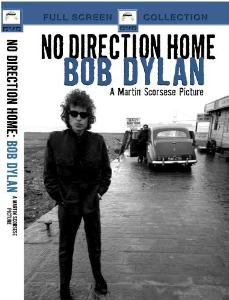
I don't really know Dylan's music that well beyond the big singles, but I've heard a lot about how brilliant and encyclopedic his knowledge of old American musical styles and traditions. I think I read that in the assessment of one of his latest series of albums (which folks have said are a remarkable run on their own). Watching this film is an introduction in some ways, but Scorsese does not focus on the chronological assessment of Dylan's ever-changing, ever-expanding musical persona, nor of his recorded output. I think it wisely looks at him from different angles and perspectives, including those of Joan Baez, whose heart he obviously broke, Allen Ginsburg in interviews that were late in his remaining life but quite riveting and dynamic, band members and producers, and other fellow artists like Pete Seeger and Peter Yarrow.
All I can say about the collective impact of the more than 3.5 hours of this documentary (took up two picks on my netflix rotation) is that it really made me think about bucking expectations, staying true to what you have inside, and trusting your voice. Baez has a really telling segment where she described what it was like to be active and political (and linked to him) once he'd moved on from topical songs and traditional folk, when she performed at protests and sit-ins and people asked for Bob: she had to say "he's not coming. He's probably never shown up, you poor fools."
It was so interesting to hear her talk about it - particularly because she's still doing that circuit more than 40 years later. It made me wonder about political art, actually, which I value so much in the Asian American context. Dylan's path gives us the rare opportunity to look at both forks in the road for artists (particularly with Baez or Seeger as a foil)... and activists, actually. He wrote some of the finest songs of his generation that captured the mood, inspired other great work (Sam Cooke wrote "A Change Gonna Come" after hearing "Blowin' in the Wind" and wondering why it was a white man who wrote it), and are still sung today. He then just had to move on.
Should we take note of this - not just in a creative context, but in movement work too? Sometimes I come across folks who haven't reinvented themselves and are still using the same rally chants and tactics (like street protests and petitions) as they've been using for decades. It seems like sometimes folks get so locked in, even when they're not that good at something, that they don't evolve or they stay the same to meet the expectations put onto them by followers or admirers. I wonder if that's true in a lot of contexts, actually, including civil rights leaders who still seem locked into a vision of America from the 50s and 60s, one that is not as diverse nor as complex as that which we work in now. These outdated models, and the people who continue to push them, may stall the evolution of movements for progress. And those are people who were actually once effective.
As a related aside (jumping back to the artist/activists thread) maybe the Two Tongues crew closed shop at the right time. They remain powerful (one of their tracks just came up on my Shuffle last night and the passion rocked my consciousness all over again), and they continued to evolve as individuals. It's a good lesson to keep in mind, and the film definitely hits that point for me. Strongly recommended for music fans and fans who consider the balance of consciousness and the creative process.
Nov 9, 2008
Hip Hop is Gentrified
I went out dancing for the first time in a long time, and we ended up at a spot that was pretty popular and overwhelmingly white. In a city that's got a good amount of color in it, it's easy to end up the only color in the room, which is a little odd. More odd is that other people of color in the room are often other Asians. That model minority thing isn't always wrong, particularly in the young middle class / gentrifying force in America's cities.
But I was in a good mood, with mine and some friends, and I wasn't looking to start any trouble or have a mood. The DJ was playing all the big hip hop singles of round about the late eighties, but it was really odd to see these white kids sing along with every word. First, most of them were in diapers when these songs dropped, second were these all really that big as singles to cross over that long ago, and third: I was embarrassed that while I can name the songs and sing individual lines, these folks were singing the whole damn joints. I did think it was funny that when the D threw out "Bring the Noise" by Public Enemy (I would have loved any number of other songs), I was the only one shouting out lines. Maybe I got caught up in the hope of the week to think they'd spin Dead Prez next.
So what does this any of this mean? I have conversations with conscious friends about authenticity all the time. The question of who "owns" hip hop is out there, and there's the comment on who buys hip hop, of course. But then there's this other question - if the kids know the songs so well not because they were trying to appropriate the culture but because they just heard and knew the songs from years of growing up and going to parties, is that something to hate on them about? I don't really know. It was just awkward for me - I had a great time, but I guess just like so many other situations, I was far more self-conscious about how I sang the songs and what the dynamics of being brown and singing songs about black experience (mindless party songs are different of course) than most of the white folks around me.
Was I over-thinking it all? I decided not to give a shit and just lay back and enjoy the night, which I did. But it seemed kind of ironic that I ordered Son of Nun's new CD earlier that day, and was considering putting out a little more for a shirt with the slogan that I borrowed for the title of this post. The universe tells us in funny ways, enit? We just have to keep listening.
Tune out the radio
throw out the tv
breath
The Dawn of a New Age of Disappointments
Went to a benefit dinner tonight for a group in the area, and their keynote speaker was, as I think much of the free and not-so-free world are still, running a high Obama fever. I don't begrudge him or the rest of them that. I mean, like I said, I was in the streets (or at least the bars) celebrating the victory too.
But I guess Tuesday already feels like a long time ago. And even though I'm not watching the news or following the twitter-like monitoring of P.E. Obama's (not Public Enemy, but Prez-Elect(ed) of course) every move, I feel like I've been disappointed a lot already.
I know - people will say "well, you people on the left are never satisfied. First Bush was terrible, now you get your liberal man, and you're just going to tear him apart for not being a freegan or something." Well, yeah, we can get a little critical and have issues with just celebrating once in a while. But I think I know how to celebrate real victories, and I'm not getting anything out of writing these things - not money, and no, not kicks. I want so much to believe in the hope hype.
But really, all I've been getting since Tuesday night is O-Bummers. I mean, we get built up to think change is coming, but first the Rahm Emanuel pick, which is bad news for Palestine, and bad news for a lot of other reasons as well. Now I feel like we're facing the prospect that while the vetting process for the transition team and appointees will likely knock out anyone who has even a touch of pro-Palestine leanings, possible ties to Hindu fundamentalists who say and do all kinds of things to Christians, Muslims, Dalits, and other "undesirables" in India are perfectly fine.
I hope this string of O-Bummers ends soon. It hasn't even been a week, and I was on such a high with the rest of the country, but I feel like it could be a long and painful hangover.
Subscribe to:
Posts (Atom)