Showing posts with label arts. Show all posts

May 17, 2009

API* Heritage Post #17: Cornershop's New Video by Prashant Bhargava

This year, in an actual attempt to really observe API* Heritage Month, I'm trying to put up a post a day about what that means to me. Click the tag for API* Heritage to get the whole series.

Rather than bore you with my missives into the ether, check this out. Via Cornershop's Myspace blog:

Well before the current interest in India as a different locational source for film, Chicago's award winning Grafitti artist turned award winning Film-maker and Designer Prashant Bhargava put together his film Patang -- this feature length drama is set during the jubilant atmosphere of India's largest kite festival. Luckily for us he also did a video for "The Roll Off Characteristics"


You can catch Bhargava's short film Sangam on Netflix View Instantly, and get onto the Facebook fan site for Patang, which is due out at either the end of this year or beginning of 2010. Support our arts, ya'll.

Read More......

May 11, 2009

API* Heritage Post #11 & 12: Jean Shin and Hope for Asian American Art

This year, in an actual attempt to really observe API* Heritage Month, I'm trying to put up a post a day about what that means to me. Click the tag for API* Heritage to get the whole series.


Saturday's post gave a tiny piece of context for a little review I wanted to share about artist Jean Shin's show at the Smithsonian American Art Museum, which I got to check out while in DC yesterday. First, Jean Shin came to the U.S. with her folks from Korea when she was 5. They settled in the suburban Washington area, and she eventually moved to NYC to pursue her career as an installation artist.

She has been featured in a number of different places in New York and around the nation, but this is (to my knowledge) her first significant show at a Smithsonian space. Smithsonian = free, so I made an effort to get to the city and check this one out.

Basically, this show is remarkable. I strongly recommend it to anyone who is in DC or planning on visiting there at some point before the show closes in late July. I'm hoping to go down to the show again before it closes, and definitely want to check out more of her work in the future - there are some permanent installations in NYC, actually.

Jean Shin takes ordinary items, amasses huge quantities of them, and does something quite interesting with them as part of an installation piece. Her thoughtfulness, her connection between the work, place, relationships is really fascinating, and while the work may seem initially abstract / "modern" (in the pejorative sense that people often use for art created principally for the sake of the artist), there's a lot more going on there.

Everyday Monuments is the piece that's new for the Washington show. She collected more than 2,000 athletic trophies from residents of Washington DC, which she and her staff painstakingly modified one at a time, removing signs and indications of the sport, and replacing the props held by the figure or the implied motion with something that represents an unheralded job or occupation. Where once there was a hockey stick, there is now a broom or a shovel. A football player's pigskin is replaced with a book. Trays of food and drinks, garbage cans, plungers, tires, paint brushes replace balls and other implements of sport, and fill empty hands that were supposed to represent the second after a free throw was made.

Taken one at a time, the pieces are interesting, funny, and innovative. Taken all at once in the context of Washington, a city filled with stoic monuments to people and times that sometimes mask the full scope of loss, complexity, and the many people who make any movement/moment in history, the work is revelatory. The title, "Everyday Monuments," and the deliberate placement of the work within a scale representation of the National Mall make the artist's intentions clear: she is highlighting the unsung heroes of our society, their labor building the foundation for all other great acts to follow. The fact that she and her staff had to physically alter the figures, sometimes removing limbs or torsos, is also quite symbolic of the transformation and losses that laborers often endure, which are often not fully evident when you just look at them (i.e. the very specific condition of immigrant laborers, who often perform their demanding jobs with torn and still raw familial and other connections that they have left behind to work, usually without much choice).

Why is the work so compelling? Because Jean Shin is a very thoughtful artist, and the scale and ambition of her work is extraordinary, even though multiple pieces fit into a relatively small gallery space. Another piece explores the interconnectedness of the Asian American arts community in 5 or 6 cities through a physical "mapping" of relationships by threads linking sweaters arranged on walls that have been donated by more than 200 other API* artists in the cities where the piece has been exhibited. The use of physical space and the direct engagement with the API* community immediately frames her sensibilities as directly linked to
the "community" even if all of her work does not derive solely or directly from those links.

It's probably this fact that leads me to believe that in many ways, this imagined, fractured community we still talk about is most evident, seems most real to me, in creative and arts spaces, where the communal is personal, and where both inform the political, but the discourse between the three and the outside worlds are seldom simple or just reduced to the uncritical space of "solidarity" amongst people. Even work that is not politically radical often explores boundaries, borders, definitions, and complex questions of belonging, heritage, and even worldview in ways that our political discourse and movement building have not been able to do since these conversations began more than 40 years ago.

Read More......

May 9, 2009

API* Heritage Post #9: Asian American Arts and the Movement

This year, in an actual attempt to really observe API* Heritage Month, I'm trying to put up a post a day about what that means to me. Click the tag for API* Heritage to get the whole series.

My post about "The Snake Dance of Asian American Activism" a few days back didn't really get into the authors' discussion of Asian American arts in the movement. I thought some of their reflections on cultural work and the movement were quite good, actually.

One section in the book, labeled Art and Culture: The Making of Asian America discusses how cultural work gave a popular to some of the ideologies behind the early AA Movement mobilization such as self-determination, the "common person's role in making history," and other specific historic references. There was a point, which is also well-documented in Tad Nakamura's touching portrait of the life of Chris Iijima in A Song for Ourselves, when artists and cultural workers had to decide between representing and exploring collective personal histories of our people, and moving into work that looked inward (best captured in a quote in the book on page

I've had a long love affair with Asian American cultural work. Artists and cultural workers who are deliberate and thoughtful about their histories, our collective inheritances, and what world it is in which they live have been able to create powerful, lasting work that is not just propaganda on the stage, page, or track, but actually brings to light an experience, no matter how personal or individual it may seem, that comprises another patch in the quilt of Asian America.

Cultural workers can create spaces for community members to engage with questions of identity, belonging, community, and in/justice in ways that a speech, a manifesto, or a rally can never do. And by re/appropriating traditional cultural forms, from sampling filmi songs to using korean drumming at a rally for racial justice, Asian American cultural workers are able to bring together elements of the familiar and the new to many generations of community members at the same time. This is both a personal observation and something that the authors of Snake Dance brought up as well.

But it's when folks are lazy about "political work" that I get annoyed. While I like some overtly political/ideologically driven work, I think the worst example of rants masquerading as cultural work come in the spoken word arena - where there is often nothing artful about the framing of a piece that just seems hollow, angry, and gimmicky. Regular readers know how much I like some of the Fil-Am emcees who have been writing and living incredible work in the past 10 years - Geo, Bam, Kiwi, Koba, and the list goes on. I think the Two Tongues crew were really powerful because they were able to really write and not lose creativity while being clear about what they wanted to get across.

This post was actually the lead up to a show I just got to see at the Smithsonian American Art Museum, but I'll leave that for tomorrow's post at this point. Stay tuned!

Read More......

Nov 11, 2008

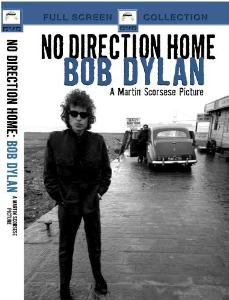
Film: No Direction Home (2005)

Finally got around to watching Scorsese's long doc on Dylan that revolved around his emergence as a folk artist and then the incredible Newport Folk Festival moment in 1965 when he pulled out an electric blues band, played only 15 minutes as the headliner to massive booing, and never looked back.

I don't really know Dylan's music that well beyond the big singles, but I've heard a lot about how brilliant and encyclopedic his knowledge of old American musical styles and traditions. I think I read that in the assessment of one of his latest series of albums (which folks have said are a remarkable run on their own). Watching this film is an introduction in some ways, but Scorsese does not focus on the chronological assessment of Dylan's ever-changing, ever-expanding musical persona, nor of his recorded output. I think it wisely looks at him from different angles and perspectives, including those of Joan Baez, whose heart he obviously broke, Allen Ginsburg in interviews that were late in his remaining life but quite riveting and dynamic, band members and producers, and other fellow artists like Pete Seeger and Peter Yarrow.

All I can say about the collective impact of the more than 3.5 hours of this documentary (took up two picks on my netflix rotation) is that it really made me think about bucking expectations, staying true to what you have inside, and trusting your voice. Baez has a really telling segment where she described what it was like to be active and political (and linked to him) once he'd moved on from topical songs and traditional folk, when she performed at protests and sit-ins and people asked for Bob: she had to say "he's not coming. He's probably never shown up, you poor fools."

It was so interesting to hear her talk about it - particularly because she's still doing that circuit more than 40 years later. It made me wonder about political art, actually, which I value so much in the Asian American context. Dylan's path gives us the rare opportunity to look at both forks in the road for artists (particularly with Baez or Seeger as a foil)... and activists, actually. He wrote some of the finest songs of his generation that captured the mood, inspired other great work (Sam Cooke wrote "A Change Gonna Come" after hearing "Blowin' in the Wind" and wondering why it was a white man who wrote it), and are still sung today. He then just had to move on.

Should we take note of this - not just in a creative context, but in movement work too? Sometimes I come across folks who haven't reinvented themselves and are still using the same rally chants and tactics (like street protests and petitions) as they've been using for decades. It seems like sometimes folks get so locked in, even when they're not that good at something, that they don't evolve or they stay the same to meet the expectations put onto them by followers or admirers. I wonder if that's true in a lot of contexts, actually, including civil rights leaders who still seem locked into a vision of America from the 50s and 60s, one that is not as diverse nor as complex as that which we work in now. These outdated models, and the people who continue to push them, may stall the evolution of movements for progress. And those are people who were actually once effective.

As a related aside (jumping back to the artist/activists thread) maybe the Two Tongues crew closed shop at the right time. They remain powerful (one of their tracks just came up on my Shuffle last night and the passion rocked my consciousness all over again), and they continued to evolve as individuals. It's a good lesson to keep in mind, and the film definitely hits that point for me. Strongly recommended for music fans and fans who consider the balance of consciousness and the creative process.

Read More......

Apr 7, 2008

Taiyo Na: Love is Growth

I heard about Taiyo Na through the feedBACK collective, APA poets and musicians who came together in the late 90s at the Asian American Writers' Workshop and even put out a cool CD with some of their work.

Taiyo Na has finally finished his debut album, which started out as a wholly hip-hop joint, but now fluidly integrates soul and a range of other kinds of music into the vibe. I heard him in an interview on Asia Pacific Forum (where, incidentally, I first learned about Blue Scholars, who I can't even imagine my life without at this point). The album was put out/produced by Issilah Productions, one of the many projects of former Queens laureate (and damn good singer/scribe herself), Ishle Park. Man - there's talent oozing out over all the boroughs!

So check out some of the tunes, and show the brother some love - I've ordered up my copy, and have been listening to the tracks on his MySpace patiently until the disk arrives. You should too. I mean, the man wrote a love song to his immigrant moms. That's keeping it real.

Read More......

Dec 21, 2007

A World Without Art.

I have spent the last two and a half years stuck in the timesuck that is law school, and while I see the tunnel's end, it isn't really lit up yet. I'm thankful to be back in school, but a quick accounting of what I've lost along the way makes it a less than fully rosy picture.

But what affects me more, and in a far deeper way, is how I have lost my connection to the arts. This has happened over a longer period time, maybe about 4-5 years, spanning from the dog days of the last full-time gig that I held down. In my first life after school, I spent a lot of time checking out performances, readings, and even some visual stuff. It's easy to overlook things in NY, even though it's all over the place, but I was fortunate enough to be in a setting where I had access and I was around artists.

Cut to more social service and policy work, and I didn't have as much exposure, but still took advantage when I could. There's something rejuvenating and pure about art, and engaging with people who want to talk about the (per)mutations of human experience, thought, culture, and political galaxies that intertwine with good work. To feel inspired, to feel challenged, to experience something that is, in most cases, ephemeral... momentary... unique in that moment. That's probably why I love performance. Though live music can fill that gap, but it's still a different experience than other performance, especially good theater and performance art.

I've dug deep into music as a refuge, but it is not a satisfactory replacement, no matter how much I love it. At least not recorded music. I've not been able to read much fiction for a long time, and I still feel that reading is too isolating - it doesn't feel like I'm experiencing something with people the same you feel with performance. The journey is generally inward, and I don't feel satiated or inspired by inwardness.

So I feel empty, in some critical, crucial way. There is a vibrant, creative, urgent world right outside of my viewpoint, and I have not dipped into it for any sustained time in years. And honestly, lawyers, law students, policy wonks - they are too literal, too limited, too linear. Their language is tightly wound around single meanings and objectives - their time too guarded by objectives (worthwhile or otherwise). Spontaneity is a "waste of time" rather than a tapping of the real lifestream that is meant to replenish our weariness with passion for the struggles and stories that make liberation more than just an academic exercise.

No press release nor policy brief ever moved me. No legal argument ever fundamentally changed my view of the world and my place in it. No conversation with a lawyer has ever really kept me guessing about which turn or angle it will take next, careening from random association to crystal clarity and connecting dots I didn't even know existed. I don't begrudge any lawyers this, because it's not their role, but I miss what I have lost.

Read More......

May 7, 2007

From Monument to Masses; API Arts in San Fran.

I just clicked into the Manja: Asian American Arts Events list of events happening around town in San Francisco when we're there. There's a lot! I'm incredibly impressed. One of the events we actually missed, though, was a concert by From Monument to Masses on April 20. I decided to bite and see what they're about, and it ends up that they create instrumental soundscapes that are quite compelling, but not just for "suffocating artsiness of highbrow indie wankery." Check out this opening paragraph from their band bio:

"The work: to make revolution irresistible."
- Toni Cade Bambara

Revolutionary. While it's become increasingly difficult to refrain from rolling one's eyes whenever one hears the word, it's even harder not to use it when describing From Monument To Masses. This San Francisco area three-piece, founded in late 2000, is constantly pushing the boundaries of instrumental post-rock--combining layers of guitar loops, driving polyrhythm and breakbeats, and sampled sound into emotional, ever-changing song structures. FMTM's music has always moved away from the pop music standards of lead vocals, verse-chorus-bridge song structures, and radio-friendly song lengths. But there is a conscious limit to their instrumental experimentation...

Hell yeah. This is what I'm talking about. The music and smart samples speak volumes. I'm very impressed by the four tracks I heard through their myspace, and really hope they come out to the east coast soon. I'm just starting to tap the indie stuff that's all over the place - I guess I've been stuck in the mainstream quite a bit, but learning more about this work that people have been doing is really awesome. More music and groups to check out. But what hits me with their stuff is that they aren't afraid of the political message, without hitting you over the head with it lyrically. I've been vibing out to Explosions in the Sky a lot, but this sound captures the emotion without forgetting the context in which we're living. I can dig it.

Wow - just checking out the arts scene events listed on that site makes me wonder about my choice of coasts. Something else that we're going to miss is State of Bengal's record release party, a few performance showcases (including one by Denizen Kane a.k.a. Dennis Kim from I Was Born With Two Tongues), and a range of visual art openings. While I'm really excited to be out there, I may get antsy about what we're bringing on this coast. The diversity of genres and disciplines is what I imagined for the Bay, but it's a different thing to check out the actual list. Damn. We got a lot of work to do. Talking about movement, working for it is one thing, but it's the artists who will document the experience and move the hearts and minds of the people. Plus, straight-up activists are boring.

Read More......

Feb 11, 2005

DesiArt, Inc?

light trails

After listening to the Himalayan Project CDs that A lent to me last week, I've been thinking about how few progressive desi music projects I know of that are based in the US. Finding ADF from the UK was a revelation for me a few years ago. Their political voice, ferocity, and commitment to grassroots organizing and empowerment were immediately inspirational. But what about here? Don't we have enough of a history in the United States to begin to see musical work that incorporates and embraces those histories?

I hear some of that in Vijay Iyer's piano and jazz arrangements, but no matter how accessible it may seem or become, it's still not a popular music format, and very few people can hear the message without the words. So what about other music projects? Have I just been out of the loop, or are there very few of them around? I mean, of course people point to Freddie Mercury (British, anyway, and though brilliant, he was mainstream with Queen), Kim Thayil of Soundgarden (who has even heard him speak about anything), Tony Kanal of No Doubt (oh yeah! you're saying to yourself... he is brown), and that brown guy in Sum 41 who gets the least screen time, isn't mentioned in many interviews with the band, but I think is the shredding Maiden-head who gives them their edge, and we can't forget Sonya Mandan of Echobelly (British again, but righteous).

I know that there's music out there, especially in the world of underground and local hip-hop - as this article testifies, but it's so hard to find and to connect to. Is it that the music is so far on the periphery, or that I'm so removed from this scene?

Even the writing scene has been a disappointment. How many pieces are out there that talk about a return to South Asia, or arranged marriages - how many novels break that mold and actually reflect some of the experiences that we can actually identify with? And the spoken-word circuit is almost completely bereft of strong Desi voices who have skills, spit consciousness, and represent real community issues. That's why we have to really support folks who are trying to do this - from D'Lo to the HP brothers. And why we have to take to the clubs, the dancehalls, and the lyricist lounges to find the next voices of this crazy generation.

I'm tired of getting crappy Asian Avenue Plugged In CDs and wondering where the South Asian voice is. I'm tired of Asian American music and spoken word events that have either no, or worse, that bad self-exoticizing kind of desi artist on the playlist. I would rather they don't appear at all than appear and put another piece about arranged marriage or terrible food metaphors out to represent some twisted worldview as a self- or other-appointed ambassador of desi culture. You can't help it if others label or try to squeeze you into a box, but you most definitely don't have to embrace and perpetuate that perception that you're a voice of a people.

High-end desi art, especially in the world of English-language literature, continues to celebrate a "Renaissance" of sorts, in which Booker and Pulitzer and Nobel seem almost pedestrian prizes for members of the global diaspora. But whose stories are they telling? And if it's art for art's sake - who are they really entertaining? And in setting the mold and the expectations of what stories from brown writers should be like, aren't we backing ourselves, and more troubling - future writers, into a tiny little room from which to write? How can the artist depict different views of the world around her, if she's got the same window to look out from as all her peers and antecedents?

All that said, I think that the stage, with plays and theater, are probably further ahead than any of the other creative art forms, at least in NYC. I have seen a number of performances and short plays that feel more with it - especially stuff that DesiPina Productions has been doing. More power to them. Documentary film-making has also been strong, and getting stronger. But the creative side still feels lacking.

However, the aggressive marketing of cultural products has co-opted most attempts at community arts movement. There's so much space for that kind of work to grow, especially in South Asian communities. Where's our Kearny Street Workshop? Is the Basement Workshop's model - something that we spoke of with reverence, if not complete understanding in the 1990s arts community of NYC - outdated and impossible in the corporate, professionalized community-work environment?

So do yourself and the community a favor - support local art that brings forth local and community voices. It may not be polished, but if it's honest, it will have something that no MFA program is going to teach you: it will begin to give us our anthems to sing as the struggle continues.

Read More......