

So much for writing more this year. It is what it is. The hoopla and excitement surrounding Slumdog Millionaire's Oscar hope has made conversations about the film more interesting, and more frustrating. I have held that it's just a film, and it's average: there are some fun moments, but what's the big deal about this film, particularly in the midst of such a good year in just American and British film?
I think one of my issues is that there is hardly any artistic rhyme or reason to the non-American or British films that make it to the regular film categories in the Oscars. Frankly, the Oscars are a marketing tool to get more people to buy the DVD (or for smaller films, to see them in wider release once the nominations come out). That's all this is about: it's a scheme by the producers and distributors. The choice of "Lagaan" as the first Indian directed movie to make the big leagues for best picture was smart: this is all about the distribution rights, not who makes the film (i.e. it's somewhat irrelevant (and not on other levels) that Danny Boyle is the director of "Slumdog"). It's all about the money, and this blatant exploitation just to get the dollars really bitters me to the whole possibility of cinema to be transformative. It's like "Crash" all over again.
I think my issues stem from the fact that the film opens up a number of social issues: poverty, the abuse of orphaned children, prostitution, corruption, Hindu-Muslim violence, but it uses most of these things as a backdrop to a love story. It's the typical Bollywood set-up, really (think "Dil Se" or any million other films). And it's not that they raise these issues, but that the movie kind of glosses over them. It's just another hook to hang the "feel good" sentiment on: commodifying people, hardship, and things that are not so easily resolved in real life. People argue "it's just a film!" but I guess I don't feel like we can just absolve the film and its creators of responsibility when it feels like they are using these elements to show how it's somehow different from the thousand other films made in India and around the world. If the film is to be an escape, so be it: but then make the love story more believable, and stop using people's suffering as your prop: then I won't care so much. But the reason this film shot up is because it kind of absolves middle class/rich, and/or white people of their guilt for fostering some of the problems that the film uses as backdrop. When you have "Milk" and "Che" out this year, what is "Slumdog" but proof that this system is nothing but jacked up.
I guess it's like when people get upset about progressive political messages getting into mainstream radio. "Keep it separated!" they yell (and really, how much of it gets through anymore?). It's not a selling point nowadays to be socially conscious and/or radical in our mass culture of escapism, but if it were, maybe those songs would be on the radio more (ala 60s?).
Feb 9, 2009
Slumdog, Briefly

Dec 28, 2008
Film: Frost/Nixon (2008)
Rounding out my holiday movie watching spree, I got to see Frost/Nixon as the result of a weird series of negotiations between three of us trying to manage dinner, our disinterest in going out to where the indie theater was playing a few different films we want to see, and the resistance of at least one in our party to seeing that Brad Pitt movie, The Wrestler (which I will still go see when I get a chance), Valkyrie (the Tom Cruise vehicle), and probably some animated movie about dogs or rodents (there's always at least one playing at all times, right?).
It was a pleasant surprise. The film was put together well, and who would have thought that Ron Howard could pull together such a compelling piece of cinema. Basic premise: it focuses on the first thorough interview that Nixon granted after his ignominious descent from the highest office of the land. The person who landed it: a pop/celebrity talk show host from London who saw this as a golden opportunity, and got a few lessons in real journalism along the way.
I thought the screenplay was sharp, the supporting characters were compelling enough to move the story along, but we didn't get too much unnecessary background on them, and the pacing was excellent. The leads, recapping their roles in the play upon which the screenplay was based (Frank Langella as Richard Nixon, and Michael Sheen as David Frost) were crisp and memorable, the dialogue sharp, and everything else smooth enough to not be distracting. If you like good political drama, check this one out. Highly recommended.
Unfortunately, we ruined the feeling and depth of this film by going to another right afterwards (see Seven Pounds (of crap) review below).
Film: Seven Pounds (2008)
Caught this as a one of those spontaneous double-features last night. Man, spare yourself and don't watch this movie. Will Smith was awful - I don't know if I've seen a worse film of his, and I may have to see Pursuit of Happyness or some other not-well-rated film just to cleanse myself of this one.
I thought Rosario Dawson was the best part of the film: she was more believable than anything else, and I actually liked her character - she didn't overact, and I felt her vulnerability (details are unimportant in this one - trust me), but that just didn't rescue the film for me. I mean, think of her as the pearl sitting atop a bass drum-sized tub of 4-month old, slightly greening gazpacho that has not been chilled.
The plot wanders, the mind loses track of what is going on, and you just want it all to end. I can be a sucker for believable melodrama, and even the occasional romance, but man, please don't do this to me. Do yourself a favor: find another film with a believable, vulnerable role for a supporting actress, and just watch that instead of this one.
Dec 25, 2008
Film: Milk (2008)
I was a little skeptical about a mainstream Hollywood movie about Harvey Milk, even though I have a lot of respect for Sean Penn's choices. After seeing the film a few days ago, I'm happy to say that my hesitation, though well-founded, was not justified in the end. Sean Penn really does throw himself into the role, and just in terms of great acting, it's a performance to watch.
But more importantly, I think the film gives you a real flavor for a particular character in American politics and social movements, not as a perfect or unmatchable soul, but as a full person. I liked that a lot - doing some sort of movement work for longer than a minute, there were a lot of moments when we thought "hey, we know people or situations that are similar or that this reminds us of." I checked out the documentary about his life and assassination a while ago. Rent that for a historical perspective when you get a chance.
Geo/Pro Brown from Blue Scholars said it best in his review here: "What makes Milk so much more than just another historical bio-pic or a generic plea for humanity is an awareness - by filmmaker, writer and actor - that the personal is political. That leaders are created by movements and not the other way around, as most other movies suggest." Here, you get a sense of the people around Milk too, that colorful cast of characters who are committed to more than just their own self-aggrandizement, or even just the cult of personality around that central figure.
Amen to that, and as far as mainstream movies go, this one is worth seeing before it gets kicked out of the theaters by the usual drivel that comes around during the holidays and beyond. Though I have to say, it's because of the holidays that I am actually catching up on some films finally. Look forward to a little writing about "Slumdog Millionaire" next, and have a peaceful week, ya'll. 2009 is rising!
Nov 11, 2008
Film: No Direction Home (2005)
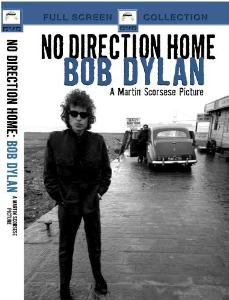
I don't really know Dylan's music that well beyond the big singles, but I've heard a lot about how brilliant and encyclopedic his knowledge of old American musical styles and traditions. I think I read that in the assessment of one of his latest series of albums (which folks have said are a remarkable run on their own). Watching this film is an introduction in some ways, but Scorsese does not focus on the chronological assessment of Dylan's ever-changing, ever-expanding musical persona, nor of his recorded output. I think it wisely looks at him from different angles and perspectives, including those of Joan Baez, whose heart he obviously broke, Allen Ginsburg in interviews that were late in his remaining life but quite riveting and dynamic, band members and producers, and other fellow artists like Pete Seeger and Peter Yarrow.
All I can say about the collective impact of the more than 3.5 hours of this documentary (took up two picks on my netflix rotation) is that it really made me think about bucking expectations, staying true to what you have inside, and trusting your voice. Baez has a really telling segment where she described what it was like to be active and political (and linked to him) once he'd moved on from topical songs and traditional folk, when she performed at protests and sit-ins and people asked for Bob: she had to say "he's not coming. He's probably never shown up, you poor fools."
It was so interesting to hear her talk about it - particularly because she's still doing that circuit more than 40 years later. It made me wonder about political art, actually, which I value so much in the Asian American context. Dylan's path gives us the rare opportunity to look at both forks in the road for artists (particularly with Baez or Seeger as a foil)... and activists, actually. He wrote some of the finest songs of his generation that captured the mood, inspired other great work (Sam Cooke wrote "A Change Gonna Come" after hearing "Blowin' in the Wind" and wondering why it was a white man who wrote it), and are still sung today. He then just had to move on.
Should we take note of this - not just in a creative context, but in movement work too? Sometimes I come across folks who haven't reinvented themselves and are still using the same rally chants and tactics (like street protests and petitions) as they've been using for decades. It seems like sometimes folks get so locked in, even when they're not that good at something, that they don't evolve or they stay the same to meet the expectations put onto them by followers or admirers. I wonder if that's true in a lot of contexts, actually, including civil rights leaders who still seem locked into a vision of America from the 50s and 60s, one that is not as diverse nor as complex as that which we work in now. These outdated models, and the people who continue to push them, may stall the evolution of movements for progress. And those are people who were actually once effective.
As a related aside (jumping back to the artist/activists thread) maybe the Two Tongues crew closed shop at the right time. They remain powerful (one of their tracks just came up on my Shuffle last night and the passion rocked my consciousness all over again), and they continued to evolve as individuals. It's a good lesson to keep in mind, and the film definitely hits that point for me. Strongly recommended for music fans and fans who consider the balance of consciousness and the creative process.
Sep 16, 2008
Film: The Prestige (2007)
Like so many films during law school, I slept on this one. Not through it, mind you. On it. I think this came out at just around the same time that The Illusionist came out. Isn't it funny how things like that happen? You get multiple movies about talking ants, sharks, what have you, all in the same year. Well, those are animated, these are not. Anyway, caught afore-mentioned Ed Norton flick on video first. I think it's better that way. If I saw this one first, I may have stopped watching the Norton film after the first 15 minutes because it didn't have the same level of attention-grabbing.
Directed by Christopher Nolan, of Memento and the great new generation of Batman features fame, and starring Hugh Jackman and Christian Bale in great roles as rival magicians at the turn of the century, I have to say: this one was fun to watch. Where else will you see two superheroes go head on without possessing actual powers? Or is it that simple? The film isn't perfect, but there's enough mystery and period sets to keep things interesting. I definitely enjoyed it, but with plot holes and various jumps and skips, I'd have to give it 3.5 out of 5 stars. Still, there are some really interesting questions that the film makes you think about, particularly the way science and magic were perceived at that time (and maybe even still), and the line between performance and reality. It's a good ride.
Sep 2, 2008
Film: Batman: Gotham Knight (2008)

To take it back, I loved the Batman: Animated Series cartoon. It took me a while to get into it, because it was different from the other stuff that was out there (and I think I was in high school or something when it came out). I remember first watching and thinking "this is it? why is there so little music? It's just him talking, and then there's some action, then more talking." I finally gave it another chance, and realized what was going on.
The creators wanted to bring Batman back to his roots from the comic books - Frank Miller's reinvention of the character as a much more complex, dark figure in the DC Universe.Batman was much more aloof, harder to connect to the sunny optimism (and red, white, and blue Americanism) of Superman. He had a dark back story that led to the character that we know. He lived in the shadows, did not have supernatural or extraterrestrial origins to make him special: he was a bad mofo with a lot of money and personal discipline (most of the time).
Because of this, Batman was more human this way, and tapped into something deeper with real readers. Additionally, his realm, Gotham is a dark, sinister version of NYC, where retro, modern, and futuristic forms and technology clash and combine in interesting (but almost always gothic) landscapes. I think Nolan's Batman Begins and Dark Knight also went back to the source material, which is why the fans of the comic have been so taken by them, and the films worked in shadows and shades of black and gray.
I had mixed feelings about the film, only because it made me nostalgic for the old series, which I would record on VHS whenever I could (time to dig out that tape... and buy a VCR?) but it's definitely worth seeing for the fans. I don't think I could rank it better than Mask of the Phantasm, which I actually saw in the theater. You know, this just made me realize that I never saw Batman and Mr. Freeze: Subzero, which is actually ranked higher than Mask of the Phantasm on Rotten Tomatoes...
Aug 31, 2008
Film Recommendation: Heavy Metal in Baghdad

One of the most amazing things is that the band had been together since 2002, but until their "reunion" show in Syria, they'd only played 6 times together. Their rehearsal spot in Baghdad was blown up by a rocket. They had nothing left, and yet they still push ahead to try to make music. It's phenomenal and really sad and triumphant all at once. Even if you're not a fan of the genre, you have to see this film. It's just very moving to see these young guys who have seen so much yet keep on pushing. And again, like that monk from Italy, they say that Metallica is an influence, but they kick Metallica's ass all over the place: their playing really rips.
On top of all of this, the film was co-directed by a South Asian Canadian: Suroosh Alvi - he has a welcome perspective that made me much less suspicious of it from the get-go (seeing the film-makers wearing kevlar vests just so they could make the trip out to Baghdad from the airport to meet the band in 2006 was pretty striking). They had to travel in an armored SUV and hire 2 gunmen and a fixer/translator.
You know, when I was talking about the film with a friend over breakfast yesterday, I realized that beyond the music element, the story personalizes the very real heartbreak playing itself out over and over again for people who have been forced to leave their homes as refugees, seeking asylum in places that are not as war-torn or dangerous. But it also reminds me that the story never ends with their entry into the accepting country: asylum seekers do not have it easy, and the band's travails and sharp observations of life in Syria (and to a lesser extent, Turkey) was quite telling. On the flip side, the way that the global metal community, upon watching the film and hearing that the guys had to sell all their gear to eat, came together, and raised money to get them more gear. Regardless of what people think about this subculture, there is a community here, and reading that just reminded me of that fact.
Anyway, not your average documentary about metal. Check it out. You won't be disappointed.
Aug 29, 2008
Jessica Yu's Ping Pong Playa
 Okay, just listened to a report on Asia Pacific Forum (if you are reading this, you should be listening to the weekly show from the prog/rad collective in New York) about Jessica Yu's new film, Ping Pong Playa. I definitely want to see this film - seems like an insider's send up of a lot of the cliches in Asian American activism and community dynamics. Here's the synopsis from the Asia Pacific Forum piece:
Christopher "C-Dub" Wang, a suburban Chinese American kid, aspires to make it in pro basketball. He spends his days talking trash and overreacting to perceived slights against Asian Americans. But when misfortune strikes his family, C-dub must overcome living at home, working a dead-end job and living in the shadow of his older brother, a physician and ping pong champion, to run his Mom's ping pong classes and defend the family's athletic dynasty. We’ll be joined in the studio by director JESSICA YU and by JIMMY TSAI, who created the character of C-Dub and played him in the film. Ping Pong Playa is the first narrative feature for Yu, an acclaimed documentary filmmaker.Catch the film as it debuts in NYC, LA, and the Bay Area next week! Read More......
Aug 28, 2008
Heavy Metal Monk: Fratello Metallo
This is a real monk from Italy who was so taken by heavy metal that he decided to create a band and sing without pushing his faith on people too hard. The dude says he was inspired by Metallica but he could sure teach those losers a thing or two.
There are a range of really interesting metal books and films coming out. Heavy Metal in Baghdad made the circuits in film festivals last year. There's a new film that I'm very anxious to see, called Global Metal, by the excellent director (metalhead who is also an anthropologist) of "Metal: A Headbanger's Journey." The film tag "7 Countries, 3 Continents, 1 Tribe" captures a lot of the allure for me, actually. I'm looking forward to seeing that one and will report back once I track it down.
Meanwhile, get a good trappist beer and rock out to Fratello Metallo. Man, these monks are cool.
Aug 27, 2008
Tropic Thunder: Appropriation Revisited

Without ruining too much, the whole film is a satire on the industry, and Downey plays a five-time Oscar winning Australian actor who is such a method actor that he decides to undergo a medical procedure to "look black." Downey plays his role to perfection - making fun of extreme method actors (Day-Lewis, anyone?), cultural appropriation, and the seeming paradox of actors with huge egos and overwhelming insecurity. There was also a black actor on the team calling him out each step of the way ("there's only one role for a black man in this film, and you get it!").
Stiller surprised me: I was expecting nothing but slapstick and bathroom humor (they make fun of some of that as well). I know there are criticisms of the film regarding its approach towards the mentally disabled, but I have a feeling that some of that was also tongue-in-cheek (saying to the viewer, we're so clever about race that we have multiple levels about that, but Hollywood doesn't get everything). Maybe that's giving them too much credit, but some of the "retard" comments were so over the top that I feel like they knew what they were doing.
But this also makes me think about representation and appropriation, particularly in light of some of the weird Mickey Rooney denial of the racism inherent in his much reviled Asian caricature in the otherwise classic Breakfast at Tiffany's.
Is there a space where this kind of caricature is acceptable? And does it matter who is doing it and for what reason? The film features Asian actors playing members of an Asian drug ring, and it begs the question: we get pissed off when white people play our people, even in "sympathetic" roles, but then our people play our people in crazy terrorist/trafficker/bad driver/whatever roles, and we're okay with it? Because an Asian/POC actor has to live and "Hollywood's fucked up - you have to play the game so you can get to where you don't have to play the game"? I'm not feeling that. But I guess I'm not an actor, either.
***
Anyway - if you want to see two octogenarian actors/movie people talk about this film (it's not perfect because they get caught up in the whole "PC" discussion) check this review out. But it's kind of funny to hear them talk to each other and about this film. Woah - just watched their review of the Dark Knight. Not cool.
Jul 1, 2007
Red Doors: Thumbs Down.
Have been in a whirlwind of other activity lately, so haven't been able to be present here, but hell, it's summer and I'm not making excuses, just living life. Enjoyed Gravel in the Dem "Debate" at Howard. I really think he was awesome, because he made Kucinich look like a regular ol' liberal. So his little quixotic campaign is offering the most interesting element to the long and overwrought primary marathon. Gosh, I can't wait for this to be over. I can't imagine that I'll be out of school and working (hopefully) by the time election day finally rolls around. Unreal that we're still 16 months away.
Anyway, I saw Red Doors by Georgia Lee recently - one of those films on the "must see someday" list that I finally got around to. I want to be supportive, but I have to give this one 2 of 5 stars. And one of those is because as an APA film it gets an automatic star. It just didn't do it for me at all. I found the storytelling to be too ambitious with not enough going on, if that makes any sense. I didn't believe in the family or in any of the individual characters, and it wasn't a small enough movie or plot for me to just sit in for the ride. So that was a problem, because I got to the point when I just didn't care about what was happening anymore. I know that it's not fair to compare a new artist with one who is established, but thinking about something from Wayne Wang like Dim Sum or Chan is Missing or Ang Lee's Wedding Banquet or Pushing Hands, and you really see masters at work. It's a totally different thing from what I was witnessing with this film. I felt like it was flat. And I really like Asian American films (do I have to sit here and talk about the merits of Shopping for Fangs, Disoriented, or even... well I won't go as far as American Desi because of Alaudin's role in it, but still... I'm pretty soft on these films). Even though I think that Mike Kang had promoted the film as one to see because it's a filmmaker that he knows, he's being too kind on this one. Watch Better Luck Tomorrow again, and even though you'll cringe at some of it, hell, the story still drew you in. Okay, I'm panning this film, but it was formulaic, and for a 2005 film, we should be beyond the formula. Eat a Bowl of Tea wasn't even formulaic, and we had stuff like Joy Luck already. Give us a sliver of life, but make it vibrant.
Georgia Lee's first short was included in the DVD package ("Educated"), and it was actually more interesting than the feature. It had some interesting concepts, angles, techniques (like I'm an expert). But the feature didn't do it for me, and I wish her well. The scenes with Julie, the middle sister, made me really want to see Saving Face, Alice Wu's clever, sweet, well-acted film that I just thought the world of. Better luck... next time.
May 25, 2007
More SF Docs.
To prep for the trip to the Bay, I checked out a number of docs on the area. I know I missed some good ones, but I have odd taste. So besides seeing Sucker Free City, which is not a doc, didn't make much sense to me, and was a poor example of a mid-era Spike Lee Joint (see here for my low-down), I saw these:
1. The Parrots of Telegraph Hill. Weird doc that traces a flock of parrots that's been living in SF for a while, including a dude who was sorta studying/living with/bonding with them. It was quirky, but 90 minutes of man and the birds got even me saying "save me." Still, at least I got to see more of the neighborhoods and understand them a little. Didn't see the flock when we were walking around though. Pity. They'd probably have shit on me anyway.
2. The Times of Harvey Milk. Really glad I saw this before going. I didn't know enough/anything about Harvey Milk, and he was pretty awesome. The film is 80s era, made not long after he was killed, and actually before his assassin killed himself (and the ultimate understanding that the dude, Mike White, wanted to kill a lot more people than the Mayor and Milk). Anyway - my favorite parts were seeing his victory celebrations, and hearing about how he stood up for language access for the Chinese community without asking Henry Der/Chinese Americans for Affirmative Action what he should do. That was pretty cool - wish the fuckers in councils around the country would do that now. It's LEP, stupid.
3. Piece by Piece. A doc on SF graffiti and street art. This was awesome. You must check this out. I think I even liked it more than Rize, which I really liked. I guess I missed this culture altogether, growing up in white suburban stupidity. But learning about some of the people, and better understanding what folks were doing - it just really spoke to me. The camera/doc style is uneven and shaky in the beginning (got motion sickness in the first 15 minutes) but it evens out. I really dug the respect people were giving to others, and the deaths that happened in the community were from stupid shit outside of the community. I was really touched by the way they all talked about Mike Dream - a Pinoy brother who seemed to have his shit together, and who integrated political messages into his work, and his relationships, before he was killed in Oakland in 2000.
I missed an event in SF in memory of him - which sucks. But it's good to know that there's a site that also tries to keep the memory alive. It's also really interesting how many Asian kids were involved in graffiti/street art - I think it makes a lot more sense now to me about how there are all these Fil-Am DJ crews - after watching Rize and now Piece by Piece, it seems like they were involved in hip hop culture all the way around, way back when. It's pretty amazing, and a story I didn't really know. I feel like that's one of the things that makes the West Coast really special - they were already around way early, so they were in on the foundation when shit was getting started, unlike the new people getting involved now. They helped to shape that foundational culture.
Anyway - film made me think about graffiti art in a lot of ways (not based on its actual content). Just the way that people are willing to take such risks and do crazy shit to create art, and art that will likely disappear in a day, a week, not much longer. But they do it anyway. And the tags that I wasn't a big fan of (everyone can appreciate something big and pretty) seem to make more sense in the context of the big stuff.
Yeah. I'm done with docs for a while. But check out Piece by Piece. Worth it.
Apr 1, 2007
I for India: On Lata, Leaving, Longing, and Losing Our History.
I recently had the very good fortune to see I for India - a family documentary that touches on the emmigrant experience of a particular family that settled in the U.K. If you can see this film, I highly recommend it. It's a very personal look through the eyes of the family itself, because they used the medium of film to keep in touch with the family they left behind in the United Kingdom. The loving arrangement of these fragments was made by the youngest of three daughters and interspersed with amusing and illuminating BBC and other clips, as well as present-day segments with the filmmaker's parents, the emigrants who straddled two worlds in their quest for a new life, and even tried to return to India.
I'm not going to go into the play-by-play on this one. Just check it out. However, there were a few scenes that really touched me. There's a scene that has the filmmaker's father in the present day, going through his morning routine (and at other times going through mundane, home-owner chores like property maintenance) with his headphones on. The filmmaker smartly takes us inside the 'phones, and gives us a blast of old school filmi music from the greats of Bollywood. I couldn't name the song, but I'd heard it countless times before while growing up, and as the images on the screen segued from a small town in the UK in the 21st Century to older 8mm film from India, I felt like I was traveling down the winding road of memories with him.
And it was at that point that I started to think about my parents, and by extension, many emigrants from India and Pakistan who left bright-eyed and ready to study or work in the 50s, 60s, and 70s. I don't know a lot about their stories beyond the touchstones ($8 in my pocket, going to Chinese markets to get Indian vegetables) that we always take for granted. But I do think that there are some things that lie just beneath the surface about their big trip out here, into the unknown and away from their loved ones and the reassuring feeling of belonging just because you look like everyone else.
It's nothing like what immigrants to urban areas in the UK and the USA face now. Even though the earlier generation was well-educated and/or relatively affluent, I imagine that the predominantly bachelor population had a bit of a shock having to do many of the household activities for themselves. They didn't have the option of going out for food and conveniences from home that most H1-Bs take for granted now, and had to either cook, or adapt to the new environment (with many bringing a less than climactic end to the countless generations who preceded them without taking drink, cigarette, or meat).
Nor did they have the regular communication back home in the years predating low-cost and accessible internet (or even international long distance). Forget that, getting the news of back home was probably quite difficult in the UK and nearly impossible in the United States of the 50s and 60s. So they were on their own, and left to their own devices to survive, to make a home for themselves, and find some comfort in what was likely a cold place. Imagining that time, and thinking of how much was changing in the United States, especially with Kennedy's election, his assassination, the war in Viet Nam, and the growing importance of political protest in the culture of the time, I just wonder what it was like for that generation of people who came to the U.S. to study or to work. What was it like for folks who came from inherently conservative backgrounds to be in the United States at the time when it was arguably at it's most liberal? When revolution was actually something more than the rhetorical exercise its become in the States. Many of my friends speak of the 60s and even early 70s as the time they wish they were around, and active, because of how many things were coming up at that time, and how much (at least in our looking back at their history) it seems like people were actually engaged and willing to be more engaged. But it seems that many of us forget that we likely know folks who were here during all of it. Our parents, our uncles and aunties, a family who we've been in touch with through our many informal desi networks. But have we ever asked them of their impressions, when Watts and other urban centers were burning... when the 4 students were shot at Kent State... when Fred Hampton was killed by the FBI? Or do we fear that nothing beyond the big assassinations really registered?
Anyway, aside from the context in which they came, they were probably met with curiosity in the U.S. (or downright racism), and I can't even imagine the range of reactions in the UK where the scar from the colonial "umbilical cord" was still fresh. Still, as curiosities, they were probably spared the virulent anti-immigrant rhetoric that bleeds into most mainstream media in the present day. But without their own media outlets, the earlier wave of desi immigrants missed out on more than just the news: they also missed out on music and the simple comfort of turning on the radio and hearing songs that would remind them of growing up, of their parents, of home. But for whatever reason, and in whatever way, their connection to that music is incredible. Songs that they haven't heard in decades come flooding back when happen upon them, and their memory of when they first heard the song, or when they first saw the movie, is often impeccable. Somehow, the ability to recall the year of release seems to be very prevalent with a particular generation, and it's not limited to just the men - the aunties can bring it too.
Perhaps their separation from their homes and the music that enveloped them through much of their formative years (whether consciously or not), and the shock of arrival created a more developed connection with that music. But is that explanation sufficient?
When I think of my family members and uncles and aunties I know from India, and their depth of recognition of popular songs from Hindi films, and the emotional ties they have to that music rivals anything I know from my friends or myself. The music and love of the songs from that particular time (40s, 50s, 60s) is not a casual exercise for many of these folks, even though they did not own much of the music while growing up. It was radio, maybe more than the movies themselves, that soldered the songs to their memories, creating a link that has stayed with them through the great journey over the ocean and into America.
And the amount of music that they know off the top of their heads, and the connection between those songs, their memories, and who they are is astounding. For a long time, as an American/British popular music enthusiast, I scoffed at the relative paucity of music in India that was independent of the film industry. The link between the movies and the music, though, is making more sense to me, especially in the context of immigrants who are removed from the lives and worlds that they remember. While folks listen to songs/music many times, especially when linked to their emotions or memories, there's something more profound about the way that songs from Indian films end up having both a very personal connection for our folks, and also a visual element because of the films in which they were housed. It's difficult to separate the soaring duets by the famous singers from the actors/actresses who were likely in mind when the songs were conceived for the films in which they appeared. Take the interplay between emotional weight of the song from within the film, and then the emotional pull of that song within the listener's own life, and suddenly, you have emotional content that's far more potent than most pop music in other contexts. I guess the best analogue we may have is musical theater in the United States, for the folks who have the privilege of seeing really good shows and being affected by them - Rent is the obvious choice for me, but I have similar feelings for songs from Les Miserables, Sunday in the Park with George, and a few others. It's the combined effect of the music, the lyrics, the delivery, and the context. And getting context beyond the song itself is helpful to bond your emotions to those songs.
I remember going through my Dad's records while growing up, and just passing right by all the desi records to get to a Muppets 45 that we had, or later on, to discover the copy of Abbey Road that he'd bought, which now hangs on my sister's apartment wall. But I went back home recently and dug out the records that Mom had stored carefully, even though we hadn't had a working record player in the house for well over 15 years. I was amazed at what was there - more than just for the retro-cool of having Bollywood paraphernalia that didn't reek of the new schmalzy palette of the 21st Century, but because these records represented, for folks who were pretty modest in what they bought and kept, some kind of connection to home, to belonging, and perhaps even to their childhoods and adolescent years. I was suddenly filled with more regret that I didn't take the chance to go through these records and garner some of their stories when I had the chance.
Maybe some of the 45s actually came with my Dad from India when he first came here in the early sixties to study, though given how little money he had, that's pretty unlikely. Maybe they came with his brother, who he sponsored in the early seventies. Some of the 45s are in thin plastic sleeves that have a record store's name printed on them - a store from Bombay. Maybe some of the records were part of some prized collection that he took care of when he studied in Bombay. But that's incredibly unlikely as well, because he wouldn't have had a record player in India.
But sadly, the possibilities of where these records were from, and how they fit into the puzzle of my father's life in India and in the United States are not comforting to me. They are pieces of a relationship that I didn't put together quickly enough, when the time was in front of me. And I don't want to create fiction about something that is so hardwired into who I am. I want to collect and understand where these things fit in the past. I want to recreate what really happened. I want to see my father eye-to-eye through the few things that he left behind of who he was.
Ignoring our own histories in the effort to emphasize the injustices felt by newer economic migrants doesn't really help them. It just makes the middle class activist more likely to ignore stories of early immigration, acculturation, and resistance that don't fit the mold of "the most oppressed" group within the community or direct action or organizing. The motives for their resistance to discrimination and misunderstanding may not comport cleanly with our goals for critical analysis and desire for a break from the capitalism that brought them here to begin with. Their "making it" (economic assimilation, if not cultural) after initial difficulties may seem to argue against the whole project of discussing their history to begin with.
But denying their history or its personal import makes us somewhat rootless. Rootless in way that is unlike those people in poor communities with whom we want so much to identify, to work with and on behalf of (for non-organizers). We deny these stories from within our own families because we perceive that the minor injustices and difficulties that we think our parents faced register as less immediate, less pressing than what people are dealing with now. But I'd argue that we need to ask these questions. We need to document these stories, if not for some larger movement, then at least for our personal histories and to pay the proper tribute to our parents who made it through cultural upheaval in a way that few of us will ever experience. So even when we're talking about middle class privilege, and while we keep their experiences within the broader context of the different waves of immigration and the difficulty that poor and uneducated immigrants have in this American society, we should keep in mind that the stories of our parents are still interesting, affecting, and part of the mosaic of our communities in this country.
And I think that more than anything, I for India really recognized this, without overemphasizing their struggle in the UK or anything else. It was clearly a labor of love to her parents, and it made me think of how much time I've lost without asking some of these questions. Some of which I will never get to ask.
Mar 27, 2007
Afro-Punk & Metal: A Headbanger's Journey
I've been promising, among other things, a quick take on the really interesting documentary Afro-Punk that I picked up through NetFlix. I've not gotten around to it until now, and in the interim, I checked out Metal: A Headbanger's Journey, which definitely merits some airtime as well.
There are two very different docs, but both take on genres and subcultures that are altogether unknown to the mainstream. Afro-Punk isn't trying to be a retrospective history of punk - it's really looking at the intersection of race and the genre, primarily through a bunch of interviews with a bunch of young and long-time fans, as well as a few punk veterans. For someone like me, who is so new to the genre, and not a convert to punk, though punk elements in the metal that I love definitely appeal to me (early Maiden/NWOBHM, etc), it was an eye-opener.
Also, because the film kept race front-and-center, I found the questions, approach, and gems that they uncovered incredibly interesting. The filmmaker had a light tough, enough so that you didn't feel like he was trying to make some profound statement from the film. It asked a few questions, found a bunch of interesting people, and just gave us a brief introduction to their place in a genre of music that's so often associated with unhappy white kids that you forget that some of the real trailblazers, like Bad Brains, like members of a bunch of groups, were actually black.
My favorite part was when he had a bunch of the interviewees, in rapid succession, saying that they were the only black kid at punk shows growing up. It's just awesome to hear like 10-15 people say the same thing. And you think "I wish I could have them all meet each other!" There's also something refreshing about the do-it-yourself aspect of punk - I was pretty inspired to see/hear folks talk about it - the race didn't really matter - it was the attitude. And finally, one sister was really deep because of the way that she identified the music, and the culture of punk - from the haircuts to the tattoos and piercings, with specific traditions in Africa. It was quite powerful to hear her talk about it, and talk about how much she was mocked or told that she was "acting white" by folks in her neighborhood, when she flipped it and said "actually, I'm getting closer to a culture that we lost."
It's pretty powerful, and I appreciated her take on it. Regardless, the film moved smoothly, there was enough cool stuff that was known and stuff that was unknown (at least to me, a neophyte to the culture), and I have to say, some of it was damn funny. Not to ruin the film, but there's a moment when the guys from TV on the Radio are asked to name all the groups that had black members, and they went through a list, and eventually said "The Clash... because they *had* to be black" and quickly followed it up with, "the whole scene is full of them!" I guess you have to see it.
So with that rave review of Afro-Punk, which was very satisfying as a film, I have to move on the Metal: A Headbanger's Journey, which suddenly found itself high on my Netflix list and in my DVD player quickly thereafter. What can I say? This is my genre, my first love in music, and the first true community that I felt like I was a part of while growing up. The filmmaker is an anthropologist who was a metal-head while growing up in Canada, and he has an easy, welcoming style of narrative that draws you in.
The film starts with shots from Heavy Metal Parking Lot, a short film taken during a Judas Priest show in the heyday of crazy metal fans (sometime in 1984, I think) and just showed a bunch of kids waiting for the show to start. I rented that DVD, was not really impressed by the film itself and less impressed by the dozen or so extras, most of which were quite a bit longer than the actual film (though I have to say, the filming of the demolition of the arena where the show had taken place, as well as the metal fan who went through a quite detailed LP-by-LP review of each of the Judas Priest albums as he showed off his collection were precious).
Anyway, so the filmmaker, Sam Dunn, a fan of the music, went on an exploration of metal culture and history in his film, and I thought that it was well done. He looked at the roots of the music, without talking about it for too long, interviewed people like Alice Cooper, Ronnie Dio (who kept making fun of Gene Simmons), Tommy Iommi, Dee Snider and a number of other respected folks from the beginning of the movement. He also did a one-on-one with Bruce Dickinson, in the Hammerstein Ballroom, which was pretty incredible, and a mind-blowingly funny interview with one of the most controversial black metal bands in the genre.
All that said, because I know the music fairly well, I wanted more. I thought that his exploration of controversy, from the Norwegian church-burning black metalists (and the way that Alice Cooper laughed at them) to the PMRC and Dee Snider discussion, were great. He even dealt with gender (and gender bending) in the genre. But he didn't open the question of race - which may seem like a non-issue because it seems like such an overwhelmingly white male genre and culture.
But it's not, the crowds around the world that turn out for metal shows is incredible (look at Brazil, Japan, and other places where metal shows can sell more than 75,000 seats easily), and even within metal, there are a good number of thrashers and others who are not white. Tom Araya of Slayer is Peruvian. Testament's Chuck Billy and Eric Petersen (at least) are American Indians. There are plenty of others. And the lyrics - from Anthrax's numerous songs to many others - also look at intolerance and hatred in interesting ways. [note, when posting this, I went to the website for this film, and realize now that Dunn is en route to making a follow-up that looks at the world metal phenomenon called: Global Metal. I'm impressed by this dude!]
I would say that the fan base in the United States is similar to punk - there aren't a lot of us, but probably more than you'd find at a typical country show. I haven't seen the extras from Metal but I'm not sure if there's anything there that looks at race either, and I think it remains an interesting angle for an aspiring filmmaker: "Gold, Bronze, Brown, and Red: The Many Colors of Metal"
Mar 9, 2007
Mos Def.
I know that a lot of white kids got into Mos Def when his first solo album, Black on Both Sides, dropped. But I have to say, I think he's pretty awesome. He's walking this interesting line between mainstream sound, because his stuff isn't unaccessible, and the progressive avant guarde in hip-hop (at least by my estimation) because he's not walking the typical path, is using celebrity, Hollywood, Broadway, and the rest of it to raise consciousness, he's not a hack in any of the things in which he's engaged, and he's not afraid to make some statements. For example, he put out a track soon after the tragedy in New Orleans that slammed the Administration, and he had the conviction to sing the song outside of the (AWARDS NAME) and get arrested doing it.
So I have to give Mos Def some props. On MD's acting. I think he's a great actor, actually, from the soft role in Brown Sugar, to his cameo in Lackawanna Blues (awesome movie that you should check out if you can), to his star turn on 16 Blocks, and I just saw him play a cop with enough nuance in The Woodsman to make you both hate and like him at the same time. Mos Def has acting chops. I haven't seen him as Ford Prefect in Hitchhiker's Guide, but I think my father-in-law even liked his acting in a medical history movie called Something the Lord Made.
I haven't heard his latest album, but I'm finally listening to The New Danger on Napster, and I don't know why I didn't pick this up when it dropped years ago. It's basically an album's worth of proof, taken from his song Rock N Roll on the first album, which said flat out that rock music is black music, and reclaimed some of it from the folks who got famous with the rhythms. Danger is brimming with different aspects of rock, blues, soul with Mos Def switching over to the styles in songs composed with enough conviction to keep you on board. It's not the most cohesive album, by any means, but Black Jack Johnson, which is in itself comprised of members of some of the top black rock/funk/pubk acts (including Living Color, Bad Brains, and Parliament/Funkadelic) can cook.
I have to end here - but I'll pick this up on a post I've been promising about Afro Punk, which definitely gave me more to think about in the race/ethnicity prong of subculture/counterculture analysis. Don't know if I'll be that deep about it, but whatever. It's relevant to Mos Def's ever-expansive performance of what is "black music." Hat tip to Mos. I'm feeling you, man.
Dec 10, 2006
Desi Mashups.

Don't know how they'd capture the yearning looks between Amitabh and Dharmendra, but I think it's a hit waiting to happen. Trump's awful Taj Mahal can host it, Royal Albert Palace can cater, and people can take home little dolls that spout their favorite lines from the original, and a bag of masala popcorn.
Apr 27, 2006
Rize and Sucker Free City.
I have had the chance to check out a few documentaries and indy films that I missed along the way. I wrote about Dark Days - which artfully tracked a subterranean community in NYC. I recently watched Rize, and Sucker Free City.
There’s something about docs that take place in L.A. The last one I saw was OT: Our Town, which tracked a teacher’s effort to bring theater to her inner city high school class in Compton. That was a good film, for what you’d expect - these youth take a piece of celebrated American literature, which talks more to a sometimes imagined nostalgia of small town white America, and make it their own through the support of a Teach-for-America teacher. It is definitely impressive to see these young people integrate their expression about their town through this piece of literature and through performance. While I definitely enjoyed and went through the highs and lows with the students, I felt like I’d been through it before. Unfortunately, there was also something a little Stand and Deliver-ish about the whole thing - and it feels like we’ve seen this in so many films. The outsider with the plan comes in and teaches everyone math, or chess, or ballroom dancing, or theater, and it’s a story about triumph in inner city hell. It’s a useful and valued archetype, I guess. Still, taking what is considered an American classic and showing that it’s relevant for our new towns, our new ‘hoods, our hidden worlds that exist within our known cities... I guess that has its own merits.
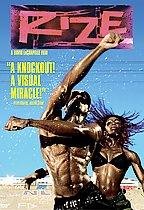 Our Town was an above average film, but Rize, on the other hand, is a great film. It looks at young people in Los Angeles who have created an art form - the schools of dance called clowning and krumping. Rize takes a look at the beginning of this dance movement, which arose from innovation and necessity in the inner city. I just loved the music and the feeling of the film, and rather than try to capture it here, just a few notes before you check it out yourself. First, the film didn’t over-romanticize anything. It just felt like it was showing you a small piece of the unique culture that has developed in this part of the country, how it was seen as a survival tool and a family for youth and others who took to it, and hinted at what was to come (krumping has gained national prominence through mainstream exposure in hip-hop videos, etc). But more than the pop culture element, the filmmaker definitely gives you a sense of how the form is connected in some way to the community itself. It’s hard to explain, but I definitely recommend the film. You even get a brief moment with an Asian American krump family called Filipino Rice Tracks. But regardless, I felt pretty satisfied at the end of the film - like I’d actually learned something, been taken on a ride for an hour and a half, and I had a different respect for a form that I’d seen, but not really understood for anything more than something like popping or b-boying.
***
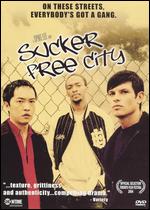 While The Inside Man is the film that folks have been talking about recently, Sucker Free City is a Spike Lee Joint that came out last year for Showtime. It takes a look at 3 young men in San Francisco - a.k.a. the Sucker Free (though this a.k.a. should apparently be “Sucka Free“). The most compelling story is of the black man that’s part of a local gang in the HP (Hunter’s Point) which titles over the opening of the film explain is the site of some of the worst environmental hazards in residential neighborhoods in the United States, is the residence of a predominantly black population, and has a much higher rate of cancer than the rest of S.F. His story intermingles with the white kid from another, impoverished district in S.F. (the Mission) that is gentrifying really quickly, when said white kid has to move into the HP. Their interaction crosses with the Chinese dude... aww forget it. Just see the film yourself if you’re still interested.
As an outsider to the Bay area, I took this film as an opportunity to learn something about the cultures/subcultures in the area, like I’ve used some of the films on LA (with a healthy dose of skepticism, of course). But this film felt like such a particular slice, and though I was initially excited that there was an Asian element to the film, it felt pretty shallow. The character wasn’t very compelling - not at all like the African American character. I liked some elements of it, but it seemed like the writing could have been tighter (Asian American screenwriter, so that’s interesting), and it just didn’t feel like I was getting into anything more than three stories of individuals - my entry into their worlds felt like less than a window, and their interactions also didn’t really hold water. Ultimately, it felt like Spike Lee and Alex Tse were in over their heads, trying to make a point about gangs and communities, but not really getting anywhere because one person seems like he’s alone, one person seems like he’s the peon/bag boy for a larger crime syndicate, and the last one, who’s actually part of what could be called a gang, is in the middle of so many different stories that it’s hard to really understand the character’s arch in the film. So as a broad brushstroke about some of the things that different people face/see in the S.F... I guess it could be passable. As an allegory, or even a representation of anything, I don’t know if it does justice to real stories.
And to top it off, this review from a reader at the Internet Movie DataBase reminded me of some of the issues I had. Especially the fact that the only Latino in the film is supposed to be Puerto Rican - that seems so New York that it stuck out immediately. Not to mention that he didn’t actually seem to have any back-up or group, though he and the white kid talked as if there was something there. So that was questionable. Nevertheless, an interesting film to check out, if you don’t have to pay extra for it.
This has been a ”not quite a review“ squareroots desi production.
Mar 14, 2006
Dark Days: On Life Underground

I thought the film by Marc Singer was the typical anthropological adventure and exploration of a particular breed of New Yorker - the so-called mole people that urban legend had introduced to the intrepid about the labyrinthine depths of the old lattice of train tunnels that criss-crosses beneath the most densely packed area of land in all of the United States. And at first, you think that's exactly what you are watching as you are introduced to a cast of residents with particular habits and idiosyncrasies. However, as you continue to watch their day-to-day lives in a loose structure that doesn't quite conform to classical act-based story-telling (and doesn't have a narrator to lead us along the premise), you start to wonder what the point is of these endless takes. Is there a story? Is it going to be obvious, or is this something fully in the realm of art-for-art's-sake?
But then you start to think about what these folks have in this tunnel, and how they have survived, and found ways to survive, build homes out of what they could find, salvage the usable food and materials from our waste, and even means of income from the discarded items of value to others that they picked up and sold. You think about how they cared for their homes same as any of us would. How they made due, tapping into electricity currents, cooking what they needed, and even supporting one another. You realize what their stories, or at least some of them, were to get them to that place, and how each of them was a survivor, unwilling to live exposed to the elements, or in a shelter where they had no sense of ownership or privacy. I was overwhelmed by their sense of ownership down there.
And then the film moved on to show that they were at risk of being tossed out when Amtrak decided to run their Albany - New York corridor through that tunnel, and how they worked with Coalition for the Homeless, and they were eventually connected with homes on the surface. And then you realize that they didn't enjoy living in the tunnels at all, and that they were surviving, but that they had no romanticized notions of what it was - that they felt and knew that it was hell. And the happiness they showed about moving on and up from that environment was the second striking thing.
The third wasn't actually in the film, but in the making of. There, an interview with Marc Singer revealed that he actually had just been interested in the stories that he was hearing about someone living in the tunnels, after he had been spending some time with homeless folks on the surface. He went down, with only curiosity, not a film project, driving him, and he ended up meeting, and spending about 2 months with folks that he'd found in the tunnel. He then learned, after becoming friends with a lot of the residents, that they were at risk of being kicked out. He was upset, they were upset. One of the residents said "they should make a film of this to remember what it was," and Marc started thinking that it would be an effective advocacy tool to either help stop the eviction or get them place up on the surface, instead of a place on the waiting list.
So he thought he'd make a film, but that the residents would be the crew and that they would have a stake and a role in the making of the film, so that they would be working towards their own solution. And that they would use the money from the film to solve the housing issue for the residents. When I heard the story behind the film, I felt that it actually added a great deal to it for me. And the way that Marc worked to get financial backing without releasing creative control, and that he was actually homeless near the end, having run through all his resources to get to a standstill before finishing the film, and actually having to stay with the residents for lack of an alternative. He spoke about how they took him in, and made it possible for him to finish the film, and also about how they found it funny that he had to join them.
Much is said about the use of film and other media as a medium for change, but often, it is a subject/object and observer relationship, much like anthropology. It feels like the camera lens is a significant wall between the filmer and the filmee. But Dark Days certainly feels very different, mostly because the residents were involved in the making of the film, even if creative decisions may not have been consensual. And because the film remains both the rare example of an advocacy piece that worked before the end of filming (and was able to include some of the positive end result within its 85+ minutes), and a historical document, as the residents destroyed the underground homes that they so carefully and painstakingly built and maintained when they had to vacate.
While it may not be the most compelling subject for folks, I think that the film does what it needs to establish the humanity of the residents and the lives that they were leading without pleading for pity or aggrandizing their situation. It made me think a little differently about my city, and it also showed that not all unhappy stories have sad endings.
Definitely one to check out.
Jul 14, 2005
OT: Our Town
I've been on a documentary binge lately, after seeing March of the Penguins in the theater, we rented Super Size Me and OT: Our Town last night.
March of the Penguins was awesome - nature, drama, even humor in this story about the perseverance of life on the precipice of earthly extremes.

Any other suggestions for docs that I should watch? I really love When We Were Kings, and am hoping to see Genghis Blues and Amandla! soon.