


Apr 30, 2007
Hallowed Be Thy... Delight?

Apr 26, 2007
City reading (i.e. stay tuned)
That time is upon me again, and I'm caught in the humdrum of exam prep. Luckily (or not?) I only have one big exam this term, so once that's out of the way, I'll just have to stress about a take-home exam and a big paper for which I'll have to resist the urge to do the million and a half things I remember I have to do at just the right moment. It's not adult ADD. It's just that springtime feeling, that "can't-stand-being-inside-now-that-it's-finally-warm" feeling. I realize that my patience with some of this stuff is waning, but it's all good. It's a short two weeks before I can pack up these books onto the already loaded bottom shelf of my bookcase.
So for now, not much more to report. Read a couple of really interesting articles about cities, so I'll share the links here:
1) Jersey City ranked #2 in least sprawl in major American cities, after NYC. In the nation. I had no idea that planners viewed the rapid growth in Jersey City to be "smart growth." I have mixed feelings about some of the rapid changes - having spent so much time there while growing up. But it's definitely an interesting piece.
2) Sorta an "answer" to this is a quick review of a new book called The Neoliberal City: Governance, Ideology and Development in American Urbanism, which argues that America's cities are moving away from being places where the poor and working class can afford to live, all as part of this neoliberal wave that encourage gentrification, privatization, and corporate invasion at their expense. It's interesting - I'll see if I can check out the book when I'm free from school.
3) Bonus: A piece in the NY Times (I don't read it myself, but it was on a planning list serv that I read) about Jamaica Avenue. I still like reading these pieces about parts of the city I haven't fully explored, so it's a good one to glance at for a less "deep" read.
Of course, it still smells of the Manhattan-centric odor of the Times and its readership. But I guess Queens is the new Brooklyn... is the new Jersey City? Wall Street West, indeed.
Apr 19, 2007
The Real Face of Terror.

I can't sesem to remember if the white/Christian/MidWestern community apologized for McVeigh's actions. Hell, do you know what school he went to? What denomination he was? Where he was born? Did any of those groups/places apologize for him? Did they emphasize that he was a white dude, and we should look out for other white dudes? Of course not. Race doesn't exist when you're white. It's a non-issue. Sort of like we only "talk" about race when there are non-white people involved. Why is that?
***
Actually, if things that happen outside of our borders struck the hearts of Americans more, I'd have pictures of Kissinger, Nixon, Truman, and a host of other people here. Oh, can't forget J. Edgar Hoover (wait, he was domestic) up here too. Hell, let's talk about the range of other things that have happened on our soil - there were many massacres, as people have mentioned in some spaces.
I guess this begs the question: are widespread massacres and shooting sprees a matter of personal interpretation? Does it really matter if there is one shooter or more than one... or if they were doing so under the auspices of "official" government business? I don't know. The systematic slaughter of Native peoples in the United States, the mass lynchings, the many other incidences of massive violence in this nation may not have happened in one day, but they had a devastating impact. And what the news reporters and the other folks who are so (rightfully) mortified by this week's events don't want to think about is the most unnerving pictures of people going out to watch a public execution (lynching, usually), and the joy on their faces in some of those photographs (if you haven't seen the old photos from lynchings, they are really hard to look at, and I did it because of a class, but the horror moves beyond the strange fruit hanging... it's the smiles on the faces of the onlookers. Accomplices every one.
***
Just listened to "Excuse me Amerikkka" for the first time in a long time by I Was Born With Two Tongues. That track really gets me, but it also reminded me of the terribly sad incident in 1989 in Stockton, CA where Patrick Purdy shot more than 100 rounds into an elementary school payground, killing 8 and injuring 29... mostly Southeast Asian kids. 100 rounds, folks. Do you remember that date? I don't. And that's a shame.
down on every side.
I've been reading the blog of a fellow student in school who I hang out with sometimes. He only told me about his site once, so I don't know if he knows I read it, but damn. I wish he'd cheer up a bit. It seems like he's got some pretty ambivalent feelings about most aspects of his life, from school to his home situation to his purpose in life. I don't even see him raving about... anything. I mean, I complain here once in a while (smirk away, faithful reader), but I'm a happy person, generally. I mean, is it just a function of realizing how blessed we are when we're in the moment? Is it really that hard to think that way? I don't think that my life is particularly spectacular, but I really feel like I've got good things and people around me, starting with numero uno at home.
But maybe there's a certain cache in being/seeming miserable. It's hard to tell. But it's incredibly boring to me. I mean, angst about your own life and your own ups and downs is boring even if it ends up appearing in rants all the time. But mopey posts are just painful. Just keep that shit in your head, man, and work it out. Community workers should be joyful people, or else the burdens of the world (and especially those that less fortunate people than you have to carry) will bury us.
Listen to your old joy division tapes, light up a spliff, do whatever it takes to get yourself out of it. There's a lot of work to do.
Community apologies?
Read this post by angry asian man. I should just stop writing here about this and keep reminding people to read his site. His point about not feeling compelled to apologize is right on. The Korean American community's reaction is all over the map already, with older generations feeling that the uneasy (quiet) space we inhabit in the U.S. is completely disrupted, and as a result, we have to make peace with the mainstream. I don't know that other Asian American communities feel the same or different, but I'm going to link here to something I wrote last year about the constant calls for apologies in the South Asian community around matters overseas.
While this is something domestic, I think the racialization of individual actions is invidious and belies the societal desire to distill "lessons" or generalizations about people. It's been happening to the black community forever, but it's easily attributed to other groups all the time. And it moves beyond the standard stereotypes - violent, homicidal behavior is not the standard way that folks look at Asian males (well, not right now, but just take a step back to WW II, Viet Nam, Sept. 11, etc.).
Anyway, I just don't agree with the community apologies. I think that condolences that are honest and heart-felt are appropriate, but public statements that only focus on sharing the pain seem disingenuine - Asian American groups would not be making statements of condolence about this if it weren't for the face of the killer. That doesn't mean that people wouldn't have sent their thoughts to the college or other places, or that they wouldn't have been actively engaged (we've seen that time and again with other tragedies, including Oklahoma City, which happened 12 years ago today). It just means that I think it's hollow if you don't do it all the time. If you need to show that the community isn't represented by someone who happens to be from it, do something locally, or something that helps in the healing. Be visible. But don't just issue an apology. Why do you think the United States hasn't apologized for slavery?
Apr 18, 2007
Video. Photos. Verdict?
He's playing us all. He assumed that he would be successful, and he got the images and video out so that he could take over the airwaves with his images, and to expose hatred, fear, and all the raw emotions he pulled out in his rants and writing. I don't admire him, but I wonder how "insane" he was to be able to plan to this degree, and to think through how much the media would eat up the images and the video. I just can't imagine what his parents are going through. And I don't want to see the images, the videos, the words. I don't want to make sense of his anger. I know so many people who could have taken the wrong path. How many of them end up joining the military? The police? Some other place where they can inflict their pain on others? How many more broken people are walking among us as if they were whole?
Read More......Apr 17, 2007
V-Tech.
Words are failing me, and I'm not going to take up more space spinning here. It's terrible. People shouldn't have to mourn the untimely death of students (or anyone). It's easy to sit comfortably and ponder and pontificate about this. But I'm not connected to it directly, and it's just disrespectful to those who lost their lives for nothing. So while I'll read, and I'll think about it, and I'll fret over the unfortunate thoughts that people have around possible backlash... I just can't talk about it much right now. Stay tuned into the brother at Angry Asian Man, who's doing a good job of revealing some of the craziness on different angles of this tragedy.
It's just infuriating that people will use this human tragedy as fodder for their personal agendas, from gun control to anti-immigrant rhetoric. Have some respect for the families. Shut up for a while. Just reminds me of what I was feeling about September 11th and New York for a long time. Too many voices, not enough silence, at least outside of NYC. Inside, we were all silent, broken, together.
Apr 12, 2007
Hightstown, NJ and the Know-Nothings.

Check out this story in the Washington Post.
I heard the mayor of Hightstown on an NPR show at the same time as the Mayor of crazy-land Hazleton PA. It was a world of difference, and i have to give the Mayor of Hightstown a lot of credit. He's standing up and saying "these are new members of our community, and we're not going to ignore that." What the know-nothings and isolationists don't want to understand, or what they don't want to agree, is that citizenship or immigration status is not suddenly a clear indicator of worthy and unworthy people. They don't want to even use words that recognize people as people. What the fuck is an alien? I'm sick to tears of people using that stupid word to talk about humans. I mean, take your ass to Roswell if you want aliens.
But we've seen this before, haven't we? The know-nothings, and I'm using that deliberately, of course, may not want to recognize the clear line that we can draw between the language of "aliens" and "illegal people" and the terminology used to describe black people in this country, the fractions used to designate their "white man equivalency." Treating people like chattel was the past - now folks are being characterized as not even being part of this world. Whatever dudes.
Anyway, the Hightstown mayor had it right, recognizing that people want to be active members of their new communities, but it's not so easy when there's so much hate in your face. And these folks who take it upon themselves to write and call in talking about the "rule of law" in this country and how important it is to follow the law are so full of shit it's coming out of their mouths. The vast majority of people are not law-abiding in some way, shape or form. How often do you speed, Mr. Crazed Caller? And how is it that you want such stringent law enforcement in this and other particular issues, but all that cable you've been stealing, or income you're not reporting, or workers you're hiring to fix your roof off the books, well you don't really talk about that, do you? Law-abiding my ass. As if the people in power are following the laws any more than the average crook in a CEO office.
You are anti-immigrant. And you don't care what the "legality" of the situation is. Do you really have such moral indignation about someone breaking the law? Why do I find that so hard to believe when you don't take similar time out of your "busy" schedule to call out the United States government for breaking its own laws over and over again on the domestic front AND internationally? Do you think that the Feds don't know the laws? Didn't they write them? Don't you think they should be held to a higher standard than people who don't have the fancy educations, the million dollar trust funds, and the ability to have a defacto poor people's draft to support the military-oildriller complex while their kids are living it up in private schools? Why doesn't that piss you off more than people trying to make a better life for themselves? Why are you so stupid?
Somehow, you think you own this country, and that you have some important say in what happens to it - as if the government gives a shit about what you think. And some of you realize that, and that's why you become libertarians - not only because you believe you should hoard your own gold, but you don't believe in creating a society that moves beyond the name-calling and intolerance that makes the U.S. the laughing stock of the industrialized world ("oh yeah, well here's a nuke in your direction, France/Canada/whoever else is laughing at me behind my back!"). Libertarians just want to check out of the "civic nation" altogether. With the Dems and Elephants as they are, it's hard to blame them sometimes. With all our money going down the drain in war and energy efforts, sure the common joe wants to blame something. But the situation isn't going to improve until he says "you know what? Pedro and Prakash aren't my problem - it's Georgie and Dick."
But the head's stuck in the sand, and all you can do is gather yourself up in a bold dash of writing, or a rally once in a while, to say "damn you, immigrants! you're the reason life is hard!" Sorry buddy, but if you're so comfortable (and you are), you don't know what kind of a fight we're talking about. You're not really in danger of losing everything. You and your supersized fast food meals, your supersized vehicle that you drive everywhere, your supersized ass because you don't exercise anymore... who do you think is going to be taking care of you when you keel over with your health issues? Who's going to be the real working backbone of this nation when you retire? Do you even understand how social security works? People have to pay into it, idiot. Maybe you should stop pissing them off.
Pledge.
I'm so tired of hearing the overwhelming polarization in this country around issues of race, class, political party (it's not even real debate on the last of these - just name-calling, dug-in positional disputes, and people talking over one another). Anyway, so not that I'm helping with this post, but I was doing some research, and came across this photo of American kids using the "Bellamy salute" during their pledge of allegiance.
The practice was ended during/after World War II for obvious reasons, but the irony can't be lost on too many people. It's just another in a string of weird parallels and unnerving places where the "admiration" or just "independent" convergences are quite uncomfortable... such as Hitler's modeling of concentration camps and strategies on the American attempted extermination of the Indian tribes...

America: Freedom to Fascism
Okay, so this dude, who produced such fine hits as "The Rose" and "Trading Places," is a bit of a libertarian, so I'm not fully on point with him, but I have to say, the income tax stuff and definitely the REAL ID stuff is pretty crazy. This is the full movie, but you can check out shorter versions or trailers on YouTube.
This kind of film owes so much to Michael Moore that it's hard to watch it without thinking "seen it." But the question of the personal income tax, and where the mandate has come from is a good one.
Apr 9, 2007
Permit me, this morning, a little mush. I have the best life-partner in the world. She's patient with all my noodling, my ability to feign adult ADD quite convincingly, and the occassional (?) bouts of hardheadedness, mood swings, neurosis, and egomania that take over. And she does it with grace. I know I haven't been the most attentive, and if this log is any indication... well, this site is another of many seemingly competing things, all vying for my attention. Well, you're not a thing, and you don't need to be in the competition with everything else. That's silly. And I realize that. So here's a big-up to my partner, my dear friend, my road buddy. Time will open up for both of us, and though I may not be writing about much of it here, life will be as bright as the sun on this cold April morning.
Read More......Apr 6, 2007
Kill a Scene: The Hipster Dilemma.
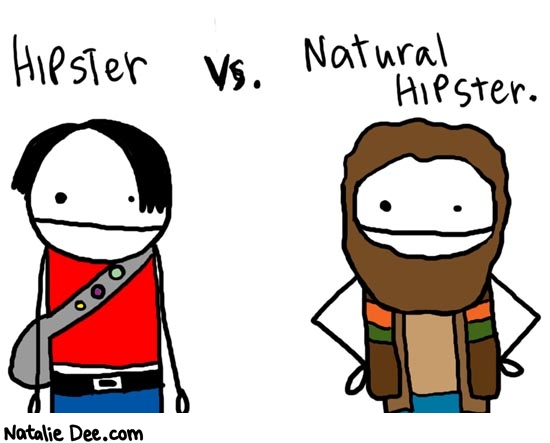
And maybe that's the thing: hipsters are ultimately people who are so noncommittal, to anything and everything, that they shift from fad to fad, playing it off as if they are at the "edge" of the cool, while fucking up the vibe for the rest of us in our respective "just around the corner" spots. How do you chill in a spot where people are trying so conspicuously to seem like they're supposed to be there? Especially when the race factor comes into play, though a friend made the observation that the "people of color on stage to hipster ratio is like, 1 to 5." But still, there's this weird dynamic when you have people coming to events because it's alt.pop, and that means that it's either political, "ethnic," or in some other way underground.
These hipsters, the folks with the wardrobes carefully chosen and hair tossed just right to make them look disaffected, nonplussed, and casual, must either be massively networked to come out to shows and events in such brute force nowadays, or it's just that some events are clear magnets for their ilk. Wow. I just found this article, which much more succinctly sums up many of the elements of what I hate about hipsters. They are not counter-culture or post-mainstream. The piece actually makes it out well: they are the new mainstream, especially in urban spots like Brooklyn and San Fran. It's this commodification of "cool," or trying to be cool, that really annoys the shit out of me. I like people who go deep in things. I enjoy conversations with folks who are actually really into something, and have been with it for a while. There's a harmonic vibe I feel from that, and if the person is talking about fly-fishing but seems to love being able to share it, well, that's awesome, and I do my best to keep along.
But what do hipsters talk about? I mean, do they have much depth? And is what I feel true: that they're mainly just a bunch of well-off white kids trying to create a "bohemian" lifestyle without any of the passion, ideals, or at least "I don't give a fuck" attitude of past (and current) groups? I just don't get it. I love hanging out with true bohos. Because they just don't care about what everyone else is doing. It's sort of the East Village of the not-so-distant past, when you just felt more free to express and explore who you were, and you had this loose community of people who were doing the same thing, and finally didn't feel like freaks for liking stuff that was non-mainstream and out there. It wasn't a "Scene"... it was just a bunch of micro-scenes that people went in and out of, but it wasn't as faddy as hipster "culture" (I cringe at giving hipster tendencies any cultural significance). It's just weird. I mean, if you seem to eschew the mainstream, you should be thinking about capitalism and marketing and what elements of "cool" are being marketed to you and what you're just reinforcing with your actions.
But that level of consciousness is completely lacking in the hipsters I've come into contact with. It's epic narcissism, with white kids looking at themselves and thinking that they're creating some kind of new tribe of the cool. I don't see hipsters as being a real community, but I may be wrong. I mean, I think it's ultimately every dude for himself. And "I think I'm cooler than you." It's like high school all over again. But in this weird way where instead of just keeping away from the metal heads and the brown and black kids and saying "look how uncool," the popular clique is coming to our events, getting up in our spaces, and making that their playground as part of their coolness.
Hipsters seem like just another weird outgrowth of white privilege, fucking up the vibe in vibrant subcultures as they go, essentially asserting a right to be there and leave there with no respect for anything. Basically - anyone should feel free to step into a scene, but not just to be seen, know what I mean? And that's what annoys me more than anything. Just freakin' commit already. I guess their apolitical nature also bothers me - there's nothing less counter-culture than just sucking up to the materialism that's around us, and not having anything critical to add to the dialogue. I mean, at least the Marxists sitting in their coffee shops talking about the revolution are still engaging things in some way. Hipsters are just mold on the food that is our culture.
I almost feel like skipping the stuff I'd rather go to, which has become infested with hipsters at every turn, and just going to something so over the top that they wouldn't be caught dead there for fear of being branded uncool. I mean, isn't Genesis touring again? Or is Yanni around? Suddenly the hyper-commercialized becomes so anti-hip that it's hip?
Is that the game we have to play? Fuck it cousin, I'm just unplugging if this is how it's gonna go. I'll cook my own food to stay away from them in the cheap eats around town. I'll start my own band and play in my head for hours, safe from the hordes. I'll visit folks and skip consumer leisure culture all together. And when those mofos catch on that it's the next movement, I'm locking my door behind me.

Apr 1, 2007
I for India: On Lata, Leaving, Longing, and Losing Our History.
I recently had the very good fortune to see I for India - a family documentary that touches on the emmigrant experience of a particular family that settled in the U.K. If you can see this film, I highly recommend it. It's a very personal look through the eyes of the family itself, because they used the medium of film to keep in touch with the family they left behind in the United Kingdom. The loving arrangement of these fragments was made by the youngest of three daughters and interspersed with amusing and illuminating BBC and other clips, as well as present-day segments with the filmmaker's parents, the emigrants who straddled two worlds in their quest for a new life, and even tried to return to India.
I'm not going to go into the play-by-play on this one. Just check it out. However, there were a few scenes that really touched me. There's a scene that has the filmmaker's father in the present day, going through his morning routine (and at other times going through mundane, home-owner chores like property maintenance) with his headphones on. The filmmaker smartly takes us inside the 'phones, and gives us a blast of old school filmi music from the greats of Bollywood. I couldn't name the song, but I'd heard it countless times before while growing up, and as the images on the screen segued from a small town in the UK in the 21st Century to older 8mm film from India, I felt like I was traveling down the winding road of memories with him.
And it was at that point that I started to think about my parents, and by extension, many emigrants from India and Pakistan who left bright-eyed and ready to study or work in the 50s, 60s, and 70s. I don't know a lot about their stories beyond the touchstones ($8 in my pocket, going to Chinese markets to get Indian vegetables) that we always take for granted. But I do think that there are some things that lie just beneath the surface about their big trip out here, into the unknown and away from their loved ones and the reassuring feeling of belonging just because you look like everyone else.
It's nothing like what immigrants to urban areas in the UK and the USA face now. Even though the earlier generation was well-educated and/or relatively affluent, I imagine that the predominantly bachelor population had a bit of a shock having to do many of the household activities for themselves. They didn't have the option of going out for food and conveniences from home that most H1-Bs take for granted now, and had to either cook, or adapt to the new environment (with many bringing a less than climactic end to the countless generations who preceded them without taking drink, cigarette, or meat).
Nor did they have the regular communication back home in the years predating low-cost and accessible internet (or even international long distance). Forget that, getting the news of back home was probably quite difficult in the UK and nearly impossible in the United States of the 50s and 60s. So they were on their own, and left to their own devices to survive, to make a home for themselves, and find some comfort in what was likely a cold place. Imagining that time, and thinking of how much was changing in the United States, especially with Kennedy's election, his assassination, the war in Viet Nam, and the growing importance of political protest in the culture of the time, I just wonder what it was like for that generation of people who came to the U.S. to study or to work. What was it like for folks who came from inherently conservative backgrounds to be in the United States at the time when it was arguably at it's most liberal? When revolution was actually something more than the rhetorical exercise its become in the States. Many of my friends speak of the 60s and even early 70s as the time they wish they were around, and active, because of how many things were coming up at that time, and how much (at least in our looking back at their history) it seems like people were actually engaged and willing to be more engaged. But it seems that many of us forget that we likely know folks who were here during all of it. Our parents, our uncles and aunties, a family who we've been in touch with through our many informal desi networks. But have we ever asked them of their impressions, when Watts and other urban centers were burning... when the 4 students were shot at Kent State... when Fred Hampton was killed by the FBI? Or do we fear that nothing beyond the big assassinations really registered?
Anyway, aside from the context in which they came, they were probably met with curiosity in the U.S. (or downright racism), and I can't even imagine the range of reactions in the UK where the scar from the colonial "umbilical cord" was still fresh. Still, as curiosities, they were probably spared the virulent anti-immigrant rhetoric that bleeds into most mainstream media in the present day. But without their own media outlets, the earlier wave of desi immigrants missed out on more than just the news: they also missed out on music and the simple comfort of turning on the radio and hearing songs that would remind them of growing up, of their parents, of home. But for whatever reason, and in whatever way, their connection to that music is incredible. Songs that they haven't heard in decades come flooding back when happen upon them, and their memory of when they first heard the song, or when they first saw the movie, is often impeccable. Somehow, the ability to recall the year of release seems to be very prevalent with a particular generation, and it's not limited to just the men - the aunties can bring it too.
Perhaps their separation from their homes and the music that enveloped them through much of their formative years (whether consciously or not), and the shock of arrival created a more developed connection with that music. But is that explanation sufficient?
When I think of my family members and uncles and aunties I know from India, and their depth of recognition of popular songs from Hindi films, and the emotional ties they have to that music rivals anything I know from my friends or myself. The music and love of the songs from that particular time (40s, 50s, 60s) is not a casual exercise for many of these folks, even though they did not own much of the music while growing up. It was radio, maybe more than the movies themselves, that soldered the songs to their memories, creating a link that has stayed with them through the great journey over the ocean and into America.
And the amount of music that they know off the top of their heads, and the connection between those songs, their memories, and who they are is astounding. For a long time, as an American/British popular music enthusiast, I scoffed at the relative paucity of music in India that was independent of the film industry. The link between the movies and the music, though, is making more sense to me, especially in the context of immigrants who are removed from the lives and worlds that they remember. While folks listen to songs/music many times, especially when linked to their emotions or memories, there's something more profound about the way that songs from Indian films end up having both a very personal connection for our folks, and also a visual element because of the films in which they were housed. It's difficult to separate the soaring duets by the famous singers from the actors/actresses who were likely in mind when the songs were conceived for the films in which they appeared. Take the interplay between emotional weight of the song from within the film, and then the emotional pull of that song within the listener's own life, and suddenly, you have emotional content that's far more potent than most pop music in other contexts. I guess the best analogue we may have is musical theater in the United States, for the folks who have the privilege of seeing really good shows and being affected by them - Rent is the obvious choice for me, but I have similar feelings for songs from Les Miserables, Sunday in the Park with George, and a few others. It's the combined effect of the music, the lyrics, the delivery, and the context. And getting context beyond the song itself is helpful to bond your emotions to those songs.
I remember going through my Dad's records while growing up, and just passing right by all the desi records to get to a Muppets 45 that we had, or later on, to discover the copy of Abbey Road that he'd bought, which now hangs on my sister's apartment wall. But I went back home recently and dug out the records that Mom had stored carefully, even though we hadn't had a working record player in the house for well over 15 years. I was amazed at what was there - more than just for the retro-cool of having Bollywood paraphernalia that didn't reek of the new schmalzy palette of the 21st Century, but because these records represented, for folks who were pretty modest in what they bought and kept, some kind of connection to home, to belonging, and perhaps even to their childhoods and adolescent years. I was suddenly filled with more regret that I didn't take the chance to go through these records and garner some of their stories when I had the chance.
Maybe some of the 45s actually came with my Dad from India when he first came here in the early sixties to study, though given how little money he had, that's pretty unlikely. Maybe they came with his brother, who he sponsored in the early seventies. Some of the 45s are in thin plastic sleeves that have a record store's name printed on them - a store from Bombay. Maybe some of the records were part of some prized collection that he took care of when he studied in Bombay. But that's incredibly unlikely as well, because he wouldn't have had a record player in India.
But sadly, the possibilities of where these records were from, and how they fit into the puzzle of my father's life in India and in the United States are not comforting to me. They are pieces of a relationship that I didn't put together quickly enough, when the time was in front of me. And I don't want to create fiction about something that is so hardwired into who I am. I want to collect and understand where these things fit in the past. I want to recreate what really happened. I want to see my father eye-to-eye through the few things that he left behind of who he was.
Ignoring our own histories in the effort to emphasize the injustices felt by newer economic migrants doesn't really help them. It just makes the middle class activist more likely to ignore stories of early immigration, acculturation, and resistance that don't fit the mold of "the most oppressed" group within the community or direct action or organizing. The motives for their resistance to discrimination and misunderstanding may not comport cleanly with our goals for critical analysis and desire for a break from the capitalism that brought them here to begin with. Their "making it" (economic assimilation, if not cultural) after initial difficulties may seem to argue against the whole project of discussing their history to begin with.
But denying their history or its personal import makes us somewhat rootless. Rootless in way that is unlike those people in poor communities with whom we want so much to identify, to work with and on behalf of (for non-organizers). We deny these stories from within our own families because we perceive that the minor injustices and difficulties that we think our parents faced register as less immediate, less pressing than what people are dealing with now. But I'd argue that we need to ask these questions. We need to document these stories, if not for some larger movement, then at least for our personal histories and to pay the proper tribute to our parents who made it through cultural upheaval in a way that few of us will ever experience. So even when we're talking about middle class privilege, and while we keep their experiences within the broader context of the different waves of immigration and the difficulty that poor and uneducated immigrants have in this American society, we should keep in mind that the stories of our parents are still interesting, affecting, and part of the mosaic of our communities in this country.
And I think that more than anything, I for India really recognized this, without overemphasizing their struggle in the UK or anything else. It was clearly a labor of love to her parents, and it made me think of how much time I've lost without asking some of these questions. Some of which I will never get to ask.
Giving Up Liberty for Freedom
This is quite telling. And it flies in the face of Michael Moore's hopeful assertion that only the United States was "shoot to kill" crazy. I guess it's okay to give up people's liberty when you aren't as at risk to be chased and shot in the head 8 times because you happened to be an immigrant and tensions were high around "national security."
Mar 29, 2007
Kenyan Diaspora and a New Politics of Culture/Identity
I found this 3-part article on African Path to be a good read, especially because while looking at matters of the global Kenyan diaspora, it asks more interesting questions about national identity and the role of nationalism in the shaping of a new cultural/political identity back home. Check it out.
Read More......Mar 28, 2007
The Bay.
Planning out a trip to the Bay Area for the first time in my life. At first, I didn't really think I'd have a lot to see - I know some folks out there, but not that many. Then I started to think about how so many strands in my life seem to come together on those winding streets, and I can't wait for when I can visit and explore some of it.
For example... my favorite genre of metal - thrash - has many of its standard-holders coming from out of the bay.
Asian America, the movement and the arts scene, were born on the streets of San Francisco. It's hard not to think of Wittman Ah-Sing or his inspiration, Frank Chin or the Kearny Street Workshop when you think "Asian American art," actually. Or the I-Hotel. Or the Ghadar party, for that matter.
The Summer of Love, and so much of the music and hope of that heady time all trace back to San Francisco. When we wish that we lived in the 60s, which so many of the idealistic set do (I guess, thinking that race wouldn't be an issue there, which is of course, stupid), I don't think we're thinking of Chicago, or Boston, or even New York. It's all about the Bay.
I think of the beat generation, of cafes with people reading, writing, thinking. I feel like SF is the logical sibling of NYC, and that the distaste that NY'ers have for LA is probably pretty analogous to what Bay Area folks feel for LA. Though looking at it from a distance, SF seems like it may be a bit more pure than NY, if only because NY has its superstars and Fifth Avenue to match the Sunset Strip and LA's artifice, but I don't know whether that's the case in SF.
My friends have told me that the boho experience that I remember so fondly from mid-90s East Village (still after the real wave in the 70s and 80s), would comport nicely with SF. That there is a good possibility that I wouldn't want to come back, though learning another city that has so much history seems daunting, and at my age, a little unwieldy.
I've heard from others that folks don't let too much phase them, and while I get annoyed sometimes at everyone being on edge in NYC, there's something about the edginess that keeps me awake and vibrant, and I don't know if the activism in the Bay Area is as grounded in hyper-reality. Still, it may be easier to sustain the work if you're not fighting against the neighbors, the weather, and the system as much as you seem to be in NYC.
So with all the art, and community, and history out in the area - with the ability to check out Kearny Street, and Alcatraz, and Angel Island, and a Chinatown that I can finally give some respect to, I'm definitely excited about a prospective trip. Let's see if it all pans out.
Mar 27, 2007
Afro-Punk & Metal: A Headbanger's Journey
I've been promising, among other things, a quick take on the really interesting documentary Afro-Punk that I picked up through NetFlix. I've not gotten around to it until now, and in the interim, I checked out Metal: A Headbanger's Journey, which definitely merits some airtime as well.
There are two very different docs, but both take on genres and subcultures that are altogether unknown to the mainstream. Afro-Punk isn't trying to be a retrospective history of punk - it's really looking at the intersection of race and the genre, primarily through a bunch of interviews with a bunch of young and long-time fans, as well as a few punk veterans. For someone like me, who is so new to the genre, and not a convert to punk, though punk elements in the metal that I love definitely appeal to me (early Maiden/NWOBHM, etc), it was an eye-opener.
Also, because the film kept race front-and-center, I found the questions, approach, and gems that they uncovered incredibly interesting. The filmmaker had a light tough, enough so that you didn't feel like he was trying to make some profound statement from the film. It asked a few questions, found a bunch of interesting people, and just gave us a brief introduction to their place in a genre of music that's so often associated with unhappy white kids that you forget that some of the real trailblazers, like Bad Brains, like members of a bunch of groups, were actually black.
My favorite part was when he had a bunch of the interviewees, in rapid succession, saying that they were the only black kid at punk shows growing up. It's just awesome to hear like 10-15 people say the same thing. And you think "I wish I could have them all meet each other!" There's also something refreshing about the do-it-yourself aspect of punk - I was pretty inspired to see/hear folks talk about it - the race didn't really matter - it was the attitude. And finally, one sister was really deep because of the way that she identified the music, and the culture of punk - from the haircuts to the tattoos and piercings, with specific traditions in Africa. It was quite powerful to hear her talk about it, and talk about how much she was mocked or told that she was "acting white" by folks in her neighborhood, when she flipped it and said "actually, I'm getting closer to a culture that we lost."
It's pretty powerful, and I appreciated her take on it. Regardless, the film moved smoothly, there was enough cool stuff that was known and stuff that was unknown (at least to me, a neophyte to the culture), and I have to say, some of it was damn funny. Not to ruin the film, but there's a moment when the guys from TV on the Radio are asked to name all the groups that had black members, and they went through a list, and eventually said "The Clash... because they *had* to be black" and quickly followed it up with, "the whole scene is full of them!" I guess you have to see it.
So with that rave review of Afro-Punk, which was very satisfying as a film, I have to move on the Metal: A Headbanger's Journey, which suddenly found itself high on my Netflix list and in my DVD player quickly thereafter. What can I say? This is my genre, my first love in music, and the first true community that I felt like I was a part of while growing up. The filmmaker is an anthropologist who was a metal-head while growing up in Canada, and he has an easy, welcoming style of narrative that draws you in.
The film starts with shots from Heavy Metal Parking Lot, a short film taken during a Judas Priest show in the heyday of crazy metal fans (sometime in 1984, I think) and just showed a bunch of kids waiting for the show to start. I rented that DVD, was not really impressed by the film itself and less impressed by the dozen or so extras, most of which were quite a bit longer than the actual film (though I have to say, the filming of the demolition of the arena where the show had taken place, as well as the metal fan who went through a quite detailed LP-by-LP review of each of the Judas Priest albums as he showed off his collection were precious).
Anyway, so the filmmaker, Sam Dunn, a fan of the music, went on an exploration of metal culture and history in his film, and I thought that it was well done. He looked at the roots of the music, without talking about it for too long, interviewed people like Alice Cooper, Ronnie Dio (who kept making fun of Gene Simmons), Tommy Iommi, Dee Snider and a number of other respected folks from the beginning of the movement. He also did a one-on-one with Bruce Dickinson, in the Hammerstein Ballroom, which was pretty incredible, and a mind-blowingly funny interview with one of the most controversial black metal bands in the genre.
All that said, because I know the music fairly well, I wanted more. I thought that his exploration of controversy, from the Norwegian church-burning black metalists (and the way that Alice Cooper laughed at them) to the PMRC and Dee Snider discussion, were great. He even dealt with gender (and gender bending) in the genre. But he didn't open the question of race - which may seem like a non-issue because it seems like such an overwhelmingly white male genre and culture.
But it's not, the crowds around the world that turn out for metal shows is incredible (look at Brazil, Japan, and other places where metal shows can sell more than 75,000 seats easily), and even within metal, there are a good number of thrashers and others who are not white. Tom Araya of Slayer is Peruvian. Testament's Chuck Billy and Eric Petersen (at least) are American Indians. There are plenty of others. And the lyrics - from Anthrax's numerous songs to many others - also look at intolerance and hatred in interesting ways. [note, when posting this, I went to the website for this film, and realize now that Dunn is en route to making a follow-up that looks at the world metal phenomenon called: Global Metal. I'm impressed by this dude!]
I would say that the fan base in the United States is similar to punk - there aren't a lot of us, but probably more than you'd find at a typical country show. I haven't seen the extras from Metal but I'm not sure if there's anything there that looks at race either, and I think it remains an interesting angle for an aspiring filmmaker: "Gold, Bronze, Brown, and Red: The Many Colors of Metal"
Mar 24, 2007
Explosions in the Sky.
 Texan indie-rock band Explosions in the Sky has quickly exhausted my free listens on Napster. I heard of them in a (gasp) Rolling Stone article, and was intrigued because instrumental guitar rock that I listen to is generally pretty abrasive or acrobatic stuff by solo artists with studio musicians. This is a band. And let me tell you - they are worthy.
Take Sigur Ros without the nutty vocals, but keeping the cresendos and dropping some of the orchestral embellishments, and you've got a decent idea of what these guys sound like. It's just good music - plenty of clean tones mixed in with more lively full band arrangements. It's a soundtrack to our lives, in many ways. Actually, for probably the first time that I can recall, I'm interested in seeing a movie because of who did the soundtrack (EitS did the soundtrack for Friday Night Lights).
I just missed them in the area, but I'm hoping to at least check out a few of their disks. I don't know what the live show would be like (shoegazing hipsters? Who knows). If you're looking for disks that can play that wonderful role of either being something that you put on in the background or something to which you are actively listening, Explosions in the Sky seems like a good fit.
Oh, and get this, one of the members, who's often the interview giver for the band, is brown. But the band is just the band. It's sort of like Soundgarden with Kim Thayil (though I guess they had a line in Spoonman about "all my friends are Indian/all my friends are brown and red" so he's not fully stealth.
Anyway, check them out.
Mar 19, 2007
So. Tired.
But will return in time (soon) to write about the world and all its infinite spinning. Some thoughts that are churning at this point...
I'm learning more about Transgendered identities and issues... just the tip of the iceberg, but it's got me thinking about gender privilege that moves away from a simple analysis of patriarchy. It's just tough for folks whose very identity is controlled by the state and state imposition, in a way that race, ethnicity, and even sexuality are not really touched.
I mean, you may not be able to get the equal treatment as others based on these characteristics, but the very essence of who and how you identify yourself is not being called into question or being defined for you (check that, sometimes that's not true, but generalities in this stream of consciousness, okay?). I can't imagine that feeling, or the feeling that you have no privacy at all every time there's some kind of alarm that goes off in the ID-checker's mind because the gender on your ID doesn't match what they think it should be, or how you want for it to be listed. I just feel like trying to find who and what you want to be should be your own journey, not one that the state gets in the middle of... but does that make me more of a libertarian? Or just someone who thinks that in some issues, self-determination is completely thwarted by block-headed state action.
Of course there's so much more, but so little time for me to write...
Mar 11, 2007
Genius Kid: Unhappiness in Slavery.
But if you check out Spellbound and watch the way some of the desi parents turn life into a competition, you start seeing the math and spelling competitions as the bane of these kids' existance. How maladjusted does your kid have to turn out for you to realize that you're doing him wrong? I don't know. I don't think your kids should be your show pet. If you like competition, grow roses or something. But let the kid be a kid. Read More......